National
Osun Election: Adeleke’s victory not defeat of Tinubu – Wike

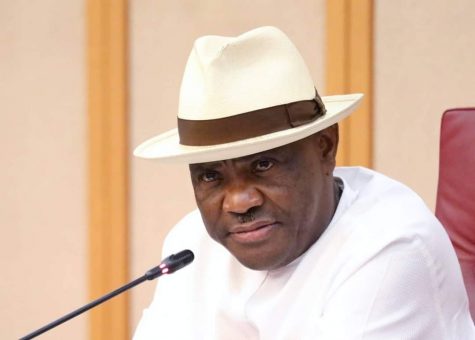
The Minister of the Federal Capital Territory (FCT), Nyesom Wike, has dismissed claims that the outcome of the August 2026 Osun State governorship election represented a defeat for President Bola Tinubu and the Federal Government.
Instead, Wike indicated the outcome was a result of President Tinubu ensuring a free and fair process rather than federal interference.
He also declared that the opposition had been “crippled” ahead of the 2027 general elections, predicting that Tinubu would secure re-election with considerably less difficulty than he encountered in 2023.
The minister spoke at a press conference in Abuja shortly after inspecting areas affected by flooding in the Federal Capital Territory.
He was reacting to suggestions that the victory of Governor Ademola Adeleke of Accord in the August 15 Osun governorship election, coupled with the involvement of opposition politicians including former Vice President Atiku Abubakar and former Sokoto State governor, Aminu Tambuwal, indicated that the opposition was gaining momentum ahead of 2027.
Wike, however, rejected the interpretation, insisting that the Osun election could not be regarded as a contest between Adeleke and the Federal Government.
“I do not know the effort made by the Federal Government, but I do know that parties in an election will make an effort to win elections. There’s nothing wrong with that,” he said.
The minister argued that had Tinubu been determined to deploy federal might to secure victory for his party, he would have been involved in the process.
“I’m part of the Federal Government. I’m sure that if the President wanted to win Osun at all costs, I would be involved, and I would have been there, and the governor would have known that it would have been different,” Wike said.
He maintained that elections were processes rather than one-day events, adding that political parties were expected to build structures and mobilise support long before voting day.
Wike also dismissed claims that the Osun outcome demonstrated the growing strength of the opposition coalition, questioning why politicians who had contested the election separately would subsequently claim credit for Adeleke’s victory.
“If you knew you were trying to support Adeleke, why did you field a candidate? Their candidate has lost. He’s now saying, ‘Oh, we thank God the Accord Party won.’ Are you a member of the Accord Party?” he asked.
According to him, genuine coalition-building should have taken place before the election, with opposition parties agreeing to withdraw their candidates and support a common platform.
“You would have gone to say, ‘Look, everybody in this party, step down. We want Accord to win this election.’ Then you would have made sense. Then after the election, you say, ‘Oh, we won.’ Look, they won,” he said.
Wike further cited Adeleke’s reported commendation of the President for allowing a free and fair election, arguing that the governor’s victory could not reasonably be described as a defeat for Tinubu.
He said the President’s alleged intervention to prevent the Economic and Financial Crimes Commission (EFCC) from taking certain actions against the governor during the election period was evidence that the administration did not deploy federal institutions to influence the poll.
“If it was federal might, he will keep quiet,” Wike said, adding that Tinubu’s decision to allow the electoral process to proceed demonstrated his commitment to fairness.
He recalled his own experience of confronting what he described as federal might during the 2019 Rivers State governorship election, saying the situation then was substantially different from what transpired in Osun.
Wike also dismissed the suggestion that opposition politicians who visited Osun after the election had secured a major political breakthrough, insisting that Adeleke had not been among the governors who were consistently hostile to the Federal Government.
Turning to 2027, the minister described the opposition as too weak and divided to pose a serious challenge to Tinubu.
“This election, 2027, is where the opposition have been crippled, crippled, you know what it means crippling people? Depleted, they finished them. They have nothing to do,” he said.
According to him, a credible opposition capable of defeating an incumbent government must have a stable political structure and spend years building its base, rather than continually moving from one political platform to another.
“You see, for you to be in opposition to remove a government, it must be what you call a strong, vibrant opposition that has stayed for over four years planning, not opposition that is looking for a party to go to,” he said.
Wike specifically challenged the African Democratic Congress (ADC) to point to any election in which the party had demonstrated sufficient electoral strength to suggest that it could defeat the ruling All Progressives Congress (APC) at the national level.
He questioned how a party could expect to win a presidential election when its performance in state-level contests remained limited.


Momodu to Wike over comment on Osun Election: Adeleke is not Fubara

Hell is real — Solomon Buchi replies Pastor Tobi Adegboyega + Video

FAAC: Federal, state, local govts share N3.007trn for July

Flooding: Heaven will not fall! – Wike orders immediate demolition of houses built on Abuja waterways

Gov Okpebholo’s Grassroots Sports Investment Yields Results as Team Edo Shines Across Abuja, Asaba
Gov Okpebholo’s Grassroots Sports Investment Yields Results as Team Edo Shines Across Abuja, Asaba

LG Polls: APC presents flag to Umahi’s son as chairmanship candidate
- Investigation3 days ago
Man alleged to be a lecturer is str!pped and b£@ten by Unizik students after a female student alleged that he molâ¬sted

 Investigation2 days ago
Osun election proves voters can beat rigging â Pat Utomi
- Investigation3 days ago
âThey have insulted me because I begged to use their house for a shootâ â Diiadem reacts after Ehi posted their private chat
- Investigation2 days ago
Osun election: No political deal with Tinubu â Adelekeâs camp replies Festus Keyamo after he remarked âAgreement is agreement.â
- National2 days ago
Vehicles: Lagos prohibits daily use of dealer plates
- Politics2 days ago
INEC declares Adeleke winner of Osun governorship election
- News2 days ago
Osun poll: Keyamo lied, Adeleke has no political deal with Tinubu – Spokesperson
- Politics3 days ago
RMAFC completes revenue formula, remuneration review