National
20m People In Sub-Saharan Africa Risk Food Crisis As Prices Surge — IMF

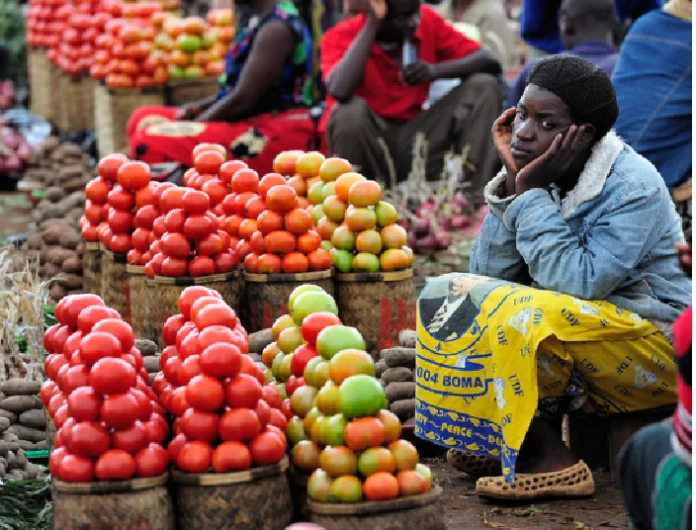
International Monetary Fund ,IMF, has warned that more than 20 million people across sub-Saharan Africa could be pushed into moderate or severe food insecurity due to rising global prices.
The warning was contained in the IMF’s April 2026 Regional Economic Outlook titled “Hard-Won Gains Under Pressure”.
The report examined recent growth trends in the region and the emerging risks from global commodity shocks and geopolitical tensions.
The Fund noted that while sub-Saharan Africa entered 2026 with relatively strong economic momentum, external pressures are now threatening those gains.
It highlighted rising inflation risks, weakening trade conditions, and tightening financial markets as key challenges facing the region.
The IMF report shows that sub-Saharan Africa recorded its strongest growth in a decade in 2025, but that momentum is now expected to slow slightly in 2026 amid worsening global conditions.
The data points to a region facing both short-term inflationary pressure and weakening external balances as global commodity prices rise and financial conditions tighten.
“Poverty, food insecurity, and other social indicators, already weakened by the pandemic, face renewed headwinds from declining foreign aid and rising food prices”.
“IMF staff estimates that a 20% increase in international food prices can push more than 20 million people into moderate or severe food insecurity across the region.
Regional growth was estimated at about 4.5% in 2025, the fastest in ten years, driven by stronger global conditions and improved domestic policy management in several large economies.
Inflation eased toward the end of 2025, supported by falling global food and oil prices, tighter monetary policy, and reduced exchange rate pressures across multiple countries.
Fiscal positions also improved during the period, helped by stronger economic activity and favourable currency movements in key markets.
However, growth is projected to slow to 4.3% in 2026, while median inflation is expected to rise to 5.0%, up from 3.4% in 2025.
Overall, the IMF warned that renewed inflationary pressures and slowing growth signal a reversal of some of the macroeconomic stability achieved in 2025.
Sub-Saharan Africa’s recent recovery has been shaped by a mix of improved policy decisions and supportive global conditions following years of economic shocks, including the COVID-19 pandemic and earlier commodity price volatility.
The 2025 recovery was driven by stronger global demand and stabilising macroeconomic conditions across several economies.
Many countries recorded easing inflation as global food and energy prices declined temporarily.
Fiscal consolidation efforts also gained traction as governments benefited from improved revenues and currency gains.
Despite this recovery, performance remained uneven between oil-importing and resource-rich economies.
The IMF noted that this fragile recovery is now being tested by renewed global disruptions affecting trade, energy markets, and investor sentiment.
The IMF attributed the emerging risks to escalating global tensions, particularly the ongoing conflict in the Middle East, which has disrupted trade routes and pushed up the cost of key commodities, including oil, gas, fertilisers, and shipping.
The Fund also highlighted broader spillover effects on external earnings and financial inflows.
Trade relations with Gulf partners have weakened, affecting exports and economic ties across parts of the region.
Tourism inflows and remittance flows are expected to decline in several African economies due to global economic uncertainty.
Rising risk aversion has tightened access to international financing, limiting fiscal buffers in many countries.
Oil-importing economies are expected to face higher import costs, while oil exporters remain exposed to price volatility.
The IMF warned that a prolonged global conflict could further worsen the outlook, potentially reducing regional output by 0.6% and increasing inflation by 2.4% points.
The IMF had earlier cut Nigeria’s economic growth forecast for 2026 by 0.3 percentage points, lowering it from 4.4% to 4.1%, citing mounting global and domestic pressures.
The IMF stressed that the most immediate concern is the social impact of rising food and energy prices, particularly on vulnerable populations across the region.
It warned that a sharp increase in global food prices could significantly worsen food insecurity levels already elevated by past economic shocks.


Experts advocate improved HPV vaccination awareness

Osun 2026: Hurdles, hopes as battle line hardens for top contenders

Ekiti APC Lauds Judiciary As Courts Affirm Party Supremacy

Tension as godfathers fight for Cross River North Senate seat

2027: Tinubu dares Atiku, Obi, el-Rufai, you can’t scare me

How terror attack ended last conversation between Brig-Gen Braimah, twin brother

Tinubu mocks Atiku over role in Nigeria’s privatisation program

 Breaking2 weeks ago
Outrage as video of secondary school students in Benue state str!ping their classmate surfaces online
 News2 weeks ago
I Joined A Cult, Worked So Hard For Demons – Tonto Dikeh Confesses While Ministering (Video)
- News3 weeks ago
Heartbreaking Story Of 300-Level Ekiti University Student Who Was K!lled After Truck Crashed Into His Building (Video)
- National2 weeks ago
Environmental Sanitation: Lagos meets with LG, LCDA bosses
- News2 weeks ago
WAEC Releases 2026 WASSCE Timetable (Full List)
- Breaking3 weeks ago
Singer Flavour shows off Italian woman and vows to shower her with so much love that she’ll have no choice but fall in love (video)
- Breaking2 weeks ago
Mother Abandons 4 Children with Neighbor and Disappears for Months — Shocking Case Raises Questions
- World1 week ago
Trump LIVE: Iran war bombshell as Trump could be 'removed from Presidency'