Breaking
After 10 years, dad’s death still feels fresh, by Lawan Danjuma Adamu

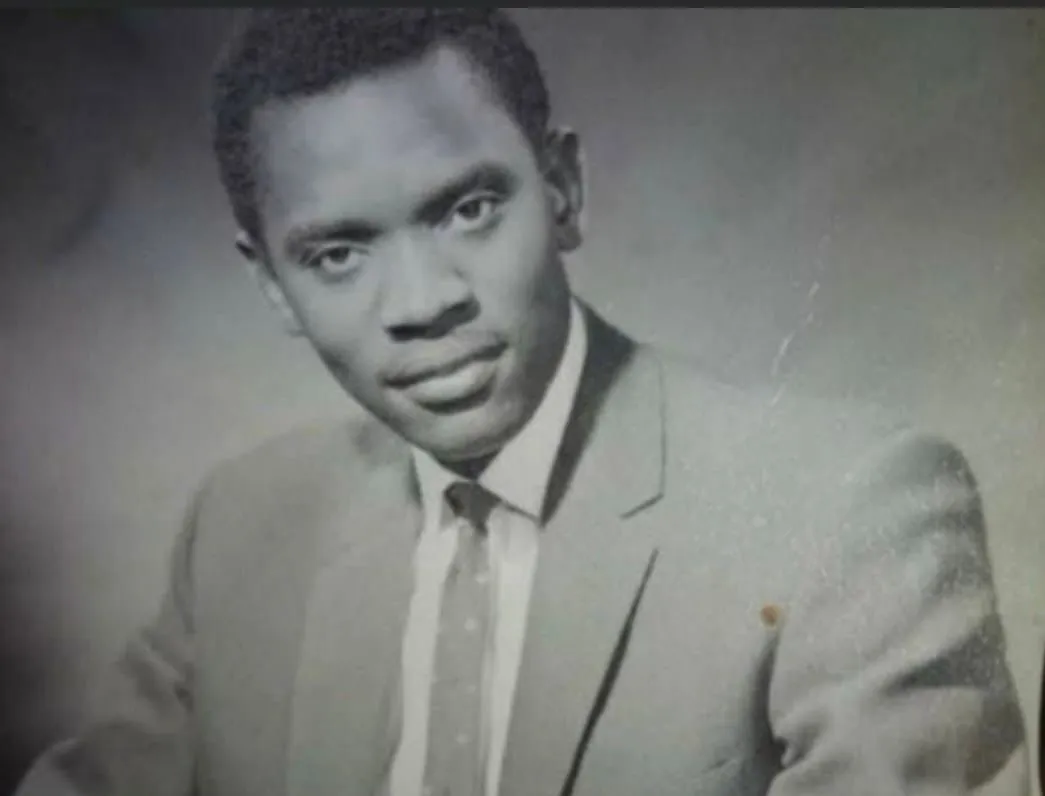
Today, Tuesday, 14 April 2026, marks exactly 10 years after our father died.
Everything happened so fast that day. He had returned my morning call, told me he was getting better and asked about my work. Although brief, the call typically ended with his routine saying a prayer for one. After that, things took a turn for the worse and he was taken to the hospital. My mother called and advised that I went to see him. So, I drove out of Abuja around 7pm and arrived in Kano at 11:11pm.
The hospital placed him on admission – his first in nearly 30 years. He was on oxygen and gasping when I entered. Tiny sweat beads formed around his forehead. He didn’t appear to be aware of my presence. When I tried to adjust one of his legs awkwardly sticking out of the bed, he slid it gently along, suggesting to me he understood exactly what I was doing. Dad last spoke hours before I arrived and his eyes remained closed, yet they let tears roll down the sides of his face. My stepmother Hajiya Maryam, a retired nurse and midwife, who was at his bedside, expressed the hope that he would overcome that fit of fever. And I felt happy. But alas, what we didn’t know was that the angels were “nearer to him” at that moment and death was not faraway.
Dad was previously admitted to a hospital in the late 80s, when the construction giant Stirling, which handled the dualizition of a portion of the Kano-Kaduna highway, carelessly left a heap of sand on the road with no sign for motorists. Traveling at night on the dusty road, dad drove into the mound and summersualted multiple times. His friend, Alhaji Danbature, died in the crash, while dad was admitted with a minor head injury and neck pains. He made a full recovery and was discharged within two weeks, paving the way for him to institute a legal action against the company, which ended in his favour at the Court of Appeal several years later. Still, his profession kept him around hospitals.
Dad trained as a nurse in the UK. When he returned to Nigeria, just before the Civil War, he started working at 44 Military Hospital, in Kaduna. As soon as the war broke out the military wooed him and his friend, Joseph, with the offer of commission as Lieutenants in the army. Dad saw the rank as too low for his qualification. He would accept the rank of Captain instead. The army tried to convince him to take the offer, as that was the policy, assuring that they would be promoted Captains after six months.
Joseph bought the idea and signed up. He was rushed through two weeks of military training and deployed.
The secessionist Biafran army was proving more formidable and prepared for a drawn out campaign than Nigeria had thought. To answer to that, the Nigerian launched a full mobilization drive, using radio jingles and posters to encourage youngmen to enlist for the cause of stopping Biafra. Everyday, the jingles only grew louder and ubiquitous, drawing able-bodied men from nooks and crannies of the North. Kaduna was bursting at the seams with troops. War songs filled the air, one of them said: “Birgediya, ba ri kuka ga gudunmawarka nan ya na zuwa” (Brigadier, do not despair, your reinforcement is on its way). Dad felt charged by such battle cries and started contemplating rethinking his stance.
News from the frontline and the wounded soldiers piling at the military hospital, left nobody in doubt that the war was taking a toll. As more men were felled or wounded, more reinforcements were hurried into the battle to sustain the advance on Biafra. The hospital was overflowing with the wounded and staff were struggling to cope. In that chaotic situation, dad reported to work one day and received heartrending news of his friend’s death. The two of them had trained together in England, returned home to Nigeria and started working in the same hospital. And now Joseph, a Jakun from Taraba, was gone.
When dad inquired about the circumstances leading to the death of his former colleague, he was told that Joseph’s unit ran into a Biafran ambush where he got shot in the hand. With only two weeks training as preparation, Joseph did what only a civilian would do when faced with an ambush. While they were still under the enemy’s intense fire, he got up and started screaming that he had been shot. He was apparently hoping to get the attention of the unit’s medical team, but it proved to be the wrong move. Other soldiers who had taken cover, yelled at him to get down. But he kept shouting, “I have been shot.” In no time, the Biafrans rained bullets on him, killing him instantly.
The incident changed my father’s mind about signing up. He resolved not to enlist even if he would be permitted “to start as Major.”
Unknown to dad, his younger brother Suleiman (who we fondly called Baba Ladan – of blessed memory) had quietly joined the army. One day, he turned up at dad’s office, fully kitted, and informed him that he had been posted to Kaduna. Dad could not hide his disbelief at his brother’s action of not informing him beforehand. He was their father’s eldest child and therefore, believed he ought to be in the know. He probably would have dissuaded him, given his experience at the hospital and with what had become the fate of his friend, Joseph.
Nevertheless, he respected his brother’s choice.
The warfront was still swallowing more men, and asking for more. Dad was very sure it would one day call his brother. So, he tried to stop that. He went to his brother’s commander and pleaded that Kawu Ladan not be allowed to go to war. Dad told the officer that his brother had just been orphaned by the recent death of their father. He came back convinced that his brother was never going to see action at the frontline.
Then one day, Kawu Ladan stormed his office in FSMO(Full Service Marching Order – helmet, pouches, back pack, etc.) and said to dad, “Yaya, za mu ta fi”(brother, we are going). “za ku ina, Ladan?”(going where, Ladan?) The visibly excited brother replied that his unit would be headed East into the battle with Biafran forces. So, dad stood up from his seat, saying: “Inna lillahi wa inna ilahi raji’un.”
After Kawu Ladan went to war, dad transferred his service to Kano, his birthplace. One day, Kawu Ladan was shot in the arm and the army checked his record and saw that his brother was working in a hospital in Kano. Quickly, they transferred his case to the City Hospital (now Murtala Mohammed Specialist Hospital, Kano). He stayed there until he recuperated.
Dad’s father, the Alhaji Adamu Usman, the Sarkin Kasuwa of Makurdi, migrated from Bebeji and settled in Makurdi long before dad was born. Alhaji Adamu established himself as a successful businessman. That gave him the leverage to send dad to school, making him one of the first set of people to receive western education within the settler community in Makurdi. His father did not bother that they were not from Benue when he sent dad to places like the Benue Provincial Secondary School Katsina-Ala. Dad quickly blended and even learnt some Tiv language. His father’s choice helped shape his attitude of accepting postings anywhere, later in life. He attended Katsina-Ala over 70 years ago, when General T. Y. Danjuma (rtd) was in the school and one year ahead of him.
His sharp recollections of the school always evoked laughter and emotions. An ex-military sergeant was responsible for maintaining discipline among students, which might not be out of place. Still, he doubles as the school’s “doctor” even though he was without any medical qualifications. His prescriptions were predictable. Any student having a headache, catarrh, stomach ache, constipation, contusions or any other ailment, knew he would be handed a dose of aspirin.
It was in the school that dad was told the story of a historical Tiv king, named Chia. Chia was very powerful and would enforce the community’s law to the letter. He had many servants. One day, one of the servants ran afoul of a law that attracted the death penalty. A large crowd gathered at the king’s palace on the day he was going to be executed. When they brought him before Chia, he pleaded with the king to allow him to sing a song before his sentence was carried out. The king nodded his approval. The servant began singing in an emotionally-laden tone that moved the crowd to tears. He extolled the king’s enormous powers and praised him for ability to forgive. He then appealed for clemency. Chia was equally touched, but he would not grant him a pardon, lest it was mistaken for a sign of weakness on his part. So, the penalty was enforced and the servant’s head was cut off. The song became very popular among the Tiv people at the time of Chia’s reign and many years after. Dad would sing it word for word and render an interpretation in Hausa, which made you feel as though you were in that crowd.
In the 60s through 70s, dad enjoyed driving in his Vulgar, Opel or Citron. He was transferred to a hospital in Katsina, but would travel regularly for the weekend in Kano. Most times, the trips took place on Fridays and at night. As he was driving one night, he started feeling sleepy, a sign indicating he was tired. He pressed on. On reaching a point in the journey, he sighted something that looked like a silhouette of a small bridge, in the dark. He lined the car to the bridge and accelerated. Then, like magic, the guardrails on either side of the bridge detached and moved in opposite directions. By the time he stomped the brakes, the vehicle was at the point of driving over what remained of the supposed bridge. Dad came out of the car. Then, it turned out that two people were carrying a wooden bed across the road when he approached. Fearing the imminent risk of being run over, the two dumped the wood on the road and fled. Dad’s sleepy eyes had formed them into a bridge. When the three of them came to terms with what had just happened, they laughed loudly. He told me this story on our way back to Kano from a condolence visit at the emir’s palace of Wamba, in Nasarawa State. We were approaching Falgore Forest around 10pm and dad fell asleep. When he woke up, the lights of a truck moving ahead of us appeared to him very close. He touched me and said, “Lawan, watch out. Don’t ram into that vehicle.” I told him the vehicle in question was more than 600 metres from us. So, he laughed and recounted his Katsina road story. He stated how lucky those people were as he “didn’t put the car on them”.
When a General Hospital was opened in Dambatta, dad was posted to take charge of it. Every night, he would place a chair outside and listen to the radio. There were many scorpions around the new building. He would hold the radio in one hand and use the other to impale dozens of scorpions before he retiring to bed. He had stopped the family of a serving commissioner from visiting a patient after hours for visitors had ended. The family went home and returned with the commissioner, and he did not budge.
Dad’s career path progressed without a hitch up to the time he attained the pinnacle of his profession and became the executive secretary of the Kano State Health Services Management Board. He was prouder of this achievement than being appointed, first, a sole administrator for Rano LGA and then, a chairman for Bebeji LGA. He believed if God had wanted to him in the army, he would have enrolled. After all, nothing stood in his way at the time, in contrast to the obstacle he encountered during his quest to study abroad, which almost robbed him of the opportunity. It was unimaginable that after he secured the admission to a school in overseas, some people in government denied him scholarship, simply because he attended a school in Katsina-Ala, not Kano. It was unthinkable that he would watch the other students who secured placements in London, fly out without him. If not for his father, who stepped in and sponsored him, he would have missed it.
He didn’t allow the brief predicament to worry him, as a result, he enjoyed narrating the story of the Igbo tailor who sewed the suit he wore to London than even mentioning the unwarranted obstacle that almost truncated the trip. The old Igbo man operated a shop in Sabon Gari, where dad went, as a last-ditch effort, to get a suit. He needed it fast to meet the deadline for registration. After listening to him, the old man boasted: “My boy, I go sew suit. I go sew you suit so tey when you go to London, people go ask you who sew this suit for you.” Of course, after he landed in London, dad noticed that the suit looked oddly different from the parade of suits pacing up and down the airport. Lo and behold, he soon found his Nigerian schoolmates, asking: “Who sewed this suit for you?” The old man was true to his words. Dad stopped wearing the suit immediately.
When he retired from service, friends and former colleagues proposed they jointly set up a private hospital, but he outrightly declined. He would not be able to stand the sight of a patient denied treatment due to inability to pay for it, he said.
Dad described what used to give him the greatest joy and feeling of accomplishment during his days in service: When a patient is brought into the hospital in a terrible state, unable to eat, talk or do anything for himself and unaware of his surroundings. Upon being admitted, he gets cleaned up, fed, and starts getting treatment and care. Then after some days, he begins to show improvement and do all those things for himself. Then he recovers fully and is discharged. But before leaving, he comes around to you, who took care of him, and says, “thank you.” “That was the greatest source of joy for me in service,” he would say.
At the hospital that fateful night, dad’s gasping increased profusely and I was asked to get the doctor. As I returned, he was breathing normally. Then he went quiet, as though the difficulty in his breathing had eased. I was standing right by his bed but didn’t realize it until my stepmother told me he was no more. Seeing that she was still seated, I placed two fingers close to his nostrils and told her that he was still breathing. She said, no. What I felt were the last molecules of oxygen leaving his lungs. The doctor came in, checked his vitals, turned to us and said, “I’m sorry, he is dead.” My stepmother and I took turns to hug dad one last time.
When his remains were being carried out of the hospital that night, we told the nurse and the doctor on duty, “thank you”. We also thanked God for blessing us with Alhaji Danjuma Adamu as father.
After 10 years, his death still feels like today.
May Allah shower his grave with mercy.


âThis bread has lasted two months and still looks freshâ â Woman raises concerns over food safety

Rob Gronkowski reveals key detail about Travis Kelce and Taylor Swift's wedding vibe

Outrage as Sharia court rules in favour of granting custody of Christian girl, 13, to Muslim man, 30, who kidnapped her, married her, and forcefully converted her to Islam

DOJ moves to dismiss Jan. 6 convictions against 12 former Proud Boys, Oath Keepers

Chevron says Venezuelan oil imports are helping curb U.S. gas prices

Comedian, I Go Save, reacts to reality star, Angelâs marriage situation

Florida doctor indicted after allegedly removing patient's liver instead of spleen

 Breaking2 weeks ago
Outrage as video of secondary school students in Benue state str!ping their classmate surfaces online
 News2 weeks ago
I Joined A Cult, Worked So Hard For Demons – Tonto Dikeh Confesses While Ministering (Video)
- News2 weeks ago
Heartbreaking Story Of 300-Level Ekiti University Student Who Was K!lled After Truck Crashed Into His Building (Video)
- National2 weeks ago
Environmental Sanitation: Lagos meets with LG, LCDA bosses
- Breaking1 week ago
Mother Abandons 4 Children with Neighbor and Disappears for Months — Shocking Case Raises Questions
- News2 weeks ago
WAEC Releases 2026 WASSCE Timetable (Full List)
- Breaking2 weeks ago
Singer Flavour shows off Italian woman and vows to shower her with so much love that she’ll have no choice but fall in love (video)
- World6 days ago
Trump LIVE: Iran war bombshell as Trump could be 'removed from Presidency'