National
Aviation Fuel Crisis Deepens As Air Peace Reduces Abuja–London Flights

By Charles Ebi
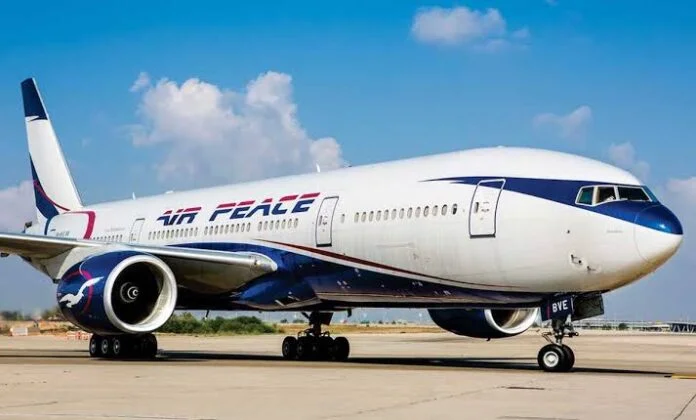
Air Peace has temporarily reduced its Abuja–London flight frequency from daily to three times per week. This adjustment is scheduled to remain in effect until July 1, 2026, when full daily operations are expected to resume.
The airline attributed this decision to local and global Jet A1 known as aviation fuel, supply constraints. In a statement made available to AljazirahNigeria in Abuja, the management explained that the reduction is a proactive measure to ensure operational safety and reliability during the fuel shortage. Nonstop flights typically take approximately 6 hours and 10 minutes.
As of April 2026, round-trip economy fares for the route are starting from approximately ₦1,423,893.
The Aviation Fuel Crisis has significantly impacted Nigerian aviation, with fuel prices reported to have surged drastically in early 2026.
Other airlines have also warned of potential disruptions or delays due to these systemic supply issues.
The adjustment reflects growing pressure on flight operations linked to aviation fuel availability both within Nigeria and globally, with wider implications for the aviation sector.
Air Peace said the reduced schedule will remain in place until July 1, 2026, when full flight frequency is expected to resume, subject to improvements in Jet A1 supply.
The airline explained that the decision was necessary to maintain operational stability amid persistent fuel challenges.
“Due to the current Jet A1 or aviation fuel, supply constraints affecting flight operations nationwide and around the world, we wish to inform you that our Abuja-London service has been temporarily adjusted to three weekly flights until 01 July, 2026”, the statement read in part.
The airline added that the move is aimed at ensuring service continuity while managing the impact of fuel shortages on its operations.
The Jet A1 crisis in Nigeria has intensified in recent weeks, driven largely by a sharp increase in prices and supply disruptions. The surge has significantly strained airline operations, forcing operators to consider cost-cutting measures and schedule adjustments.
Aviation fuel prices rose from around N900 per litre to over N3,000 between late February and April.
Nigerian airlines had earlier threatened to suspend nationwide operations from April 20, 2026, citing unsustainable operating costs.
The Airline Operators of Nigeria ,AON, described the price spike as “artificial” and disconnected from global crude oil trends.
The Federal Government intervened, urging airlines to suspend the planned shutdown while engaging stakeholders.
Recent developments include a 30% relief on statutory fees approved by President Bola Tinubu to cushion the impact on airlines, covering obligations such as parking charges, navigational fees, and other regulatory costs.
The continued rise in aviation fuel prices is partly linked to geopolitical tensions in the Middle East, which led to restrictions around the Strait of Hormuz, a key channel responsible for about 20% of global energy shipments. This disruption has added pressure to global energy markets and aviation fuel pricing benchmarks.
Industry sources say most of the jet fuel used in Nigeria is sourced from the Dangote Refinery, which remains the dominant supplier.
However, the Middle East tensions have driven global pricing indices such as Platts on an upward trend in recent weeks. The rise in Platts has translated into higher landing costs for aviation fuel despite local sourcing.
This sustained price pressure continues to affect airline operating costs, fares, and flight stability in Nigeria.
The combination of global supply shocks and local procurement dynamics has kept aviation fuel prices elevated, intensifying cost pressures across the aviation sector.
As of late April 2026, Nigeria faces severe aviation fuel crisis that has pushed the industry to the brink of a total shutdown. The price of Jet A1 fuel or aviation turbine kerosene, has skyrocketed by approximately 300% in just two months, jumping from ₦900 per litre in late February to as high as ₦3,300 per litre by mid-April.
The crisis has forced domestic airlines to take drastic measures to stay afloat:
Major carriers like Air Peace have already cut back on popular routes, including a reduction in Abuja–London flights to only three times per week.
Passengers are experiencing significant flight delays, tactical reschedulings, and baggage restrictions due to limited fuel availability.
Fuel now accounts for roughly 40% to 95% of airline operating expenses in Nigeria, far exceeding the global average of 25–30%.
Industry stakeholders and analysts point to several factors driving this surge:
Geopolitical Tensions: Conflict in the Middle East and disruptions around the Strait of Hormuz have tightened global energy markets and increased landing costs.
A “currency mismatch” exists because airlines earn in Naira while fuel and maintenance costs are globally indexed in US Dollars.
While the Dangote Refinery has become a dominant domestic supplier, distribution bottlenecks and the lack of a robust pipeline network mean fuel must be trucked across the country, adding heavy “bridging” costs.
Nigeria’s state-owned refineries ,Port Harcourt, Warri, and Kaduna, remain largely non-functional for aviation fuel production, leaving the system without secondary buffers.
To prevent a complete suspension of domestic air travel, the Federal Government has introduced emergency relief measures:
President Bola Tinubu approved a 30% relief on statutory debts owed by airlines to agencies like the Nigerian Airspace Management Agency ,NAMA, and the Nigerian Civil Aviation Authority ,NCAA.
The Minister of Aviation, Festus Keyamo, has convened emergency meetings between the Airline Operators of Nigeria ,AON, and fuel marketers to find a “fair and reasonable” pricing structure.
The government is considering a committee to review airline taxes and levies to cushion the impact on fares.
Despite these interventions, airline operators warn that a shutdown remains a possibility if a long-term pricing solution is not reached within the next seven days.
The meeting exposes a bitter divide between those who operate aircraft and those who fill the tanks. The AON, led by President Abdulmunaf Sarina, labeled the price hikes “astronomical and artificial”, accusing marketers of profiteering from global instability.
Across the table, the Major Energies Marketers Association of Nigeria ,MEMAN, pointed toward a perfect storm of external factors:
Geopolitical tensions near the Strait of Hormuz—the transit point for 70% of Africa’s kerosene supplies had sent global premiums soaring.
With the Naira fluctuating, the cost of importing refined Jet A1 has become a moving target that few can hit.
Inefficiencies in local distribution have added a “structural premium”, making Nigerian jet fuel 17% more expensive than the global average.
While bureaucrats and CEOs argue over numbers, the impact is already being felt. In Lagos and Abuja, travelers face a “ticket lottery”, fares that used to cost N100,000 for a one-way domestic trip are doubling, or flights are simply vanishing from the schedule without notice.
The Minister of Aviation, Festus Keyamo, finds himself in a delicate balancing act. In a letter to the operators, he urged “restraint”, acknowledging the airlines’ financial hemorrhaging while pleading with them not to pass the full cost onto a public already grappling with inflation.
“Any immediate upward adjustment would impose significant hardship”, Keyamo warned. “It would disrupt critical mobility and erode public confidence in our national reforms”.
The government’s proposed “emergency flight plan” includes several short-term levers
The paradox of Nigeria’s fuel crisis is that this oil-rich country does produce its own Jet A1, but lacks the structural and economic infrastructure to satisfy domestic demand without imports.
As of April 2026, the situation is a complex mix of new production coming online and old refineries failing to restart.
Here is the breakdown of why Nigeria is struggling to bridge the gap: The “NNPC Gap”: State Refineries are Offline
Despite billions of dollars spent on “Turn Around Maintenance”, Nigeria’s three major state-owned refineries—Port Harcourt, Warri, and Kaduna—remain largely non-functional for aviation fuel.
The meeting ended with a fragile truce – airlines agreed to hold off on a total shutdown, provided the government delivers on pricing transparency and logistical support within the week.
However, the “Zero-Flight” threat still looms. In a country where the rail network is still developing, and road travel is marred by security concerns, aviation is not a luxury it is an economic necessity.
If the jet fuel supply runs dry, the consequences will be felt in every sector, from tech to trade.


Russia sparks fears of 'Chernobyl 2' as missile attacks threaten horror radiation scenario

2027 Presidency: ADC proposes shared-power formula to avert post-primary cracks

‘Nothing Will Change If Peter Obi Becomes President’ – Shehu Sani

Falana Warns Lawyers: Wearing Robes at Military Court‑Martial May Attract Disciplinary Sanctions

Court martial over coup plot to resume May 8 – DHQ

Delta North Senate: I’ll Answer the Call at the Right Time — Victor Ochei

“A govt that cannot protect citizens’ lives and property has no right to exist” – Obasanjo

 World20 hours ago
Trump abruptly cancels peace talks with Iran in Pakistan: "We have all the cards"

 World2 days ago
Ronaldo has three final career dreams he must fulfil before retirement, Messi already has the first
- Breaking3 days ago
Rapper, French Montana spends $200K on Chrome Hearts Jeans then realises he can’t wear it because of his religious beliefs
- World10 hours ago
Alleged gunman wrote that he expected more security at White House Correspondents' Dinner
- News3 days ago
Iran confirms foreign minister travelling to Pakistan
- Politics3 days ago
Yahaya Bello backs Abejide’s third-term bid
- Breaking3 days ago
Kenyan woman captured in viral video damaging her hostâs household property in US
- National3 days ago
FCT residents hail President Tinubu over construction of satellite towns roads