Business
Calls grow for solar expansion amid electricity crisis

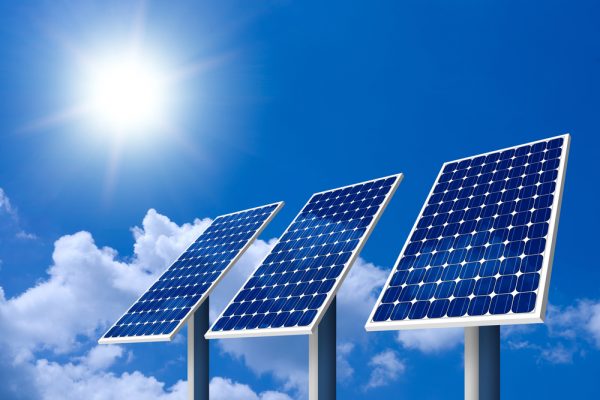
Renewable energy experts and civil society groups have raised fresh concerns over Nigeria’s deepening electricity crisis, warning that the country’s power generation remains grossly inadequate for its population and economic ambitions.
They said Nigeria’s national grid currently generates about 5,000 megawatts for over 200 million people, translating to roughly 24.5 watts per person, barely enough to power a light bulb.
The experts disclosed this in a statement issued on Friday following a media roundtable organised by the Global Initiative for Food Security and Ecosystem Preservation in collaboration with the Secure Energy Project and Power Shift Africa.
They said the current level of power supply was grossly inadequate and incapable of supporting meaningful economic growth.
The Nigeria Campaign Director for the Secure Energy Project and member of the Solar Power Nigeria Coalition, Joseph Ibrahim, said the situation highlights the severity of energy poverty in the country. He described the situation as a major constraint on national development.
He said, “Today we are facing a stark reality that despite being a nation of over 200 million people full of ambition and enterprise, our national grid generates only about 5,000 megawatts, which translates to just about 24.5 watts for an average Nigerian citizen.
“So, if you put that in perspective, it simply means we have power that is just sufficient enough to light up a bulb. That is the level of energy available to an average Nigerian.”
Ibrahim linked the country’s persistent energy poverty to slow economic growth and limited productivity, noting that about 85 million Nigerians still lack access to electricity.
“This is why millions of Nigerians are still living in the dark. Energy is more than electricity; it is the ability to do work. When a nation lacks energy, it lacks the capacity to grow,” he said.
He noted that solar energy has increasingly become a lifeline for businesses and households, particularly in the face of unreliable grid supply. “For a small barbershop in Kano or a tech startup in Lagos, solar is no longer a luxury; it is a necessity,” he added.
Ibrahim, however, cautioned against moves to impose an outright ban on the importation of solar panels, warning that such a policy could worsen energy access challenges if not properly implemented. He said the government should engage in phased banning within a period of three to five years.
“We are not against local manufacturing of solar panels. What we are saying is that we want to see lights in our homes and productivity in our economy. Building a manufacturing industry is like planting a forest. You cannot just command trees to grow; you must prepare the soil. That means stable policies, access to finance, and strong quality standards.
“We believe the best way forward is not a sudden shut-door policy, but a phased roadmap over the next three to five years. If we rush this, we risk making solar power too expensive for the millions who currently rely on it for survival,” he said.
He noted that by taking a phased approach, it will allow time for investors to build their plants, workers to learn specialised skills, and for Nigeria’s economy to adjust without losing power.
Ibrahim said, “Our position is clear: Local manufacturing and energy access must grow together. One should not be sacrificed for the other. We want a Nigeria where the solar panels on our roofs are built by our own hands, but more importantly, we want a Nigeria where no one is left in the dark.
“Nigeria is currently standing at a crossroads that will define the lives of our children and the success of our industries for decades to come. As the world shifts toward sustainable power, we find ourselves asking a fundamental question: How do we ensure that every Nigerian can finally turn on the lights?”
Also speaking, a climate expert at the West African Science Service Centre on Climate Change, Femi Asonibare, said renewable energy should be seen as a complement, not a replacement, to conventional power sources.
“The renewable energy sector is an addition to Nigeria’s power system. It is helping to fill the gap created by deficiencies in the conventional sector, especially given our reliance on hydropower, which is affected by seasonal rainfall patterns,” he said.
Asonibare warned that a sudden ban on solar imports could lead to price hikes and reduced access, as local production capacity remains insufficient.
“The infrastructure for local manufacturing is not fully developed. Without foreign investment and improved policies, prices will rise and affordability will become a major issue. That is why we advocate for a phased approach rather than an immediate ban,” he added.
On his part, the Nigeria National Coordinator for GreenFaith Africa, Lucky Abeng, described energy access as a development and social justice issue. “Millions of Nigerians live without reliable access to energy. This is not just an infrastructure gap; it is a development crisis. It affects healthcare, livelihoods, and even human dignity,” he said.
Abeng stressed the need for inclusive policies that expand access to financing and involve non-traditional stakeholders such as faith-based organisations in the energy transition. “Energy access is not just a technical issue; it is a moral imperative. We must ensure that no community is left behind,” he added.
Data analyst and Founder of AfriEnergy Tracker, Daniel Oladoja, said recent research showed overwhelming public opposition to a potential ban on solar imports. “Over 85 per cent of Nigerians are clearly opposed to the idea of banning solar panel imports at this time. While the government’s intention to boost local manufacturing is commendable, the timing is wrong,” he said.
Oladoja argued that any transition to local production must be gradual and guided by data and long-term planning. “You cannot wake up overnight and ban imports without having sufficient local capacity. It took years to build the Dangote refinery before reducing fuel imports. The same logic should apply here,” he said.
He urged the government to adopt a phased roadmap that gradually increases local manufacturing capacity while maintaining access to imported solar components.
Nigeria’s electricity sector has long struggled with inadequate generation, weak transmission infrastructure, and poor distribution, leaving millions without a reliable power supply.
The signing of the Electricity Act 2023 has opened the door for state governments to develop their own electricity markets, creating opportunities for decentralised and renewable energy solutions.
However, experts say policy uncertainty, particularly around proposals to restrict solar imports, could slow progress in expanding energy access at a time when demand is rising.
They argue that with millions still lacking electricity, scaling up solar and other decentralised solutions remains critical to bridging Nigeria’s energy gap and driving economic growth.


Gunshots Fired Near Trump, US President Rushed To Safety

Shooter fires 5 to 8 shots at White House dinner, Trump evacuated – what we know so far

NERC tackles overbilling, refunds N155m to power consumers

Monarchs, stakeholders hit Okowa over comment on Anioma state creation

2026 World Cup: ‘It would be amazing’ – Rooney names player he’d like to win trophy

Sanwo-Olu, Obanikoro, others celebrate Alebiosu at 90
Wikimedia, Indonesia reach a compromise

 Breaking4 weeks ago
Outrage as video of secondary school students in Benue state str!ping their classmate surfaces online
 News4 weeks ago
I Joined A Cult, Worked So Hard For Demons – Tonto Dikeh Confesses While Ministering (Video)
- News4 weeks ago
Heartbreaking Story Of 300-Level Ekiti University Student Who Was K!lled After Truck Crashed Into His Building (Video)
- World4 days ago
Millionaire's son beheaded and disemboweled on trip with girlfriend to holiday hotspot
- Breaking4 weeks ago
Singer Flavour shows off Italian woman and vows to shower her with so much love that she’ll have no choice but fall in love (video)
- News4 weeks ago
WAEC Releases 2026 WASSCE Timetable (Full List)
- National4 weeks ago
Environmental Sanitation: Lagos meets with LG, LCDA bosses
- Breaking3 weeks ago
Mother Abandons 4 Children with Neighbor and Disappears for Months — Shocking Case Raises Questions