Business
CBN introduces overnight rate to deepen money market

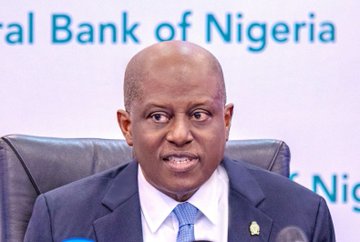
The Central Bank of Nigeria on Friday announced the introduction of the Nigerian Overnight Financing Rate as a new benchmark for the country’s money market, aimed at improving transparency and strengthening monetary policy transmission.
The disclosure was contained in a press statement issued by the CBN’s Acting Director of Corporate Communications, Hakama Sidi-Ali.
According to the statement, the initiative was developed in collaboration with the Financial Markets Dealers Association to deepen the financial system.
“The Central Bank of Nigeria, in collaboration with the Financial Markets Dealers Association, today announced the introduction of the Nigerian Overnight Financing Rate, a standardised benchmark aimed at enhancing transparency, strengthening monetary policy transmission, and deepening Nigeria’s money market,” the statement partly read.
The bank explained that the new rate aligns Nigeria with global standards for short-term interest rate benchmarks and is expected to improve pricing efficiency in the money market.
“NOFR was developed to align Nigeria with global best practices in short-term interest rate benchmarks. It is expected to improve price discovery and transparency while promoting consistent pricing of money market instruments,” it added.
The CBN noted that the benchmark would enhance the effectiveness of monetary policy, support financial innovation, boost investor confidence, and strengthen risk management across the financial system.
It further stated that the introduction of NOFR positions Nigeria alongside global benchmarks such as SOFR in the United States, SONIA in the United Kingdom, €STR in the Eurozone, and TONA in Japan, while also complementing Africa’s JIBAR benchmark in South Africa.
The apex bank disclosed that the benchmark was set following a stakeholder engagement held on February 27, 2026, during which market participants adopted the rate, along with regulatory approval.
It added that the rate is now operational, with the CBN serving as the benchmark administrator responsible for governance, transparency, and regular publication.
“Following a stakeholder engagement session held on February 27, 2026, where market participants formally adopted the benchmark and subsequent regulatory approval, NOFR is now in use, with the CBN serving as the benchmark administrator. The Bank will ensure governance, transparency, and regular publication of the rate,” the statement noted.
Additional details contained in a set of Frequently Asked Questions released alongside the press statement showed that the Nigerian Overnight Financing Rate is designed as a risk-free benchmark that reflects the cost of overnight secured funding in the interbank market, based strictly on actual transactions rather than estimates.
The framework clarifies that the rate is not a monetary policy tool and is distinct from key policy indicators such as the Monetary Policy Rate, but instead serves as a reference point for pricing financial instruments and contracts across the system.
The document further indicates that the benchmark is published daily at 10:00 a.m. on the next business day after transactions are recorded, reinforcing transparency and consistency in market pricing.
For financial institutions, only naira-denominated overnight secured transactions in the interbank market that meet defined thresholds are eligible for inclusion, with the rate computed using a volume-weighted trimmed mean methodology to remove extreme values and ensure accuracy.
It also states that in cases where there is insufficient transaction data, the previous day’s rate is retained and clearly disclosed, a safeguard aimed at maintaining continuity in the benchmark.
The FAQs noted that while the new rate may serve as a reference for certain corporate and structured loans, it does not directly determine borrowing costs, which remain influenced by credit risk, tenor, and contractual terms agreed between lenders and borrowers.
For investors, the rate is expected to play a key role in pricing, valuation, discounting, and risk management of naira-denominated financial instruments, further deepening activity in the domestic money market.
Retail customers, however, will not see direct changes to savings or loan rates, as these continue to be determined by banks based on broader cost and risk considerations, although the improved transparency is expected to strengthen overall confidence in the financial system.
On governance, the document states that any correction to the benchmark would only occur in cases of material error and must be fully disclosed, while the methodology underpinning the rate will be reviewed at least annually by the CBN to ensure it remains robust and aligned with market realities.


Abuja court sentences 76-year-old grandpa to 40 years imprisonment for drug trafficking

Top 5 countries that offer post-study work visas

White House eyes alleged Utah scandal as GOP frets about redistricting loss

Oil drops 9% after Iran says Strait of Hormuz is âcompletely openâ during ceasefire

Chinese researcher pleads guilty to smuggling E. coli into US disguised as women’s underwear

NDPC probes alleged data breach at CAC

Senate passes short-term extension of surveillance law, following House

 Breaking3 weeks ago
Outrage as video of secondary school students in Benue state str!ping their classmate surfaces online
 News2 weeks ago
I Joined A Cult, Worked So Hard For Demons – Tonto Dikeh Confesses While Ministering (Video)
- News3 weeks ago
Heartbreaking Story Of 300-Level Ekiti University Student Who Was K!lled After Truck Crashed Into His Building (Video)
- National2 weeks ago
Environmental Sanitation: Lagos meets with LG, LCDA bosses
- News3 weeks ago
WAEC Releases 2026 WASSCE Timetable (Full List)
- Breaking3 weeks ago
Singer Flavour shows off Italian woman and vows to shower her with so much love that she’ll have no choice but fall in love (video)
- Breaking2 weeks ago
Mother Abandons 4 Children with Neighbor and Disappears for Months — Shocking Case Raises Questions
- World1 week ago
Trump LIVE: Iran war bombshell as Trump could be 'removed from Presidency'