World
CBS News took a boat into the Strait of Hormuz. Here's what we saw.

It took weeks of planning to find a way into the Strait of Hormuz.
We studied maps. Talked through scenarios. How we would get in. How we would get out. Who we could call if something went wrong. And what would happen if we ran into trouble along the way.
Our plan was to reach one of the strait’s narrowest points. Close enough to see, for ourselves, the oil tankers and cargo ships that had been backing up there for weeks.
When a ceasefire between the United States, Israel, and Iran, brokered by Pakistan, came into effect, we made the call. The first round of talks in Islamabad had failed. But the truce was largely holding, and for a moment, the risk felt manageable.
We crossed from one Gulf country into another and eventually found ourselves on a coastal road that felt almost too beautiful for the tensions that lay just offshore.
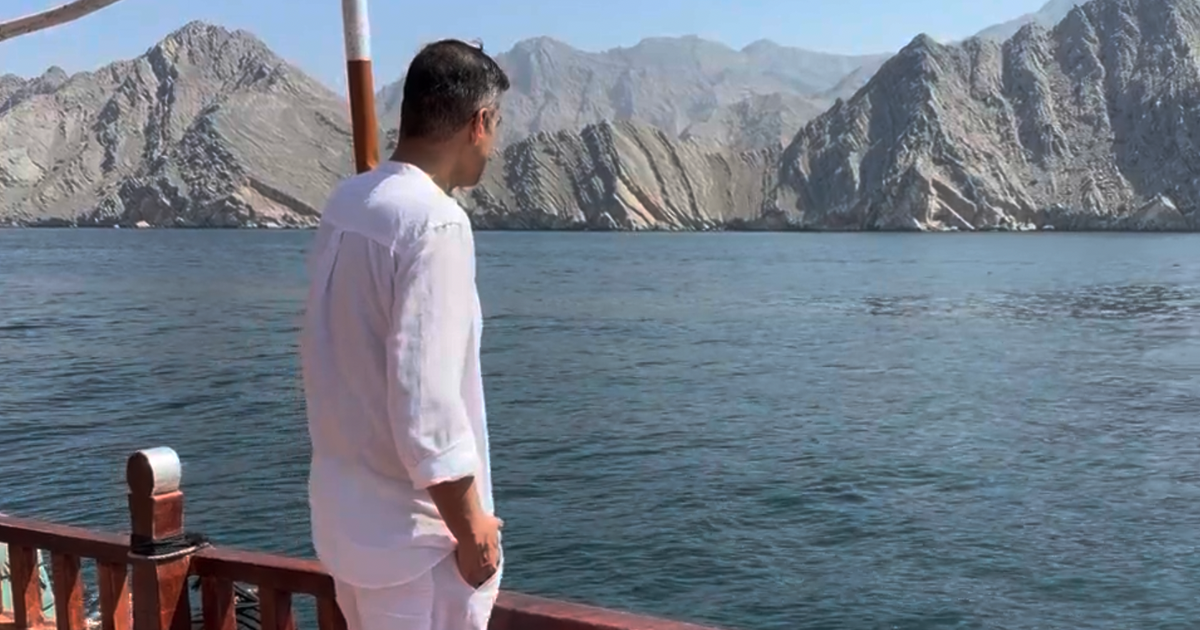
On one side were jagged mountains rising straight out of the earth, completely bare of vegetation. On the other, clear blue water stretched out into the Gulf.
And then, as the road curved, we saw the ships. Not one or two, but dozens. Sitting still. Waiting.
It is easy to forget, looking at that stretch of water, that roughly 20% of the world’s oil passes through it. The strait became a pressure point in the war between the U.S. and Iran, turning into a choke point for the global economy.
Since the violence escalated, access to the waterway has been tightly controlled. Journalists are not meant to be on these waters.
So we tried another way.
At a small port, posing as tourists, we asked around. Quietly.
That is where we met Sharif. His real name is not being used. Sharif is from Egypt and has spent decades working along this coastline. In normal times, he told us, tourists would be lining up for him to take them on trips out to sea. Now, there was almost no one.
After some negotiating, he agreed to take us. We paid $120 for two hours.
His boat was a traditional dhow: wooden, worn, painted brown. The kind that has been used in these waters for generations. Inside, embroidered cushions lined the seats.
We climbed aboard.
Out on the water, the first thing that strikes you is how calm it all feels.
The sea is flat. The coastline dramatic but still. For a moment, it is hard to reconcile what you are seeing with everything you know about what is happening here.
Then the dolphins appeared. They came up alongside the boat and stayed with us, weaving through the wake, rising and dipping in the sunlight.
And then, beyond them, the ships. We did not have to go far to see them. Within minutes, they appeared: Tankers, cargo vessels, all sitting idle.
So we tried another way.
We didn’t dare get to close to them. A police vessel was clearly visible in the distance. But, at one point, a crewman on a what looked like a cargo ship raised his hand.
We waved back.
He flashed a peace sign.
The calm on the strait’s surface does not reflect the reality underneath.
In recent weeks, Iran has moved to assert control over who can pass through the waterway and has reportedly mined part of it. At the same time, the United States has imposed a naval blockade targeting ships entering or leaving Iranian ports, part of a broader effort to pressure Tehran’s own energy exports after negotiations broke down.
The result is not a simple closure. It is something more complicated.


FG instructs ARCON to enforce 45‑day advertisement payment rule

Oyo senator Alli declares governorship bid

Police reject ethnic framing of Nigerian man extradited to UK

Wike visits renovated PDP national secretariat, says party still Nigeria’s main opposition

If you canât take a woman’s excesses, you are not yet a man, you are a boy – Judy Austin’s ex-husband writes after Yul Edochie asked men to dump disrespectful women

Awujale Stool: Again, Police summon kingmakers over alleged bribery

Downing Street defends Starmer’s case over Mandelson revelations with document release

 Breaking3 weeks ago
Outrage as video of secondary school students in Benue state str!ping their classmate surfaces online
 News2 weeks ago
I Joined A Cult, Worked So Hard For Demons – Tonto Dikeh Confesses While Ministering (Video)
- News3 weeks ago
Heartbreaking Story Of 300-Level Ekiti University Student Who Was K!lled After Truck Crashed Into His Building (Video)
- National2 weeks ago
Environmental Sanitation: Lagos meets with LG, LCDA bosses
- News3 weeks ago
WAEC Releases 2026 WASSCE Timetable (Full List)
- Breaking3 weeks ago
Singer Flavour shows off Italian woman and vows to shower her with so much love that she’ll have no choice but fall in love (video)
- Breaking2 weeks ago
Mother Abandons 4 Children with Neighbor and Disappears for Months — Shocking Case Raises Questions
- World1 week ago
Trump LIVE: Iran war bombshell as Trump could be 'removed from Presidency'