National
Dangote Refinery targets $5bn raise in Africa’s largest-ever IPO

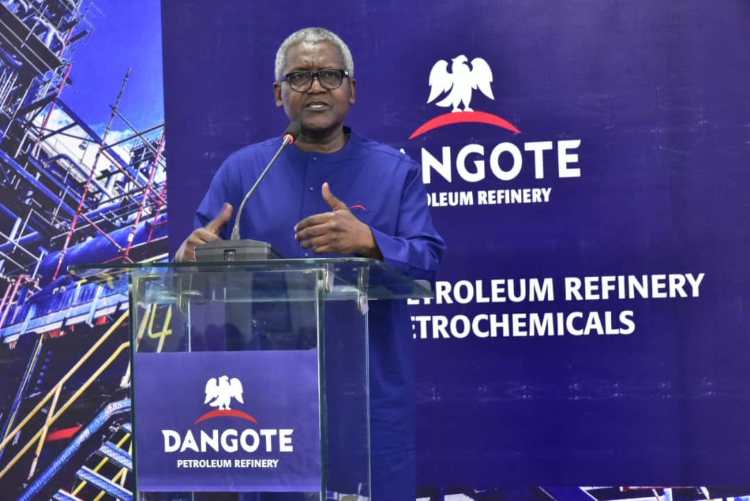
Nigeria’s leading industrialist, Aliko Dangote, is moving ahead with plans to launch what could become Africa’s largest initial public offering, as Dangote Petroleum Refinery & Petrochemicals prepares to raise up to $5 billion from investors.
Naijaonpoint gathered that the share sale could open as early as May, with analysts valuing the company between $40 billion and $50 billion—positioning the listing as one of the most significant capital market events in the continent’s history.
The offer is expected to cover between five and 10 per cent of the company’s equity, creating an opportunity for both local and international investors to participate in Africa’s largest refining project.
Market stakeholders say the planned listing could deepen liquidity and broaden participation across African financial markets, while also serving as a model for cross-border capital mobilisation.
On April 1, the Nigerian Exchange Group and the African Securities Exchanges Association convened senior executives from major exchanges across the continent to discuss the structure of the IPO and ways to improve investor access across multiple jurisdictions.
To drive the offering, the Dangote Group has appointed a consortium of financial advisers. Stanbic IBTC Capital will coordinate international placements and investor relations, while Vetiva Capital Management will handle retail distribution within Nigeria. FirstCap has been mandated to oversee institutional placements, particularly among pension funds.
Located in the Ibeju-Lekki Free Zone, the refinery remains the world’s largest single-train crude processing facility. Built at a cost of $20 billion, it was commissioned in 2023 and began operations in early 2024 after nearly a decade of construction. The plant currently processes about 650,000 barrels of crude oil per day and is ramping up production to meet regional demand.
Operations at the facility have already begun to reshape fuel supply dynamics across Africa, with exports expanding to several countries amid ongoing global supply pressures. The refinery is also producing up to three million metric tonnes of urea fertiliser annually, supporting agricultural productivity across the continent.
Expansion plans are underway to increase polypropylene output, a key input in manufacturing sectors such as packaging, textiles, and consumer goods, further strengthening regional industrial value chains.
Financial backing for the project continues to grow, with the African Export-Import Bank underwriting $2.5 billion of a $4 billion syndicated loan facility. The refinery is also expected to play a significant role in Nigeria’s economy, with projections from the International Monetary Fund indicating it could boost non-oil GDP and strengthen foreign exchange reserves.
Industry estimates suggest the facility has already generated over 150,000 direct and indirect jobs, while also supporting technical training for thousands of engineers.
As production scales up, Nigeria is projected to transition from a net importer of refined petroleum products to a net exporter, with the refinery currently meeting between 35 and 50 per cent of domestic petrol demand.
Meanwhile, regulators, including the Securities and Exchange Commission Nigeria, are reviewing a proposed share structure that would allow investors to purchase shares in naira while receiving dividends in US dollars—a move aimed at attracting foreign participation and reducing currency risk.
The company is expected to file its prospectus this month, followed by a nationwide investor roadshow, with shares likely to begin trading on the NGX main board between June and July, subject to regulatory approvals.
Analysts say the IPO could mark a turning point for Africa’s capital markets by demonstrating the scale of funding that can be mobilised within the continent and strengthening collaboration among regional exchanges.


Nigeria-Morocco Gas Pipeline To Deliver First Product By 2031

Bombshell Iran war update as two-week ceasefire deadline looms

WW3 fears explode as Russia strikes ship near NATO border – huge fireball erupts

Convention: Setback for ADC as event centre proprietor withdraws permission to use facility

Woman dies mid-air on 17-hour-long Qantas flight as police called to 'sudden death'

'Picture abhi baaki hai': Iran's Bollywood jab at Trump amid Hormuz blockade; warns missile boats 'warming up'

China releases terrifying video of soldiers ‘preparing for battle’ after Trump threat

 Breaking2 weeks ago
Outrage as video of secondary school students in Benue state str!ping their classmate surfaces online
 News2 weeks ago
I Joined A Cult, Worked So Hard For Demons – Tonto Dikeh Confesses While Ministering (Video)
- News2 weeks ago
Heartbreaking Story Of 300-Level Ekiti University Student Who Was K!lled After Truck Crashed Into His Building (Video)
- National2 weeks ago
Environmental Sanitation: Lagos meets with LG, LCDA bosses
- Breaking1 week ago
Mother Abandons 4 Children with Neighbor and Disappears for Months — Shocking Case Raises Questions
- News2 weeks ago
WAEC Releases 2026 WASSCE Timetable (Full List)
- Breaking2 weeks ago
Singer Flavour shows off Italian woman and vows to shower her with so much love that she’ll have no choice but fall in love (video)
- World6 days ago
Trump LIVE: Iran war bombshell as Trump could be 'removed from Presidency'