World
Oman: What began as road construction reveals 3,000-year-old graves and rare Iron Age burial rituals

This Video Is Trending Right Now
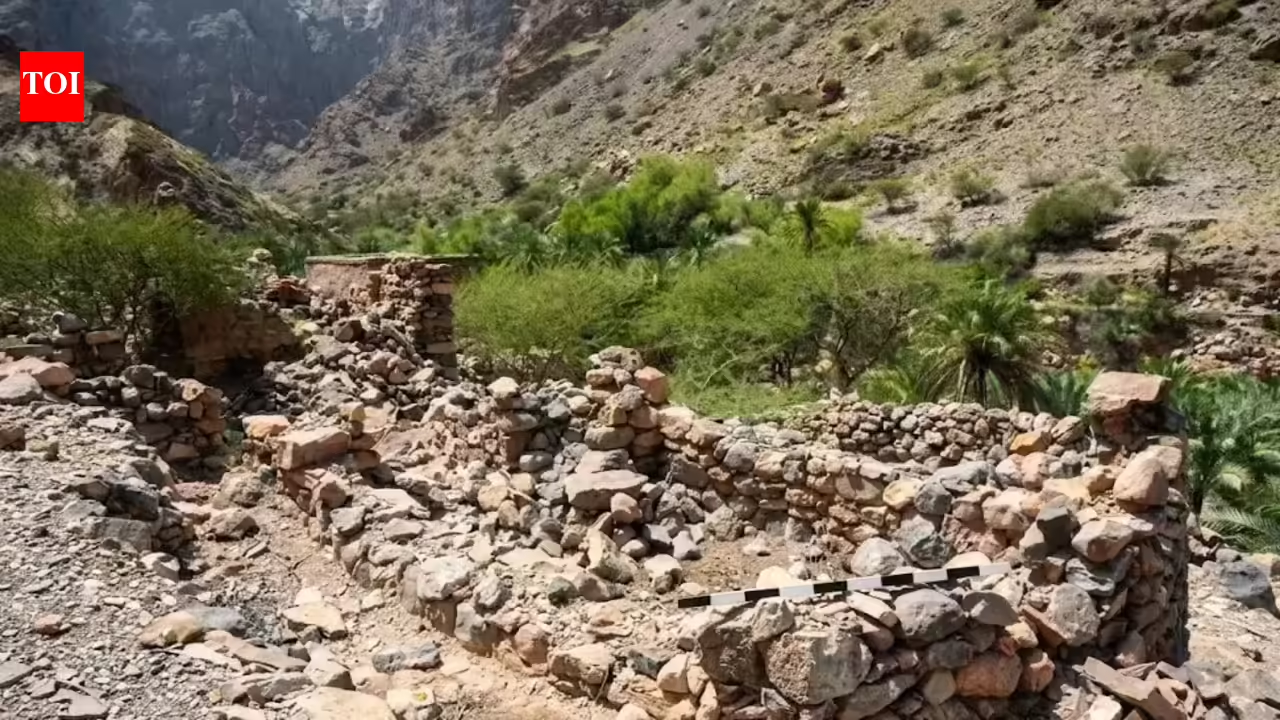
A remarkable archaeological discovery has come to light in Oman, where construction work along a key coastal road in the Al Batinah region led to the unearthing of graves dating back nearly 3,000 years. The find was confirmed by the Oman Ministry of Heritage and Tourism, which immediately intervened to halt construction and secure the site for detailed excavation.Officials say the graves belong to the Iron Age, a period crucial for understanding early human settlement in the Arabian Peninsula. The burial site appears to be a structured cemetery with multiple tombs grouped together, suggesting an organised community once lived along Oman’s coastline.
Ancient graves discovered in Oman
Archaeologists examining the graves found human skeletal remains accompanied by carefully placed objects, offering a rare glimpse into the burial traditions of the time. Pottery vessels were positioned near the deceased, alongside personal ornaments such as beads and decorative items, as well as stone tools believed to hold ceremonial value.Experts from the Oman Ministry of Heritage and Tourism explained that the arrangement of these items reflects a belief system in which the dead were buried with possessions considered important for the afterlife. The variation in burial styles across the graves also suggests differences in status, evolving customs, or distinct family traditions within the same community.This level of detail is particularly significant because well-preserved burial contexts from this period remain relatively rare in the region.
Oman’s role in ancient trade
Authorities highlighted that the graves’ location along the Al Batinah coast is no coincidence. The region historically served as a strategic link between major ancient trade networks connecting the Arabian Peninsula with Mesopotamia, the Indus Valley, and parts of East Africa.According to officials, the discovery provides critical evidence of early human habitation and helps archaeologists better understand how communities in Oman lived, traded, and interacted. The findings are expected to contribute to broader research on cultural exchanges and economic activity during the Iron Age.A spokesperson from the Ministry noted that such discoveries continue to reinforce Oman’s historical importance as a crossroads of civilizations, where maritime trade and settlement patterns shaped early societies.
Looking ahead
Excavation at the site is still ongoing; specialists are carefully documenting every detail to preserve the integrity of the findings. Construction work in the area remains suspended, reflecting the government’s priority to protect archaeological heritage over rapid development.Researchers believe the site may hold further secrets beneath the surface, including additional burial chambers, traces of nearby settlements, and biological evidence that could reveal insights into the ancient population’s diet, health, and daily life.The Oman Ministry of Heritage and Tourism has indicated that the site could eventually be designated as a protected heritage zone, ensuring long-term preservation while opening doors for academic research and potential cultural tourism.


L.A. schools strike averted as deal reached; schools open Tuesday

8 most expensive football trophies in the world

El-Rufai arrives Federal High Court in Kaduna for bail ruling

UEFA reject Barca handball complaint before Atletico return

‘No Chelsea player or fan wants Arsenal to win Premier League’ — Mikel

Trump in 2 painfully awkward moments with delivery driver – 'did you vote for me?'

Obi vows to declare war on terrorists if elected president

 Breaking2 weeks ago
Outrage as video of secondary school students in Benue state str!ping their classmate surfaces online
 News2 weeks ago
I Joined A Cult, Worked So Hard For Demons – Tonto Dikeh Confesses While Ministering (Video)
- News2 weeks ago
Heartbreaking Story Of 300-Level Ekiti University Student Who Was K!lled After Truck Crashed Into His Building (Video)
- National2 weeks ago
Environmental Sanitation: Lagos meets with LG, LCDA bosses
- Breaking1 week ago
Mother Abandons 4 Children with Neighbor and Disappears for Months — Shocking Case Raises Questions
- News2 weeks ago
WAEC Releases 2026 WASSCE Timetable (Full List)
- Breaking2 weeks ago
Singer Flavour shows off Italian woman and vows to shower her with so much love that she’ll have no choice but fall in love (video)
- World6 days ago
Trump LIVE: Iran war bombshell as Trump could be 'removed from Presidency'