News
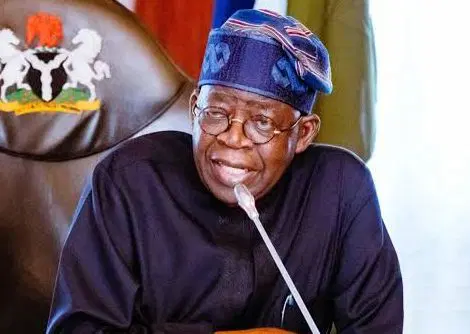
Race for Tinubu’s nod: How ‘Baba Sope Politics’ is shaping next elections

By Clifford Ndujihe, Politics Editor
As Nigeria inches closer to the 2027 general elections, a remarkable wave of political realignments is sweeping the country. Governors, senators, House of Representatives members, and other key political players are abandoning their former platforms to gravitate toward the ruling All Progressives Congress, APC, a movement largely seen as a bid to secure President Bola Tinubu’s endorsement ahead of the next electoral cycle.
The phenomenon is not just a reflection of individual ambition; it underscores the growing perception that Tinubu’s backing could be a decisive factor in the 2027 race, both within APC and across the national political landscape. Analysts describe it as a “high-stakes scramble for influence” that may shape the 2027 polls.
While the APC welcomes the moves and encourages politicians to leave “the sinking ship” that their parties had become, key opposition leaders accused the Presidency and APC of master-minding the “crises” in the opposition to achieve a one-party state and pave the way for President Tinubu’s re-election, next year.
However, the ruling party has distanced itself from the crises and asked opposition leaders to manage their problems and stop pointing the accusing finger to it or the presidency.
Defections wave
Since the beginning of 2026, no fewer than six governors have formally defected to APC, citing ideological alignment, development partnerships with the federal government, and strategic positioning ahead of 2027.
Among the most high-profile moves were Governors Abba Yusuf of Kano State, Umaru Fintiri of Adamawa State, and Dauda Lawal of Zamfara State. Each brought along a significant number of lawmakers and local council officials, dramatically reshaping the political calculus in their regions.
Similarly, senators and members of the House of Representatives have crossed over from opposition parties such as the Peoples Democratic Party, PDP, Social Democratic Party, SDP, and the African Democratic Congress, ADC. Many cited the need for “effective federal collaboration” and “alignment with national policy direction” as reasons for their moves.
The defections have been likened to the Baba Sope Politics which started in Lagos during the time of Tinubu as governor.
The brand of politics, which loosely translates to ‘the anointed one’, relies heavily on the endorsement of Tinubu to assume elected office rather than personal popularity.
After Tinubu vacated office as governor, none of his successors has taken office without his Baba Sope Politics not being in focus.
Interestingly it was the absence of the ‘anointing’ that deprived former Governor Akinwumi Ambode of second term in Lagos as he fell out of favour with Tinubu and his inner caucus members.
As the race for 2027 heats up, it has been said that Deputy Governor Hamzat is the one who has been ‘anointed’ by the president to succeed his boss, Governor Babajide Sanwo-Olu, having ‘waited patiently’ for his turn over the years and served the system with loyalty.
Political observers note that defections we currently experience are more than opportunistic—they represent a carefully calibrated strategy to position aspirants within Tinubu’s inner circle, increasing their visibility and political leverage.
Since the third quarter of 2025, no week had passed without the APC welcoming defectors. Although, the African Democratic Congress, ADC, has also benefited from the defections, the major beneficiary and collector of the lion’s share is the ruling APC followed by the ADC.
Conversely, the PDP, Labour Party, LP, and the New Nigeria Peoples Party, NNPP are the major losers.
What arguably began in 2013 as a coalition of strange bedfellows – forged in opposition and baptised in dissent – has matured and morphed into the most dominant political force of the Fourth Republic.
Today, APC has the presidency, 31 governors, 89 senators and 282 Reps. It has a clean sweep of the 19 governors of South-South, North-Central and North-West geo-political zones, four of six in South-West, three of five in the South-East, and five of the six states in the North-East making altogether 31.
Only five states -Abia, Anambra, Bauchi, Osun, and Oyo are governed by opposition parties. The All Progressives Grand Alliance, APGA(Anambra); Labour Party, LP (Abia) and Accord(Osun) control three while the PDP controls Bauchi and Oyo.
Also with four of the 109 Senate seats vacant on account of three deaths and Senator Jimoh Ibrahim’s appointment as an ambassador, the opposition parties have only 16 seats.
In the House of Representatives, the opposition has 78 of 360 seats.
As it is, the APC has now surpassed what the PDP achieved at its peak.
After the 2003 polls, the PDP reached its zenith of political dominance with 31 governors, 76 senators and 223 members of the House of Representatives. Today, PDP’s hold has shrunk to two governors, 4 senators and 30 Reps.
In comparison, following recent waves of defections the APC is standing astride Nigeria’s political landscape like a colossus.
How the parties stand
Governors
APC 31, PDP 2, APGA 1, Accord 1, and LP 1
Senate
APC now 89; ADC, 9; PDP 4; NDC 1; Accord Party 1, NNPP 1, totally 105, 4 vacant seats
Reps
APC 282, PDP 30, ADC 24, LP 10, APGA 5, Accord 4, APP 2, SDP 2, and NNPP 1
Rush for Tinubu’s endorsement
In Nigerian politics, the backing of an incumbent president, especially one with Tinubu’s clout, is often considered the ultimate political endorsement. For the APC, this is not only about party unity; it is a calculated approach to consolidate influence, manage internal rivalries, and create a pipeline of loyal candidates for governorship, Senate, and House of Reps seats.
Speaking on the matter, a senior political analyst, Dr. Funke Adebola, said, “President Tinubu’s endorsement has become a currency in Nigerian politics. Those who secure it early are better positioned to influence party primaries, mobilize grassroots support, and attract campaign funding.”
The stakes are evident: governors seeking a second term or eyeing the presidency, senators planning for governorship contests, and House members aspiring for higher offices are all strategizing around Tinubu’s influence.
Strategic calculations in key states
The defections are not evenly distributed. States with politically fragmented landscapes such as Delta, Ondo, and Kaduna have seen the highest concentration of crossovers. Analysts explain this as a calculated effort to dominate the party machinery at both the state and federal levels.
In Delta State, for example, two major opposition senators recently joined the APC, bringing with them a network of local leaders and party activists. “This is a clear signal to Tinubu and the APC hierarchy that they are committed to the party’s future agenda,” said a party leader in Delta
Ondo State’s recent wave of defections, including prominent House members, is interpreted as a move to consolidate APC’s base ahead of highly contested governorship elections, ensuring that whoever emerges as Tinubu’s endorsed candidate benefits from unified support.
Implications for party dynamics
The influx of high-profile defectors is causing shifts in APC’s internal dynamics. Party executives at both state and national levels are navigating a delicate balance between welcoming newcomers and managing tensions with long-standing members.
Some party loyalists express concern that the rapid intake of defectors may dilute grassroots cohesion and spark conflicts over candidacy allocations. However, the prevailing sentiment is that Tinubu’s endorsement provides a unifying focal point, capable of smoothing over emerging frictions.
Political strategist Mr. Chike Umeh noted, “The APC is navigating a fine line—absorbing defectors without alienating long-standing party stalwarts. The President’s influence serves as the glue keeping these divergent ambitions aligned, at least for now.”
Broader political trend
While APC is the focal point of this realignment, the trend reflects a broader pattern in Nigerian politics, where the influence of incumbents often shapes the fortunes of parties and candidates. This concentration of power underscores the strategic importance of early allegiance, particularly in presidential and governorship races.
For smaller parties, these defections represent a significant loss of political capital and organizational strength. Analysts warn that the opposition must reinvent strategies to remain competitive, lest APC dominate both the grassroots and elite political networks.
Looking ahead
As the 2027 elections approach, the scramble for Tinubu’s endorsement will likely intensify. Political operatives predict a continuation of high-profile defections, realignments, and coalition-building exercises, with each move carefully orchestrated to gain the president’s nod.
Ultimately, the pattern suggests that beyond ideological affiliations, political survival and influence increasingly hinge on proximity to power—making Tinubu’s endorsement the most coveted prize in the forthcoming electoral cycle.
Observers caution that while this strategy strengthens APC’s electoral machinery, it also raises questions about the health of Nigeria’s multi-party democracy, particularly the capacity of smaller parties to challenge entrenched political networks.
Downplaying the effect that President Tinubu’s endorsement would have on electability of candidates, Professor Pat Utomi, a stalwart of the ADC, challenged the APC to tell Nigerians why it was jittery and allegedly does not want ADC to be on the ballot despite reaping massive defectors.
For now, the message is clear: in the run-up to 2027, alignment with President Tinubu appears as the golden ticket, and the political landscape is rapidly transforming in response to that reality.
Indeed, the 2023 Presidential Candidate of the SDP, Prince Adewole Adebayo, said Nigeria was not facing the threat of a one-party state but that of one-man rule.
How these will pan out in 2027 is a question of time
QUOTE: The brand of politics, which loosely translates to ‘the anointed one’, relies heavily on the endorsement of Tinubu to assume elected office rather than personal popularity






Gunshots Fired Near Trump, US President Rushed To Safety

Shooter fires 5 to 8 shots at White House dinner, Trump evacuated – what we know so far

NERC tackles overbilling, refunds N155m to power consumers

Monarchs, stakeholders hit Okowa over comment on Anioma state creation

2026 World Cup: ‘It would be amazing’ – Rooney names player he’d like to win trophy

Sanwo-Olu, Obanikoro, others celebrate Alebiosu at 90

Wikimedia, Indonesia reach a compromise

 Breaking4 weeks ago
Outrage as video of secondary school students in Benue state str!ping their classmate surfaces online
 News4 weeks ago
I Joined A Cult, Worked So Hard For Demons – Tonto Dikeh Confesses While Ministering (Video)
- News4 weeks ago
Heartbreaking Story Of 300-Level Ekiti University Student Who Was K!lled After Truck Crashed Into His Building (Video)
- World4 days ago
Millionaire's son beheaded and disemboweled on trip with girlfriend to holiday hotspot
- Breaking4 weeks ago
Singer Flavour shows off Italian woman and vows to shower her with so much love that she’ll have no choice but fall in love (video)
- News4 weeks ago
WAEC Releases 2026 WASSCE Timetable (Full List)
- National4 weeks ago
Environmental Sanitation: Lagos meets with LG, LCDA bosses
- Breaking3 weeks ago
Mother Abandons 4 Children with Neighbor and Disappears for Months — Shocking Case Raises Questions