Business
Reforms bolster economy amid March inflation uptick

Ongoing economic reforms are strengthening Nigeria’s resilience, cushioning external shocks and sustaining growth momentum, even as inflation recorded a marginal increase in March due to global pressures, JUSTICE OKAMGBA writes
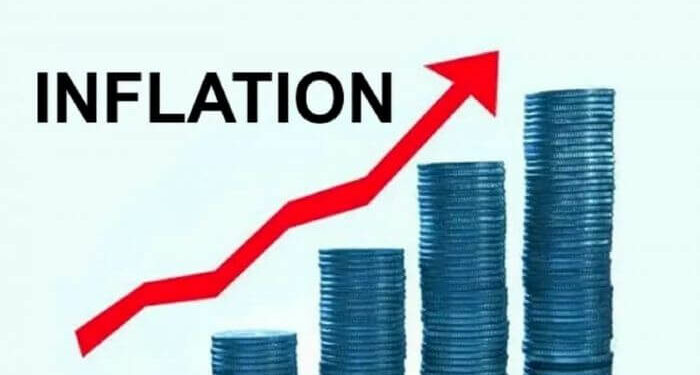
Nigeria’s push toward achieving a single-digit inflation rate seems to remain on track, despite the slight uptick in price levels recorded in March, driven largely by external pressures, including the ongoing crisis in the Middle East and related global headwinds.
Governor of the Central Bank of Nigeria, Olayemi Cardoso, recently expressed confidence that the country will attain a single-digit inflation rate, even as headline inflation rose marginally to 15.38 per cent in March from 15.06 per cent in February. According to him, the economy’s resilience and its ability to withstand global shocks reflect the positive outcomes of ongoing financial sector reforms spearheaded by the apex bank, as well as broader efforts aimed at strengthening the economy.
Inflation is widely regarded globally as a major impediment to economic growth and a significant burden on citizens, particularly those with limited incomes. For Nigeria, however, the reforms implemented over the past two years have strengthened economic fundamentals, positioning the country to better absorb shocks and navigate challenging external conditions.
There is growing recognition both locally and internationally that Nigeria’s economic reforms have enhanced investor confidence. The country is increasingly seen as better equipped to manage external pressures, with improved resilience attributed to deliberate policy actions.
Speaking at the just-concluded International Monetary Fund/World Bank Spring Meetings in the United States, Cardoso noted that the spillover effects from the Middle East crisis, which contributed to the modest increase in inflation in March, have been relatively contained.
He explained that the economy’s capacity to manage these pressures demonstrates the effectiveness of ongoing reforms, including exchange rate stabilisation, stronger foreign reserves, and a more robust monetary policy framework.
Cardoso said, “We are not relenting on continuing to build resilience and also to stay the course with respect to something we have constantly been talking about, and that is bringing down inflation to single digits. In spite of all that is going on, we will stay that course.”
Data released by the National Bureau of Statistics, under the leadership of the Statistician-General of the Federation and Chief Executive Officer, Prince Adeyemi Adeniran, showed that Nigeria’s headline inflation rate increased to 15.38 per cent in March 2026, up from 15.06 per cent in February.
The March figure represents the first increase recorded in 12 months, following a steady decline that began in April 2025. According to the NBS, “The Headline inflation rate rose to 15.38 per cent, up from 15.06 per cent in February 2026 and stood 27.35 per cent in the same month of the preceding year (March 2025).”
The bureau further indicated that the headline inflation rate rose by 0.32 percentage points compared to the February 2026 figure. On a month-on-month basis, inflation stood at 4.18 per cent in March, representing a 2.17 percentage point increase from the 2.01 per cent recorded in February.
In response to the emerging pressures, President Bola Tinubu directed economic managers to implement measures aimed at cushioning the impact of the Middle East crisis on Nigerians.
The CBN has maintained that its policy interventions are beginning to yield results, with structural reforms gradually permeating the broader economy. These reforms, the bank noted, are helping to stabilise the naira and ease lending rates, even as inflation trends downward over the medium term.
According to the apex bank, its monetary policy stance reflects a deliberate and coordinated strategy to restore macroeconomic stability after years of fiscal imbalances and external vulnerabilities.
The bank’s leadership has remained focused on strengthening the financial system, with declining lending rates emerging as one of the tangible outcomes of its policy direction.
The CBN also emphasised the importance of aligning fiscal and monetary policies, particularly at a time when technological advancements and digital finance are reshaping the financial ecosystem.
Under Cardoso’s leadership, the bank has taken steps to diversify sources of foreign exchange, with the aim of boosting dollar inflows and improving access to foreign currency for manufacturers and retail users.
Key initiatives include efforts to enhance diaspora remittances through new financial products, licensing additional International Money Transfer Operators, implementing a willing buyer-willing seller foreign exchange model, and ensuring timely access to naira liquidity for IMTOs.
These measures have simplified the process of foreign exchange inflows for authorised dealers and other stakeholders, leading to significant growth in gross foreign reserves and contributing to exchange rate stability.
Recognising the strategic importance of foreign exchange inflows in achieving both monetary and fiscal stability, the CBN has intensified efforts to attract more inflows into the economy.
Diaspora remittances, estimated at approximately $23bn annually, remain a key and reliable source of foreign exchange. In addition to this, the apex bank continues to explore other channels and policy options to sustain and expand inflows.
Cardoso disclosed that Nigeria receives about $600m monthly from diaspora remittances. He added that recent improvements, including lower inflation, greater stability in the foreign exchange market, and stronger reserves, have enhanced investor confidence and encouraged capital inflows.
World Bank, IMF react
The International Monetary Fund has also commended Nigeria’s economic policies, noting that domestic reforms are producing visible and measurable results.
Director of the IMF’s African Department, Abebe Selassie, made this known during the presentation of the Regional Economic Outlook for Sub-Saharan Africa at the Annual Meetings in Washington, DC.
He observed that the impact of sound policy decisions by Nigeria’s fiscal and monetary authorities is becoming increasingly evident, with reforms and stabilisation efforts creating conditions conducive to stronger growth and lower inflation.
Selassie highlighted exchange rate adjustments following foreign exchange market reforms, as well as the reduction in fuel subsidies, as key policy measures that have addressed long-standing macroeconomic imbalances and laid the groundwork for sustained growth.
He said: “Countries such as Nigeria have reaped the benefits of macroeconomic reforms, exchange rate realignments, subsidy reduction, and strength in monetary policy frameworks. In short, 2025 was a year of hard- won stabilisation gains, and policymakers across the region deserve credit for achieving them.”
However, Selassie pointed out that the ongoing conflict in the Middle East represents a significant new external shock, with rising prices for oil, gas, and fertilisers, alongside increased shipping costs.
He noted that trade with Gulf partners has been disrupted, while tourism and remittance inflows are under pressure. Financial conditions have also tightened, particularly for countries that rely on fuel imports.
Selassie emphasised that current policy choices across the region will play a critical role in shaping Africa’s economic trajectory. He reiterated the IMF’s readiness to support countries with financing and policy guidance.
According to him, the key issue is not whether Nigeria borrows domestically or externally, but whether it can maintain debt at sustainable levels relative to its capacity to service that debt. He advised the country to undertake liability management operations to optimise its borrowing strategy.
Selassie further noted that Sub-Saharan Africa entered 2026 on the back of hard-earned stabilisation gains achieved in 2025. Economic activity strengthened across the region, with growth estimated at about 4.5 per cent, the fastest pace in a decade.
He explained that inflation declined towards the end of 2025, supported by lower global food and oil prices, reduced exchange rate pressures, and appropriately tight monetary policies in many countries.
Fiscal positions also improved, benefiting from stronger growth and favourable exchange rate movements. However, the Middle East conflict has introduced new uncertainties, affecting trade, tourism, and remittance flows.
Selassie said regional growth is projected to reach 4.3 per cent in 2026, slightly below earlier forecasts, with varying outcomes across countries. Oil-importing economies are likely to face worsening trade balances and higher living costs, while oil exporters may benefit from increased export revenues, albeit with exposure to volatility.
He added that median inflation in the region is expected to rise to 5.0 per cent by the end of 2026, up from 3.4 per cent at the end of 2025.
Social indicators, including poverty and food security, may also deteriorate due to rising food prices and declining foreign aid.
The IMF estimates that a 20 per cent increase in global food prices could push over 20 million people in the region into moderate or severe food insecurity.
World Bank Group Chief Economist for the Africa Region, Andrew Dabalen, stressed the importance of well-designed industrial policies in driving productivity and job creation.
He noted that such policies must be grounded in a realistic assessment of each country’s opportunities and constraints, supported by strong implementation capacity, and integrated into broader economic ecosystems.
These ecosystems, he said, should include reliable infrastructure, skilled labour, access to finance, and regional market integration.
“Getting industrial policies right in Africa will depend on disciplined policy implementation, promoting economic activities rather than firms, clear performance benchmarks, credible exit strategies, and deeper regional integration, including through the African Continental Free Trade Area. Without these foundations, industrial policy risks creating ineffective isolated enclaves rather than broad-based economic transformation,” he said.
Economist speaks
On the domestic front, Prof ‘Abiodun Adedipe, founder and Chief Consultant of B. Adedipe Associates Limited (BAA Consult), identified several policy shifts that are contributing positively to the economy.
He noted that foreign exchange market reforms have eliminated opportunities for arbitrage and round-tripping, while the removal of petrol subsidies has reduced significant fiscal burdens and encouraged competition.
Adedipe also highlighted bank recapitalisation efforts, which are expected to strengthen the financial sector’s capacity to support the ambition of building a $1tn economy. He added that fiscal consolidation measures are improving accountability, reducing leakages, and expanding fiscal space at the sub-national level.
According to him, tax reforms remain a critical driver of economic transformation, with the potential to stimulate regional competition. He also pointed to initiatives such as the Nigerian Education Loan Fund, the Consumer Credit Corporation, the recapitalised Bank of Agriculture, the National Credit Guarantee Company Limited, and plans for single-digit mortgage rates as important steps toward sustainable growth.
Adedipe further underscored the structural strengths of Nigeria’s domestic economy, including its large and youthful population, estimated at 237.53 million as of July 2025, making it the sixth largest globally, with a median age of 18.1 years.
He noted that rapid urbanisation is also shaping the economy, with urban population rising significantly over the past decade. Additionally, increasing internet penetration and improved telecommunications infrastructure are supporting economic activities and digital transformation.
Nigeria’s tele-density stood at 79.65 per cent in May 2025, reflecting continued expansion in connectivity, despite adjustments due to data clean-up exercises.
Adedipe added that Nigeria ranks 11th globally in internet users, with about 123 million users, and 7th in mobile internet usage, with over 84 per cent accessing the internet via mobile devices.
He observed that local oil refining capacity is expanding, manufacturing activities are gradually rebounding, and there is growing interest in non-oil exports. Improvements in infrastructure are also expected to reduce the cost of doing business over time.
According to him, sustained and deep reforms will enhance Nigeria’s global competitiveness, improve the ease of doing business, reduce inefficiencies, and limit opportunities for economic rent-seeking.


Lagos couple beats adopted daughter to death

My talks with Jonathan anchored on repositioning Nigeria – Obi

Late singer Michael Jackson biopic opens atop North America box office

How much do you know about the events that shook Nigeria on the Night of June 7th 2005?

Who is Fred Liu? Evelyn Ha’s ex boyfriend backs Ben Pasternak’s claims and alleges past abuse details

US First Lady Melania Trump demands ABC fire show host Jimmy Kimmel over ‘hateful’ monologue

4/27: The Takeout with Major Garrett

 World1 day ago
Trump abruptly cancels peace talks with Iran in Pakistan: "We have all the cards"
- World1 day ago
Alleged gunman wrote that he expected more security at White House Correspondents' Dinner
- World10 hours ago
Trump humiliated as major NATO leader tears apart US plan in Iran war
- Breaking3 days ago
Nigerian Army recovers remains of slain personnel k!lled while travelling to Imo for their traditional wedding
- World2 days ago
Donald Trump rushed to safety after suspected gun shots at White House dinner
- Business1 day ago
Dangote refinery 1.4mbpd expansion to create 95,000 jobs
- World15 hours ago
Adult content creator accused of using 5-year-old girl to attract men for cash
- Breaking3 days ago
Suspected terrorist spy arrested at Yobe airport