Business
Afreximbank records 25% growth in Q1 profit

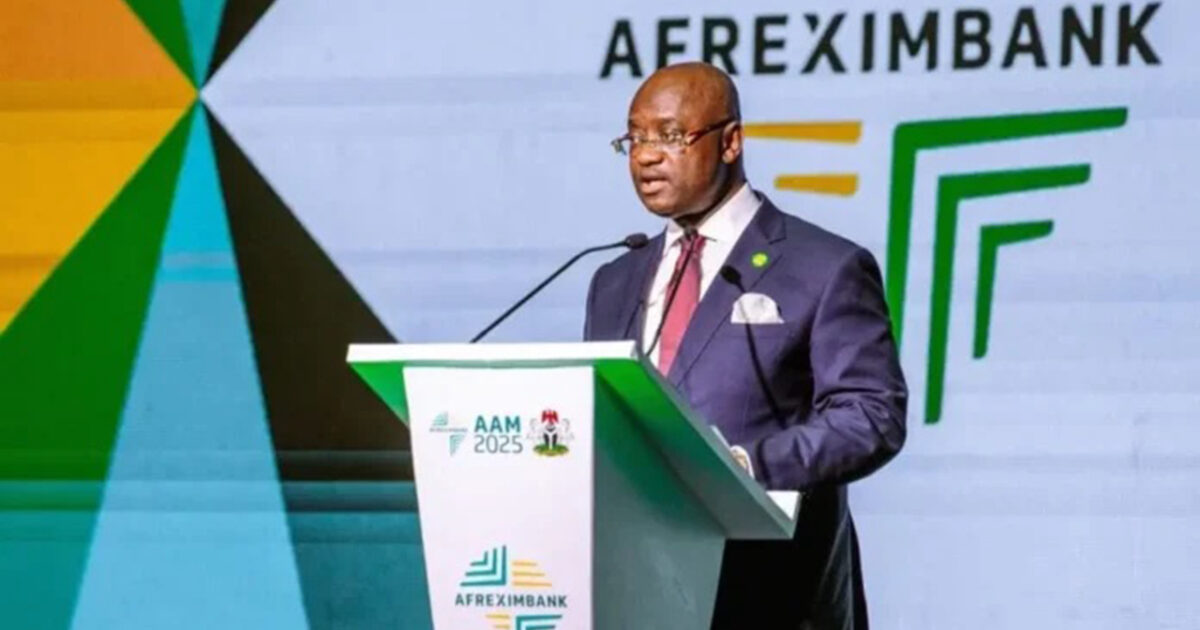
The African Export-Import Bank has announced a 25 per cent growth in net income for the first quarter of 2026, driven by strong lending activities, disciplined balance sheet management, and improved profitability.
“This performance underscores the bank’s resilience and strong deal execution capabilities within a challenging global operating environment,” the bank’s Communications and Events Manager, Vincent Musumba, stated on Friday, 22 May 2026, via a statement.
According to the group’s financial results for the three months ended 31 March 2026, the Pan-African multilateral financial institution expanded its lending activities, resulting in a two per cent increase in total credit exposure. The portfolio reached $42bn in the first quarter of the year, up from the $42bn, up from the $41bn recorded as of 31 December 2025.
Management attributed this expansion to its central role as a leading Development Finance Institution supporting cross-border trade and trade-enabling infrastructure across Africa and the Caribbean.
“Our targeted intervention strategies continue to cushion member states against external shocks while creating structured liquidity pipelines to sustain infrastructure projects,” Musumba noted.
The financial statement further revealed that net interest margins remained robust during the period under review, supported by a disciplined approach to asset pricing and cost of funds optimisation despite high international interest rates.
Looking ahead, the bank noted that it would continue to prioritise key structural initiatives, including the operationalisation of the African Continental Free Trade Area adjustment fund and the expansion of its digital payment ecosystems, to drive long-term intra-African trade value.
The bank’s performance comes at a time when intra-African trade is gaining momentum under the AfCFTA. Afreximbank serves as the main financial backbone for this initiative, notably anchoring the Pan-African Payment and Settlement System and the AfCFTA Adjustment Fund, which helps countries transition into the tariff-free regime.
The first quarter of 2026 saw persistent global economic pressures, including elevated interest rates from central banks like the US Federal Reserve, volatile commodity prices, and currency fluctuations across major African economies (such as the Nigerian naira and Egyptian pound). Achieving 25 per cent net income growth demonstrates robust structural risk management against these factors.


US strikes Iran, drawing retaliatory attack on American base

Putin's mouthpiece calls for strike on Britain in horror rant as he mocks UK food

Lagos customers urged to report electricity issues to LASERC

Railway station built by Britain in 1856 to reopen after £700,000 refurbishment

Tinubu’s daughter alleges irregularities in Lagos APC primaries, threatens protest

Aondoakaa emerges Benue PDP governorship candidate, names running mate

Police arrest two suspected Sara-Suka cult members, recover weapons, hard drugs in Plateau
- National2 days ago
Fallen Nation: While Terrorists Kill Nigerian Soldiers, General Bolaji Salami Builds Hotel and Laugh
- Breaking3 days ago
Repentant Boko Haram members are given N3m payoff after rehabilitation and placed on monthly salary of N50,000- man whose father was k!lled by the insurgents alleges (video)
- World2 days ago
Iran 'downs US drone' and 'shoots at American F-35 jet' as WW3 fears explode
- National3 days ago
Breaking: Eid-ul-Adha: FG declares two-day public holiday
- World2 days ago
WW3 fears explode as European countries ask for help
- Breaking2 days ago
Family of behe@ded Oyo teacher pleads with President Tinubu for personal intervention, visit and recovery of his remains
- Breaking3 days ago
Oyo Abductions: Nigerian man criticizes First Lady Remi Tinubu âsilence,â compares situation to Patience Jonathanâs 2014 outcry
- National2 days ago
Dollar to Naira exchange rate today, May 25, 2026: Nigerian currency begins week on positive note

