News
Children’s Day of gloom

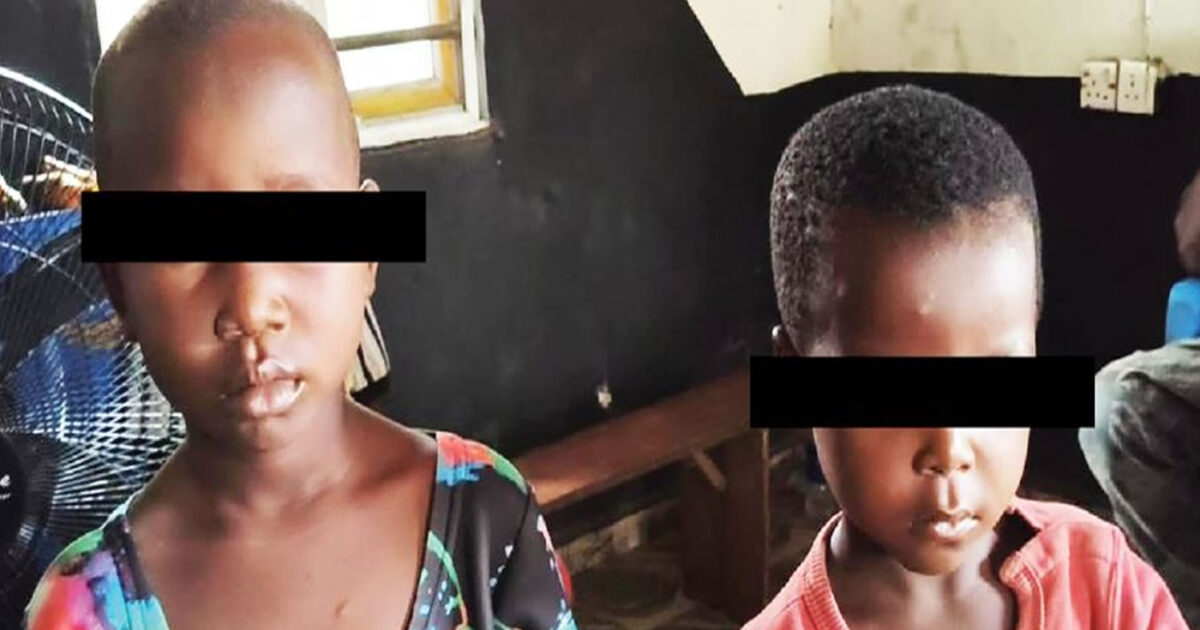
NIGERIA was shrouded in gloom as it marked the 2026 Children’s Day on May 27.
A day meant to celebrate and inspire the leaders of tomorrow, nurture their creativity, strengthen their dreams, and prepare them for the future, was instead overshadowed by mourning, fear, and despair.
As children across the country celebrated, 88 of their peers remained in captivity, abducted by terrorists in Oyo and Borno states on May 15.
On that day, Boko Haram terrorists stormed Mussa Primary and Junior Secondary School in Askira/Uba Local Government Area of Borno State and kidnapped 42 students and pupils.
While Borno reeled from the attack, gunmen struck in Oriire LGA of Oyo State, invading Baptist Nursery and Primary School, Yawota; Community Grammar School, Esiele; and L.A. Primary School, abducting 46 children and teachers, including toddlers.
The assistant headmaster of L.A. Primary School, Joel Adesiyan, and a commercial motorcyclist were killed during the operation. The school’s mathematics teacher, Michael Oyedokun, was later beheaded in captivity.
Thus, on Children’s Day, after 13 agonising days in captivity, 88 Nigerian children, including two-year-olds and four-year-olds, who should be safely under their mothers’ care, remained trapped among bloodthirsty terrorists, with guns pointed at innocent heads, languishing in deplorable conditions deep inside forests.
They endure chilling weather, torrential rains, scorching heat, blood-sucking mosquitoes, and lurking reptiles. It is a national tragedy of monumental proportions.
The cries of these children should haunt every level of government and governance. They are indelible scars on the country’s security architecture and a stain on Nigeria’s collective conscience.
More than two weeks after their abduction, the government’s response has been heavy on rhetoric and light on action.
There has been no visible, coordinated, and workable strategy to flush out these criminals and rescue innocent children whose only “crime” is seeking an education that could one day benefit their country.
Meanwhile, the grief-stricken and helpless families of the kidnapped have largely been abandoned to their fate.
Media reports indicate that the terrorists also killed two people who attempted to deliver ransom to them.
These senseless killings and the government’s lethargic response have shredded the theme and spirit of the 2026 Children’s Day celebration: “Future Now: Promoting Inclusion for Every Child.”
For these children, hope has become hollow, and President Bola Tinubu’s pledge to build “a nation where every child can dream boldly, grow safely, learn freely, and succeed honourably” rings painfully distant. Many of the country’s supposed “pride of the Republic” are instead being held hostage.
Thousands of Nigerian children have been kidnapped since the 2014 Chibok abductions, when terrorists seized 276 schoolgirls, placing them far beyond the reach of any meaningful “Future Now.”
Leah Sharibu, one of the victims of the February 2018 Dapchi abductions, remains in captivity, cruelly separated from her dreams and repeatedly failed by a government that ought to offer her hope.
Hordes of children abducted from Borno, Kwara, Niger, Zamfara, Sokoto, Kaduna, Kogi, and Kano states are still missing. Estimates suggest that terrorists are holding more than 7,000 Nigerians, including children, women, and traditional rulers, in captivity across seven states.
Insecurity is steadily stealing the future from the country’s future leaders. Indeed, since the Chibok tragedy, Children’s Day has become a shadow of itself, while successive governments appear to look the other way.
Amnesty International and Save the Children estimate that about 1,700 schoolchildren have been abducted in mass school kidnappings across Nigeria since the April 2014 Chibok incident.
According to the 2023 National Bureau of Statistics report, of the 1,134,828 displaced persons in Nigeria, 50.2 per cent are minors below 18 years, while 49.7 per cent are adults.
Vice-President Kashim Shettima has said that more than 100,000 Nigerians have been killed in the Islamic insurgency, a grim indication that thousands of children have been orphaned.
Yet the ordeal of Nigerian children extends far beyond terrorism. From pregnancy to birth, infancy to adolescence, from education to healthcare, security to nutrition, children in Nigeria increasingly resemble an endangered species. For many, living is a struggle and survival an ordeal.
The education sector starkly reflects this bleak reality. While other countries place their children on the fast lane to education, innovation, and technology, Nigeria has a staggering 18.3 million out-of-school children, the equivalent of the combined populations of Oyo, Osun, and Ogun states.
Even those fortunate enough to attend school often do so under appalling conditions. Qualified teachers are grossly inadequate and scandalously underpaid. Educational facilities are desperately lacking. Classrooms are dilapidated. Many children learn sitting on bare floors or under trees.
Public schools, once the bedrock of education from the pre-independence era through the 1970s, have fallen into alarming decline.
Private schools have filled the vacuum, even in the South-West, long regarded as the country’s educational stronghold.
Of Nigeria’s 309 universities, 168 are privately owned, while only 141 are public institutions.
The health indicators are equally troubling. According to the WHO and UNICEF, Nigeria’s infant mortality rate ranges between 52.6 and 69 deaths per 1,000 live births. The under-five mortality rate stands at 102 deaths per 1,000 live births, among the highest in the world.
The most populous Black country on earth also records the highest malnutrition rate in Africa and the second highest globally. UNICEF estimates that about two million Nigerian children suffer from Severe Acute Malnutrition and reports that 32 per cent of children under five are stunted.
Undoubtedly, the joy of childhood has been stolen from many Nigerian children. Insecurity has turned family holidays into a luxury. Amusement parks stand deserted. The toys and experiences that make childhood memorable are beyond the reach of millions.
Children are also increasingly vulnerable to food poverty. A crate of eggs now sells for about N6,000, up from N900 in 2023. Even children’s biscuits now cost about N100 each.
The worsening economic crisis has transformed many children from dependants into economic actors.
Across the country’s highways and streets, children, including minors, hawk goods daily to supplement family incomes.
Sadly, politicians continue to dance on the misfortune of the very children they were elected to protect and empower.
While 88 kidnapped children groan in the forests, politicians carry on with business as usual, boasting, scheming, and quarrelling over party primaries.
The contrast is as painful as it is indefensible. The 2025 Monthly Consolidated Budget Performance report on the Open Treasury Portal shows that the Presidential Fleet received 97.76 per cent disbursement, while funding for fuelling the fleet was fully released.
By contrast, fuelling for Air Force jets tasked with combating insecurity received near-zero per cent disbursement.
As citizens battle poverty and hunger, the political elite luxuriate in opulence, sending their children to schools abroad and moving about in endless convoys funded by the taxpayer.
Yet societies thrive only when the government cares for the majority, especially the vulnerable. Governments are ultimately judged by how they protect and provide for the weak.
To be fair, the government recognises the scale of the problem and has initiated some interventions. One such programme, the Safe Schools Initiative, designed to protect students, teachers, and educational facilities from violence, kidnappings, and natural disasters, has fallen far short of its objectives.
In March 2025, then Inspector-General of Police Kayode Egbetokun promised a technology-driven strategy to secure schools. His successor, Olatunji Disu, has similarly pledged commitment to safer schools nationwide. The police must move beyond promises and deliver results.
Governments at all levels should declare total war on the terrorists. Beyond aerial bombardments, the Federal Government and the states must work together to secure forests and permanently dislodge insurgents from their sanctuaries.
President Bola Tinubu must fulfil his promise to rescue the kidnapped children.
Nothing would restore meaning to Children’s Day more than bringing them home alive.







City Boy Movement terminates coordinator’s appointment ahead of 2027 elections

Ooni of Ife hosts grand christening for twin sons

Abia to introduce 59 football stars to European clubs, Nigerian League

I thought it was a toy gun: Indian man in Canada says he had no idea his friend was working for Lawrence Bishnoi

2027: NDC endorses Obi, names Kwankwaso as running mate

2027: Tinubu undermining democracy, afraid of free and fair elections – Atiku declares

US says it is 'more than capable' of resume war with Iran as talks remain unresolved

 Breaking3 days ago
Last-minute power game deepens as Kwankwaso plans to unveil Comrade Abdussalam as Kano NDC governorship candidate
- Politics3 days ago
Children’s Day: No casualty recorded from Ogbemudia stadium incident – says CMD
- World2 days ago
NATO issues major statement after Russian drone strikes European flats as tensions erupt
- Breaking13 hours ago
Nigeria confronted with outcomes of institutional neglect — Tunde Bakare
- World13 hours ago
Trump lashes out after removal of his name from Kennedy Center- 'System is rigged'
- News13 hours ago
Seyi Makinde clinches APM presidential ticket
- News13 hours ago
Liverpool confirm exit of head coach Arne Slot
- Business3 days ago
FMDQ debt market size hits N118.29tn