News
Why Nigeria may not produce female president soon — Women advocates

As party primaries of political parties in Nigeria come to a close, the absence of female presidential and gubernatorial candidates from major political parties has further confirmed that women remain missing at the highest level of political participation in the country.
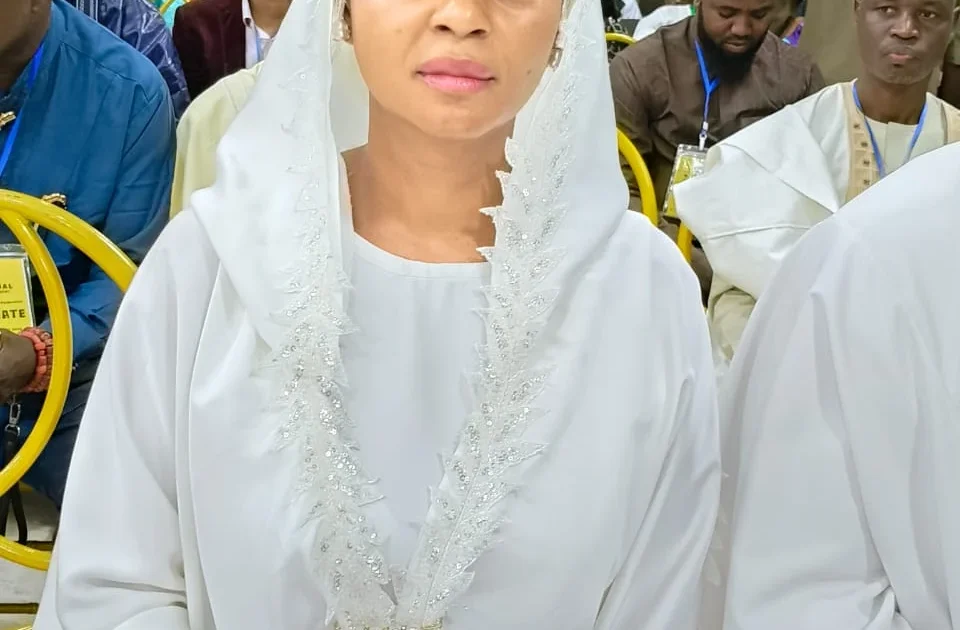
However, a Nollywood actress, Esther Okereke, was on Friday evening, presented as the National Rescue Movement’s presidential candidate for the 2027 general election, making her the only female presidential candidate so far in the 2027 election cycle and sole-female challenger of the incumbent president.
Leading legal and women’s rights advocates exclusively told PidomNigeria Healthwise that women’s exclusion from Nigeria’s political leadership has persisted because of entrenched party politics, political violence, poor funding, godfatherism, and weak implementation of gender inclusion policies.
The advocates further stated that despite years of advocacy, affirmative action campaigns and existing gender policies, women remained grossly underrepresented in elective positions, particularly at higher levels of governance.
They argued that the absence of women in top political offices is not because women lack capacity, but because the political system remains male-dominated.
They also expressed concern that although Nigeria is signatory to several international agreements promoting gender equality and affirmative action, women are still being “supported, not empowered,” with political parties failing to invest in female candidates or create inclusive structures.
The leading women called for deliberate reforms to increase female participation in politics, including the passage of laws mandating reserved seats for women, stronger enforcement of gender inclusion policies, and internal party reforms to ensure fairness and transparency.
They also demanded greater financial support for female candidates, an end to political violence, cyberbullying and godfatherism, as well as stronger collaboration among women groups and male allies to remove barriers limiting women’s participation in governance.
They further stressed that Nigeria can produce a female president if political, cultural and structural obstacles are addressed, asserting that women should be given more opportunities to contest for executive positions, including vice president and deputy governor roles, while political parties must intentionally support and invest in female candidates.
Party primaries, according to the Independent National Electoral Commission revised 2027 election timetable, held from April 23 to May 30, 2026.
An analysis of the primaries showed that the presidential candidates of major political parties are all men.
Further checks of the gubernatorial candidates showed that while about five women across several states in the country declared intent for the position, all declared candidates so far, in Lagos, Rivers, Niger and Ogun State are all men.
The current trend seems to align with historical patterns where Nigeria has never had a female president, vice president or an elected female governor.
PidomNigeria Healthwise reported that the United Nations Entity for Gender Equality and the Empowerment of Women, also known as UN Women, on Tuesday raised concerns over low female political representation ahead of the 2027 general elections in Nigeria and called for urgent reforms and inclusive governance.
The organisation further noted that women’s exclusion was not about competence or qualification, stressing that Nigeria has more than enough capable women to drive development not only within the country but across Africa.
Commenting on the matter, the Country Vice President of the International Federation of Women Lawyers Nigeria, Eliana Martins, described the current situation as “most unfortunate,” noting that women continued to face systemic barriers despite constitutional guarantees and international commitments supporting gender equality.
The legal luminary stated that although women had constitutional and political rights to participate in governance, the reality within political systems remained exclusionary.
“We must acknowledge that it is important for women to strive, that it is part of their constitutional rights, they have political rights, and as a fundamental prerequisite to being a Nigerian, they are entitled to participate,” Martins stated.
She noted that women’s underrepresentation was not limited to politics alone but extended across leadership spaces.
“While we acknowledge that women’s political rights help them to have better engagements, to be part of leadership, to be part of decision making and governance, while that is our desire, we see that they continue to be underrepresented on many levels, not only in the political sphere,” she said.
Martins identified lack of inclusiveness, lack of transparency in party processes, vote-buying, cyberbullying, violence against women and inadequate funding as some of the barriers discouraging women from active political participation.
The lawyer further stated that women were disadvantaged by entrenched political structures and cultural stereotypes, questioning their competence.
“We see issues of lack of inclusiveness in most processes. We see a lack of transparency, even at the party level. The primaries are characterised by buying of votes, by bullying, violence against women.
“Even online, where they can use online platforms, you see that cyberbullying is going on. All levels of manipulation and falsehood online are being carried out against them.
“We stereotype women, our biases, our prejudices against women and their capacity, also limit women’s inclusion,” she noted.
She further noted that although Nigeria is signatory to several international instruments, like the Beijing Declaration and Platform for Action, requiring women to have at least 30 per cent affirmative action, these challenges persist.
FIDA’s Country Vice President called for stronger legal backing for women’s inclusion through reserved seats and affirmative action laws.
“We need to push for that law to come into play. That’s the legislation on the reserved seats before the National Assembly. We need to drive that aggressively and see that that law is passed,” she stated.
Martins also urged women to build stronger networks and collaborate with male allies to push reforms.
“We need to be a bit more proactive and intentional about what we’re doing. That definitely means women working together, women supporting women, better collaboration between women networks,” she said.
The FIDA vice president further called on political parties to adopt internal structures that guarantee parity.
“When women come on, they need to, within their own party structures, adopt systems that allow across board, right from the bottom right up to the top. Parity within the party structure,” she added.
She also advocated mentorship, capacity building, access to justice and financial support for female politicians.
“We need to remove institutional barriers that limit or handicap women from moving forward and growing up and all of that.
“The women have a fund that they can fall back on and say, okay, I need some quick funds to be able to do this and do that,” Martins said.
The Co-Founder of Voice of Women Empowerment Foundation, Toun Okewale Sonaiya, said Nigeria’s poor record on women’s political inclusion reflected a wider systemic problem.
The women’s rights advocate noted that while there was no constitutional barrier preventing women from contesting for the presidency, structural challenges within politics made participation difficult.
“The short answer is that it is not impossible. It is possible. Yes, we have not had a female president yet. But we know that the barriers are political, social, and structural, and it is not illegal,” she stated.
She stressed that the major obstacles included expensive party politics, male-dominated party structures and political violence.
“Presidential elections in Nigeria are expensive. Campaigns cost billions of naira. Party primaries are often controlled by male-dominated party structures. Women get less access to funding,” Sonaiya said.
She also said the political environment remained hostile to women.
“In Nigeria, general elections are a highly speculative business. Political violence scares off women, and it also makes party leaders hesitate to give women the party ticket,” she stated.
Sonaiya further linked women’s poor representation to the absence of women in executive political positions over the years.
“We have never had a female elected governor in Nigeria. Right now, only four out of 109 senators are women. Presidents and their vice usually come from governors or senators. So they’re not building women for executive power,” she said.
Sonaiya described gender inclusion in Nigeria as largely symbolic rather than practical, calling on political parties to deliberately support women through funding, nominations and leadership opportunities.
“The impossible part is the politics, not the law. Political parties must contribute to election campaign finance support for women,” she said.
Sonaiya also stressed the need for stronger advocacy and reforms to dismantle systemic barriers against women.
“We need to empower women and carry out necessary advocacy to sensitise gatekeepers about stereotyping women,” she added.




'Bringing the war back where it came from': Zelenskyy after Ukrainian drones hit Russian oil facilities

NNPC posts N481bn profit amid revenue surge

Monarch seeks road construction in Ondo community
Medical miracle or MAGA marvel? Trump's doc says he has heart of someone 14 years younger

Top Nigerian Newspaper Headlines For Today, Sunday, 31st May, 2026

Falling crude prices trigger Dangote petrol cost reduction
Falling crude prices trigger Dangote petrol cost reduction

 Breaking3 days ago
Last-minute power game deepens as Kwankwaso plans to unveil Comrade Abdussalam as Kano NDC governorship candidate
- Politics2 days ago
Children’s Day: No casualty recorded from Ogbemudia stadium incident – says CMD
- World2 days ago
NATO issues major statement after Russian drone strikes European flats as tensions erupt
- Breaking11 hours ago
Nigeria confronted with outcomes of institutional neglect — Tunde Bakare
- News11 hours ago
Seyi Makinde clinches APM presidential ticket
- News11 hours ago
Liverpool confirm exit of head coach Arne Slot
- Business3 days ago
Experts advocate integrated transport systems for cargo efficiency
- Business3 days ago
New Wema Bank 2026 One-Day MD emerges