Business
Experts advocate integrated transport systems for cargo efficiency

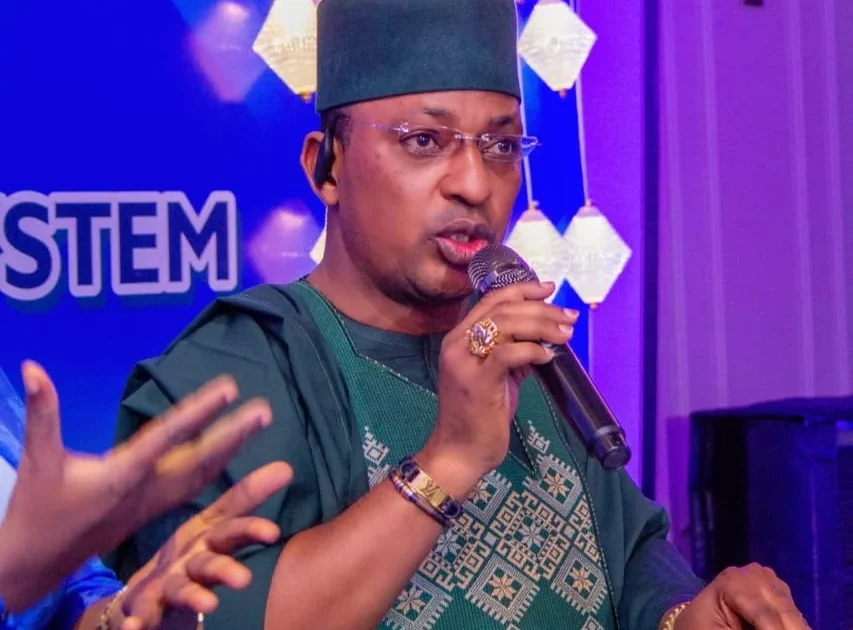
Chief Consultant of Global Transport Policy, Segun Musa, says the vision was to create a workable synergy among all modes of transportation to improve efficiency, reduce logistics costs and align Nigeria’s transport system with international best practices.
According to the logistics expert, transportation remains a major driver of economic development and must operate as an integrated system to support trade, industrialisation and national growth.
“We want to change the narrative in Nigeria’s transport sector by ensuring a more holistic and symbiotic interaction among road, rail, air and inland waterway transportation,” he said.
Musa noted that an efficient transport system would significantly reduce the cost of doing business and improve the movement of goods across the country, stressing that reliance on a single mode of transportation increases landing costs and commodity prices, while a multimodal system lowers supply chain costs and boosts economic activities.
The chieftain of the National Association of Government Approved Freight Forwarders stressed the need for investments in rail, roads, inland waterways and logistics infrastructure to enhance cargo movement and supply chain efficiency.
According to Tuesday’s statement, Musa made this observation while speaking ahead of the Global Transport Policy.
“For instance, cargo can move by rail to terminals, then be distributed by trucks or connected to airports and seaports. That is how an effective multimodal transport system works,” he said.
Musa, who is the Chairman of Widescope Logistics International also called for stronger collaboration, multimodal transportation and increased private sector investment to transform Nigeria’s transport sector and accelerate economic growth.
According to him, Nigeria must prioritise infrastructure development, capacity building and technology adoption to achieve a fully integrated transport network.
Musa identified multimodality, infrastructure expansion and human capacity development as critical reforms needed to address Nigeria’s high logistics costs.
He added that technology and digital platforms would also improve supply chain management, data sharing and operational efficiency in the sector.
Musa highlighted that Global Transport Policy has continued to advocate policies that promote integration across road, rail and inland waterway transportation, alongside stronger collaboration between government and private investors.
He said public-private partnerships, Build-Operate-Transfer models and foreign direct investment were essential to closing Nigeria’s infrastructure gap.
“Transportation infrastructure is capital intensive. The government cannot do it alone. There must be collaboration between the state, private investors and foreign partners to drive development,” Musa stated.
He also called for policies that would create an enabling environment for indigenous and foreign investors to participate in transport infrastructure development.
On rural infrastructure development, Musa said local communities must be encouraged to take ownership of projects by understanding the economic benefits attached to them.
He noted that such participation would help protect transport infrastructure and ensure sustainability.
Speaking on digital transformation, Musa urged greater investment in young people and technology-driven innovations to align Nigeria with global transport standards.
“We live in a digital world. Technology drives modern transportation systems, and Nigeria must embrace it to remain competitive globally,” he said.
He further identified the rail sector as the most critical infrastructure investment for maximum economic impact, stressing that rail transportation remains cheaper, faster and more efficient for moving large cargo volumes, making it vital for rapid economic advancement.
“Rail should receive greater attention because it carries more volume at lower cost and can significantly support economic growth,” he added.
A licensed customs agent, Mr Ikechukwu Ejiogu, added that integrated transport is vital in boosting the nation’s economy.
“An integrated transport sector comprising all modes is vital for the growth of the economy, especially the maritime sector,” Ejiogu added.


13 days after, abducted pupils in Borno, Oyo still in captivity

Police arrest mother, daughter over alleged N18m romance scam

Fidelity Bank Q1 gross earnings climb 38% to N435bn

NYSC has consistently fulfilled national unity mandate for 53 years – DG

Why we arrested ADC candidate — Police

US defence secretary links ISIS commander’s killing to protection of Nigerian Christians

$19.6 Million Claim Against NNPCL Dismissed, As Court Says “Rules Contract Scope Can’t Be Orally Changed”
- Breaking3 days ago
Repentant Boko Haram members are given N3m payoff after rehabilitation and placed on monthly salary of N50,000- man whose father was k!lled by the insurgents alleges (video)
- National2 days ago
Fallen Nation: While Terrorists Kill Nigerian Soldiers, General Bolaji Salami Builds Hotel and Laugh
- World2 days ago
Iran 'downs US drone' and 'shoots at American F-35 jet' as WW3 fears explode
- National3 days ago
Breaking: Eid-ul-Adha: FG declares two-day public holiday
- World2 days ago
WW3 fears explode as European countries ask for help
- Breaking2 days ago
Family of behe@ded Oyo teacher pleads with President Tinubu for personal intervention, visit and recovery of his remains
- Breaking3 days ago
Oyo Abductions: Nigerian man criticizes First Lady Remi Tinubu âsilence,â compares situation to Patience Jonathanâs 2014 outcry
- Breaking2 days ago
âMost young actors now chase fame, not craftâ â Veteran actor Ejike Asiegbu speaks on Nollywoodâs new generation

