News
I was shocked Nigerians applauded video mocking disabled children — UK-based advocacy founder, Folarin-Ogunde

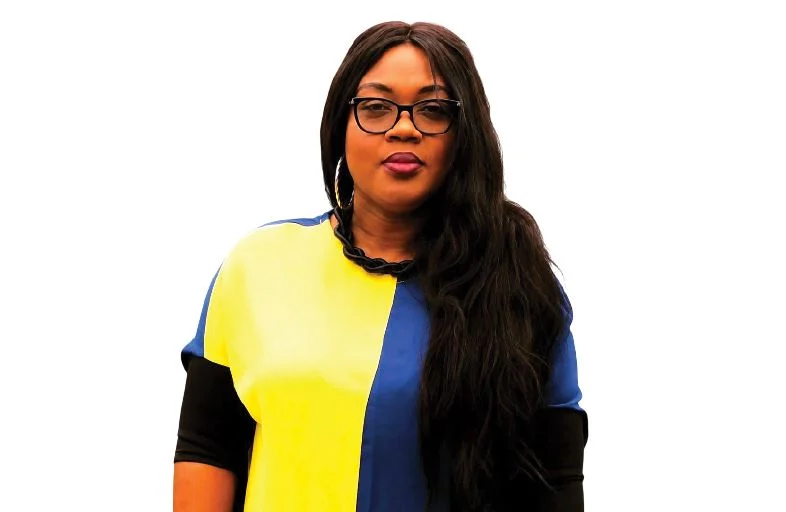
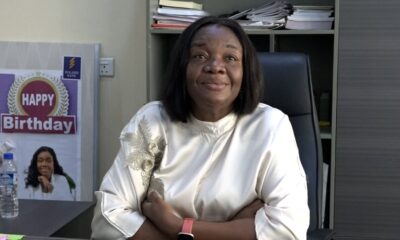
Founder and Chief Executive Officer, Jesse’s Place Foundation, Mrs Sola Folarin-Ogunde, shares with BIODUN BUSARI her thoughts on the insensitivity of the Nigerian society towards children with disability
How would you describe your advocacy?
I am the founder of Jesse’s Place Foundation, which is an organisation that works with parents and carers of children living with autism and learning disabilities. I’m also a senior education practitioner who was trained and has practised in the United Kingdom for over 25 years.
We operate in the UK and Nigeria. Part of what we do is the creation of respite programmes for children and young people. It makes the parents have some respite so we can take on the children and engage them in meaningful activities. So, that’s part of what we do.
Does your advocacy have training initiatives?
We run workshops for parents and carers on important topics relating to their children and young people. In Nigeria, I have worked with the Ogun State Government, and my foundation invited 10 professionals in various aspects to deal with the lives of young people living with autism and learning disabilities.
That programme was held in 2019. These invited professionals were speech and language therapists, occupational therapists, and social workers. So, we came to Nigeria for a one-week workshop in the state. A few years before that, I worked with the Lagos State Government and did the same thing.
I currently support a couple of schools, so my foundation is actually global, even though we do a lot of work in the United Kingdom. I am linked with our local authority in the United Kingdom as well, where we are asked to run a number of programmes for parents and carers within my local authority as well.
Why did you choose the UK for relocation?
My case is not typical of many Nigerians who have relocated to Nigeria. I wasn’t born in Nigeria. I was born in the United Kingdom, but I left the United Kingdom when I was three. My parents obviously moved us back to Nigeria. My sisters and I went back to Nigeria. I was 18 at the time I went back to Nigeria in 1985. But I’ve remained in the United Kingdom ever since, although I have strong links with Nigeria.
So, I’m always in Nigeria. My last trip to Nigeria was last year. This makes me carry out my advocacy because I know that when it comes to special needs in Nigeria, that’s an area where the government is not doing a lot. It’s an area where lots of parents and carers need a lot of support and encouragement.
Do you have any latest incident against what you defend?
Some weeks ago, I received a message on Instagram from Special Education Needs and Disability. When I first received it, I didn’t know who the person in the video was. All I could hear was, ‘Kiekie, you need to think twice about what you’ve done here. You have a large platform and influence. Why are you encouraging your child to laugh at disability?’ These are the words I saw in the message sent by that organisation.
Then, it dawned on me that it was the content creator and actress, Kiekie, asking her child to pretend that she was blind and deaf. She was now begging people to donate to the child. It was content, but it was a jest against children with autism and other disabilities. Unfortunately, many people commended her acts.
It was two or three people who didn’t see any sense in what she did. They criticised the video. A lady was telling her to apologise for what she did because it was absolutely making a jest of children living with disabilities. So, I got curious. I then went to look for that video.
Did you see the video?
Yes, I saw the video. I was shocked at what I saw. She has a lovely daughter, and she made her put her head backwards and close her eyes and act as if she were deaf and dumb. But what got me angry was when she said the child couldn’t see or hear, and that she needed millions of naira to be flown abroad for medical treatment.
That was very insensitive, using the plights and predicaments of certain people to catch a cruise, as they usually say. In that video, she was begging Nigerians to donate money for her to travel abroad by booking a first-class flight ticket. This was a mock content for children with disabilities and their parents.
Don’t you think it was just content not deliberately created to cause emotional harm to anyone, but out of naivety?
I would have thought so too, but the question she put in the video revealed that she knew why she was doing. She wrote, ‘The African mother in me prayed before I put this content out.’ This means she knew that people would be angry and curse you and your child for what you’ve done.
Maybe she thought, ‘I don’t want a child that’s blind or deaf.’ So, if the African woman or the African mother in you prayed before you put the content out, you must know that it would definitely have some negative implications or negative impact. To be honest, on my own personal Instagram, I do see what Kiekie does.
I regarded her as someone intelligent and eloquent, but that video did not speak well of her personality. It was so bad that many people were commending her daughter for being a good actress. Apparently, it was not the fault of the child, but the mother. There was a part she called the daughter. She didn’t want the daughter to respond, because apparently, she was meant to be deaf.
So, the daughter answered, and then she said, ‘What’s wrong with you? You are saying that you’re deaf and you’re answering.’ That was just insensitive. If you call yourself a celebrity, that is the weight of morals and responsibility that you carry, whether you like it or not. It is not something parents should applaud, and that is why Nigerians should do better.
What if she were just ignorant, and all you needed to do was reach out and let her see why the video was insensitive?
I’ve always said that though my organisation is for parents, carers, and professionals working with children and young people living with autism and learning disabilities, I also care for any other child, be it cerebral palsy or physically challenged, visually impaired, or others. We are all in the same community because we go through the same heartache.
So, when I saw the posted content, I was just shocked and totally disappointed. I understand that as people, we should be careful about our digital footprints. I also cautioned myself on how to react on social media, so I wrote in the comment section to tell her how I felt.
I sat down and composed my response because I wanted it to have an impact. When I put that response out, a couple of people liked it, saying this makes sense. I told her to rethink what she posted, and that she should not do that as an influential person who should actually be an advocate in a way for families that are going through challenges like this and not make a jest of their conditions.
How did she take the reaction?
I would have expected someone like her to send me a private message. Maybe if she searched for my name and saw that I have an advocacy in that line. Rather than speaking with me, I think she decided to block me instead. On Instagram, one is notified if there is a comment or a like, so I could see people reacting to my comments, so I wanted to visit the page again.
Then, I saw I could access her. Then I went back to the Instagram page for my foundation. Then another advocate said the same thing to correct her. I decided to contact that person about my plan. When I thought she had responded to my comment, I couldn’t find her.
I know what that means is one or two things. It’s either that she had blocked me or that her page had been brought down. But her page hasn’t been brought down because I used another number to check, and I think it was still there. So, the next thing I did was to report her account. But I don’t think they’ve done anything yet.
Was there anything your advocacy did to make her and others see the right thing?
I called two other strong advocates that I know. We agreed to bring more enlightenment with regard to special needs. It was discovered that the Nigerian society needs more sensitisation, awareness, and understanding. I think the awareness is there that people are going through this.
But the understanding to put yourself in their shoes and understand what families are going through, which is empathetic or even sympathetic to their plight, needs to be continuous. I live in the UK, and I cannot compare the services there with those in Nigeria.
We still talk to people to accommodate, tolerate, and understand these people and their families. It’s about raising more awareness and understanding that you cannot make fun of families in the name of making money or becoming popular online.
Do you think people like her do this content out of ignorance?
If you read my response, there was nothing insulting in the message. What she did in her response was nothing but sheer arrogance, not ignorance. It was a kind of arrogance that, ‘Who is this one out of God knows how many millions of followers? So, I’m just going to block this one.’ Most of the comments she’s getting are people rubbing her back and patting her head for what she posted. Only one or two people that I saw so far aligned with me.
Have you come across this kind of incident before in your advocacy career?
That is a generic question. I would say with the kind of veteran actors and actresses that I know who are still in the industry, they would never do this. Now, there could be educated people, making fun or having what we call preconceived, stereotypical views or ideas about people with disabilities. So, I have seen it with people of that calibre. That was why I mentioned ‘understanding’ the other time.
People need to realise that even if your child is autistic, we tell them not to hide them. I have a son who’s autistic. So, my interest is so personal in this matter. The celebrities should be the ones to also promote this kind of advocacy. Many of them have charities, but the essence of their activities still lags in this regard.
Do you think the government has any responsibility in this area?
Absolutely! The government actually has a responsibility. Now, in the United Kingdom, we have what we call the Equal Opportunity Act. This Act is aimed at ensuring that people are treated equally. In between this act, when you’re reading it, we tell you that you cannot discriminate against people. You cannot make a jest of someone’s plight or someone’s situation.
So, the thing is, what the government has to do in Nigeria regarding families or children and young people, even adults with disabilities, is quite a lot. Even in terms of cyberbullying and related stuff, it’s a big role that the government has to play to sensitise people.
While people are mindful of what they put on social media, the government should be working on monitoring and providing support services to families with children who have special needs.


Osimhen, Mbappé, Kane lead UEFA Champions League Player of the Match rankings

Why I plan to buy back my music masters – Davido

Water, gas & power outages – Pakistan's Karachi hit by utility collapse as Eid turns into crisis

NNPC rakes in N4.97tn in April

Cancer jabs destroy whole tumours in treatment-resistant cases, trial shows
Cancer jabs destroy whole tumours in treatment-resistant cases, trial shows

'Serious concern about Russian infiltration' as 14,000 Irish visas approved

 Politics3 days ago
Children’s Day: No casualty recorded from Ogbemudia stadium incident – says CMD
- World2 days ago
NATO issues major statement after Russian drone strikes European flats as tensions erupt
- World16 hours ago
Trump lashes out after removal of his name from Kennedy Center- 'System is rigged'
- Breaking16 hours ago
Nigeria confronted with outcomes of institutional neglect — Tunde Bakare
- News16 hours ago
Seyi Makinde clinches APM presidential ticket
- National3 days ago
I never promised to release Nnamdi Kanu from prison – Abia APC candidate, Opah
- Business1 day ago
Lagos generates N80bn from building approvals
- Politics19 hours ago
EDSG redeploys Aledeh, names Alenkhe acting EBS boss