World
Risk of Ebola global spread is low, but high at regional levels, WHO says

The World Health Organisation has said the risk of global spread of the Ebola virus in the Democratic Republic of Congo and Uganda is high at national and regional levels, but low at global level.
The risk assessment came as the leader of the WHO team in DR of Congo said on Wednesday that the outbreak, which has led to 134 suspected deaths, could last at least another two months as aid efforts intensified on to stem the spread.
The WHO has declared the Ebola outbreak a public health emergency of international concern, requiring a coordinated response.
On Tuesday it expressed concern over the “scale and speed” of the outbreak.
Worried residents have reported rising prices for face masks and disinfectants following the outbreak of the rare type of Ebola, known as the Bundibugyo virus, which spread undetected for weeks following the first known death as authorities tested for a more common type of Ebola which came up negative, health experts and aid workers said.
There are no approved medicines or vaccines for the Bundibugyo virus.
So far 51 cases have been confirmed in DR of Congo’s northern provinces of Ituri and North Kivu, as well as two in Uganda, WHO director-general Tedros Adhanom Ghebreyesus said on Wednesday.
DRC #Ebola outbreak: @WHO is working closely with the authorities and rushing more testing kits to eastern DRC to identify cases of infection of Bundibugyo virus. https://t.co/X52gEKZaS0 pic.twitter.com/YKZxpcnv5q
— UN News (@UN_News_Centre) May 19, 2026
Beyond that, there are almost 600 suspected cases and suspected deaths, he said.
“We know that the scale of the epidemic is much larger,” he said.
“We expect those numbers to keep increasing.”
DR of Congo was expecting shipments from the US and UK of an experimental vaccine for different types of Ebola, developed by researchers at Oxford, Jean-Jacques Muyembe, a virus expert at the National Institute of Biomedical Research, told reporters on Tuesday.
“We will administer the vaccine and see who develops the disease,” he said.
Health experts said that the delayed detection of the virus, large movements of population in the affected areas, as well as the pre-existing humanitarian crisis, complicated the response.

Parts of DR of Congo are in the hands of armed rebels, hampering the delivery of aid.
DR of Congo said the first person died from the virus on April 24 in Bunia, but the confirmation did not come for weeks.
The body was repatriated to the Mongbwalu health zone, a mining area with a large population.
“That caused the Ebola outbreak to escalate,” said DR of Congo’s health minister Samuel Roger Kamba.
Dr Anne Ancia, the head of the WHO team in DR of Congo, said authorities still have not identified “patient zero”.
There was a long road ahead, she said, adding that cuts in funding had “a marked detrimental effect on humanitarian actors”.

US secretary of state Marco Rubio told reporters on Tuesday that the Trump administration would “lean into” Ebola response efforts with a priority on funding 50 emergency clinics in affected areas.
The US has so far contributed 13 million dollars (£9.7 million) to the effort and Mr Rubio said more would be coming.
In Bunia, the site of the first known death, schools and churches remained open on Wednesday, and some residents were wearing masks in the street.
Residents said that masks have become harder to find and that some disinfectants previously sold for 2,500 Congolese francs now cost up to 10,000 francs (£3.25).
“It’s truly sad and painful because we’ve already been through a security crisis, and now Ebola is here too,” said Justin Ndasi, a resident of Bunia.
“We have to protect ourselves to avoid this epidemic.”
Trish Newport, emergency programme manager from Doctors Without Borders aid group said that her team in Bunia identified suspected cases over the weekend in the Salama hospital, where there is no isolation ward.
They tried, unsuccessfully, to place them in another health facility in Bunia.
“The team called around to other health facilities to see if they had isolations,” she said.
“Every health facility they called said, ‘We’re full of suspects cases. We don’t have any space’.
“This gives you a vision of how crazy it is right now.”

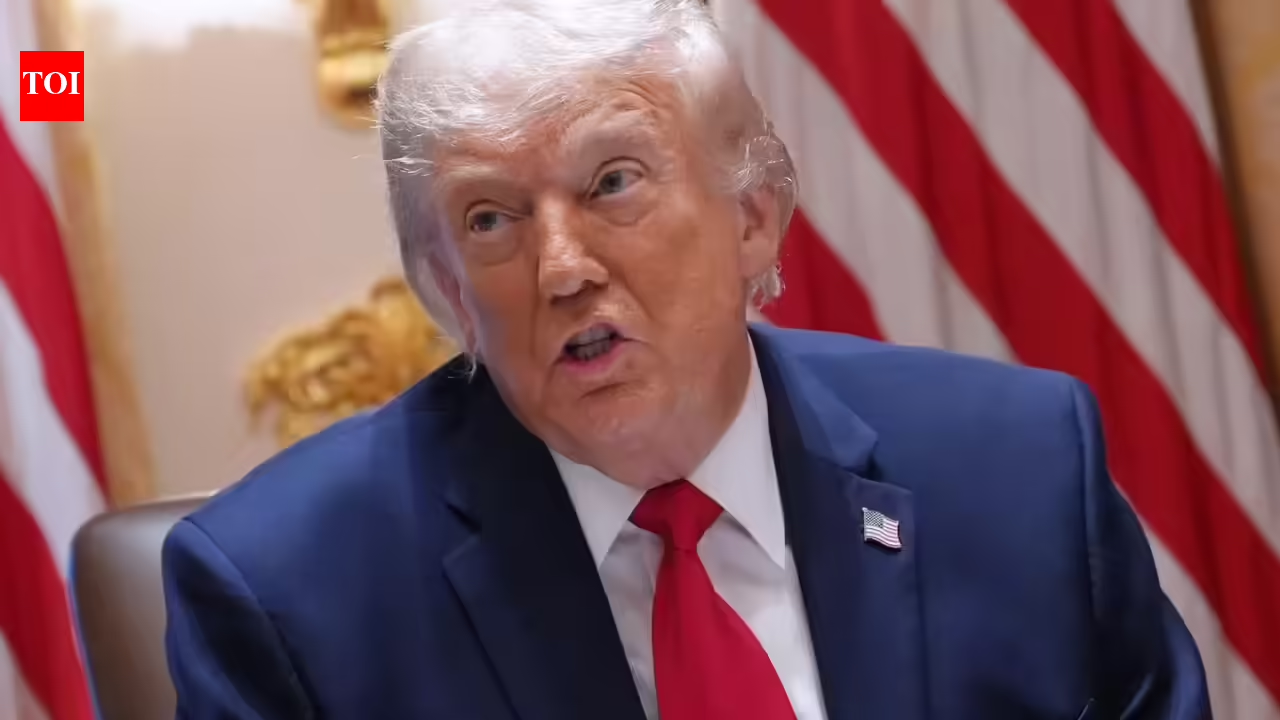
From Iran deal ultimatum to Ebola preparedness: Key takeaways from Donald Trump’s cabinet meeting

Russia could pull European nation into gruelling war with Ukraine

NLO sanctions Campos FC Chairman over intimidation of match officials

Kogi federal varsity introduces ‘one-day VC’ programme to inspire students

Celtic Boss uncertain over Kelechi Iheanachoâs future after cup double triumph

Woman alleges man stormed her home, attacked her and tried to take newborn baby in Abia State

Land Dispute: Esa-Oke Community Calls for Security Intervention Over Alleged Intimidation
- National2 days ago
Fallen Nation: While Terrorists Kill Nigerian Soldiers, General Bolaji Salami Builds Hotel and Laugh
- Breaking3 days ago
Repentant Boko Haram members are given N3m payoff after rehabilitation and placed on monthly salary of N50,000- man whose father was k!lled by the insurgents alleges (video)
- World1 day ago
Iran 'downs US drone' and 'shoots at American F-35 jet' as WW3 fears explode
- Breaking1 day ago
2027: Jonathan eligible to contest elections — Court rules, awards N21m fine against lawyer
- World3 days ago
Iran's supreme leader is holed up in undisclosed location, U.S. intel says
- National2 days ago
Breaking: Eid-ul-Adha: FG declares two-day public holiday
- World1 day ago
WW3 fears explode as European countries ask for help
- Breaking2 days ago
Family of behe@ded Oyo teacher pleads with President Tinubu for personal intervention, visit and recovery of his remains

