Investigation
âSeek help from usâ â NDLEA tells Nigerians battling Drug addiction

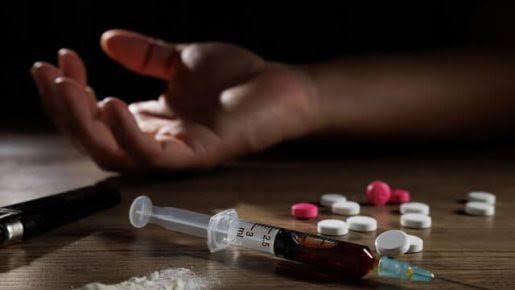

The National Drug Law Enforcement Agency (NDLEA) has urged Nigerians battling drug dependence to seek help through its 24-hour counseling and referral service.
The Secretary of NDLEA, Shadrach Haruna, gave the assurance on Monday, June 22, to commemorate the 2026 United Nations International Day Against Drug Abuse and Illicit Trafficking. He stated that professional support is available round the clock for persons struggling with drug use disorders.
“We also urge families and friends of persons battling addiction to seek help from NDLEA, stressing that recovery was possible with the right support and intervention,” he said. “The agency’s helpline, 0800-1020-3040, also known as the 247-Network, was established to ensure timely access to professional assistance for individuals and families affected by drug dependence.”
“If you know anyone who is suffering from drug use disorder, NDLEA is there to support. Anyone who calls the number will receive an instant response in whatever language they speak, whether Pidgin English, Hausa, Yoruba, Igbo or formal English.”
Haruna noted that trained social psychologists are available to provide counseling and refer callers to appropriate treatment and rehabilitation centers closest to them. According to him, treatment and rehabilitation remain essential pillars of NDLEA’s balanced approach to drug control, alongside enforcement, prevention, and public enlightenment.
Speaking further, Haruna said the agency has adopted innovative approaches in tackling drug abuse and illicit trafficking, including partnerships with faith-based organizations to strengthen prevention, treatment, and rehabilitation efforts. He added that churches and other religious organizations have become critical stakeholders in the campaign against drug abuse due to their influence on families and communities.
“We involve and use a lot of innovative responses, and one of those responses is to use faith-based organisations, which of course include churches,” he said.
Beyond collaborating with the agency by reporting drug-related activities, Haruna explained that faith-based organizations contributed significantly through counseling, moral teachings, and family-focused interventions. He described families as the fulcrum of social development, adding that religious bodies provide a strategic platform for reaching homes and communities with anti-drug messages at the grassroots level.


These United States: Raising the flag

Man arrested for selling expired, toxic powdered milk in Katsina

One injured as IED planted under vehicle explodes in Lagos market

These United States: Ken Burns on America's continuing revolution

Court adjourns trial of nurse over death of two minors in Kebbi

These United States: The White House

Declare state of emergency on insecurity, Makarfi urges Tinubu

 Investigation2 days ago
Update: Abia police arrest man caught on camera ass@ulting woman
- World1 day ago
Russia burning as Ukraine launches massive attack on key waterway 160 miles from frontline
- Investigation3 days ago
Africa’s richest man, Dangote reveals the largest amount heâs made in a single year (Video)
- Business3 days ago
FG seeks banks’ support to optimise revenue
- Investigation2 days ago
Police detain TikToker following boyfriendâs death in Kano
- News3 days ago
Veteran Fuji musician Love Azeez buried in Lagos
- Investigation3 days ago
Actress Anne Hathaway, 43, announces she’s pregnant with baby bump video
 Business3 days ago
Only 18% of retailers access formal loans – Report