National
Abuja Maize Farmers Lament Delayed Rains -By Prosper Okoye (Abuja)

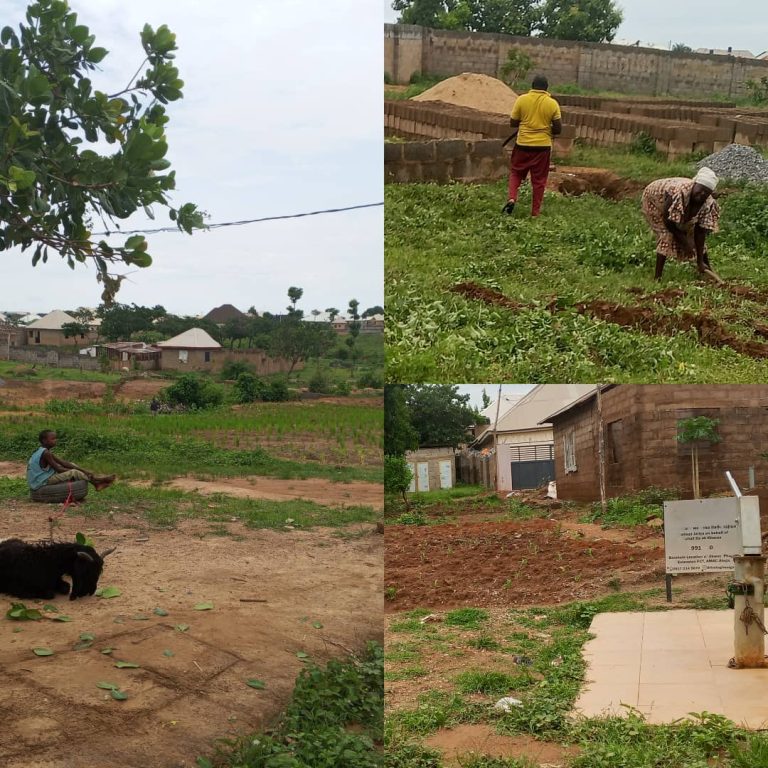
On a rocky slope overlooking Dagbana, a farming community on the outskirts of Abuja, Awak Michael stood beside rows of freshly planted maize and searched the sky for signs of rain. By this time last year, the young shoots would already have been pushing through the soil. Instead, the earth remained stubbornly dry.
“We normally plant around April,” he said. “This year, I planted just last week.”
For farmers across Nigeria’s Federal Capital Territory, the rainy season has arrived with unusual hesitation. The clouds gather, disappear, and return again. Weeks pass between downpours. In farming communities where planting schedules are built around generations of weather patterns, uncertainty has become as much a part of the season as the rain itself.
Michael, who has farmed maize for more than a decade, is not a commercial farmer in the conventional sense. Agriculture supplements his primary occupation, providing food for his household and a modest income when harvests are good. Yet he speaks about farming with the conviction of someone who believes it offers a path to economic survival.
“Agriculture pays,” he said. “When you grow your own food, you realise how much money you would have spent in the market.”
His farmland sits on elevated rocky terrain, where cultivation requires persistence. Herbicides must be applied carefully to avoid damaging young plants. Rainfall determines almost everything else.
In previous years, the planting calendar was predictable. Farmers prepared their land in March, planted by late April, and expected harvests around July to September. This year has broken that rhythm.
“The difference is very clear,” Michael said. “Last year and the years before, the rain came almost within the same period. This year, we are already in June.”
The delayed rains have created a dilemma for farmers. Plant too early and seeds risk drying out before germination. Wait too long and crops may not mature before the season ends. Every decision carries a cost.
A few kilometres away, George Bolt, a part-time farmer who grows maize, groundnuts and soybeans primarily for family consumption, faces the same uncertainty.
“We expected rain frequently after it started,” he said. “For about a week, we were waiting. Only today did it rain.”
Some of the seeds he planted have yet to germinate.
“We have to slow down a bit and wait for more rain,” he explained.
Like many farmers in the region, Bolt believes climate change is altering weather patterns that communities once relied upon.
“In the past, we did not experience this kind of erratic rainfall,” he said. “We are close to the Sahel. Drought is affecting us.”
Scientists have long warned that climate change is increasing rainfall variability across parts of West Africa. While total seasonal rainfall may remain within historical ranges, its distribution is becoming less predictable, producing longer dry spells punctuated by intense storms.
For farmers who depend almost entirely on rain-fed agriculture, unpredictability can be as damaging as drought itself.
The concern extends beyond individual farms. Delayed planting often means delayed harvests. If the rains do not persist long enough for crops to mature, yields could decline.
Michael worries about what that might mean for food prices.
“If the harvest drops, production will be less,” he said. “And when production is less, demand becomes higher than supply. The price will definitely go up.”
For now, however, food prices in many local markets have eased compared with the sharp increases recorded last year. Michael attributes part of the decline to strong harvests during the previous farming season and government food imports that increased market supply.
A measure of maize that sold for as much as ₦1,800 during the height of food inflation can now be purchased for around ₦500 in some local markets, he said.
Whether those gains can be sustained depends partly on what happens in the coming weeks.
The rain that finally arrived during the interviews fell heavily across the community, drumming on zinc roofs and soaking fields that had waited weeks for relief. Farmers welcomed it, but cautiously. One storm cannot make a season.
As dark clouds lingered over the hills surrounding Dagbana, the uncertainty remained. The seeds were in the ground. The growing season had begun. What nobody could say with confidence was whether the rain would stay.


Army arrests five suspected terrorists informants in Niger State

Osubi Airport refutes bird strike allegation, cites two-year safety record

I was forced to sleep with 20 men daily – 18-year-old Benue girl recounts escape from s3x traffickers in Mali

Ex-Rep Danmaliki reacts to alleged plan to rename Nigeria, abolish Shari’ah

FG targets early completion of Abuja-Keffi highway projects, seeks quality delivery

Cuba hands out weapons to citizens and issues 'prepare for invasion' warning

2027: Elected officials must consult party before major decisions — NDC

 Breaking2 days ago
Woman shares flimsy reason that made her breakup with her boyfriend who was âperfectâ
 Breaking2 days ago
I slept with 50 men daily – 16-year-old Nigerian girl recounts how she was trafficked to Ghana by neighbour and forced into pr0stitution
- Breaking3 days ago
"Are you not ashamed to post this?" Politician called out after sharing project she commissioned in her Constituency
- Breaking1 day ago
Elon Musk could be the worldâs first trillionaire in weeks
- News3 days ago
NiRA convenes stakeholders to strengthen internet sovereignty
- Business3 days ago
FG certifies 131 firms under African quality mark
- Breaking3 days ago
Community members of slain nurse Chinwendu "Wendy" Achumba place irrevocable curs£s on the men who r@ped and k!lled her and on their family members (video)
- Breaking3 days ago
Security officials averted bomb attack on Ondo government house – Gov Aiyedatiwa says