National
Built for Athletes, Occupied by Strangers: The Untold Story of NIS’s Abandoned Hostel – Part One

Secrets Reporters
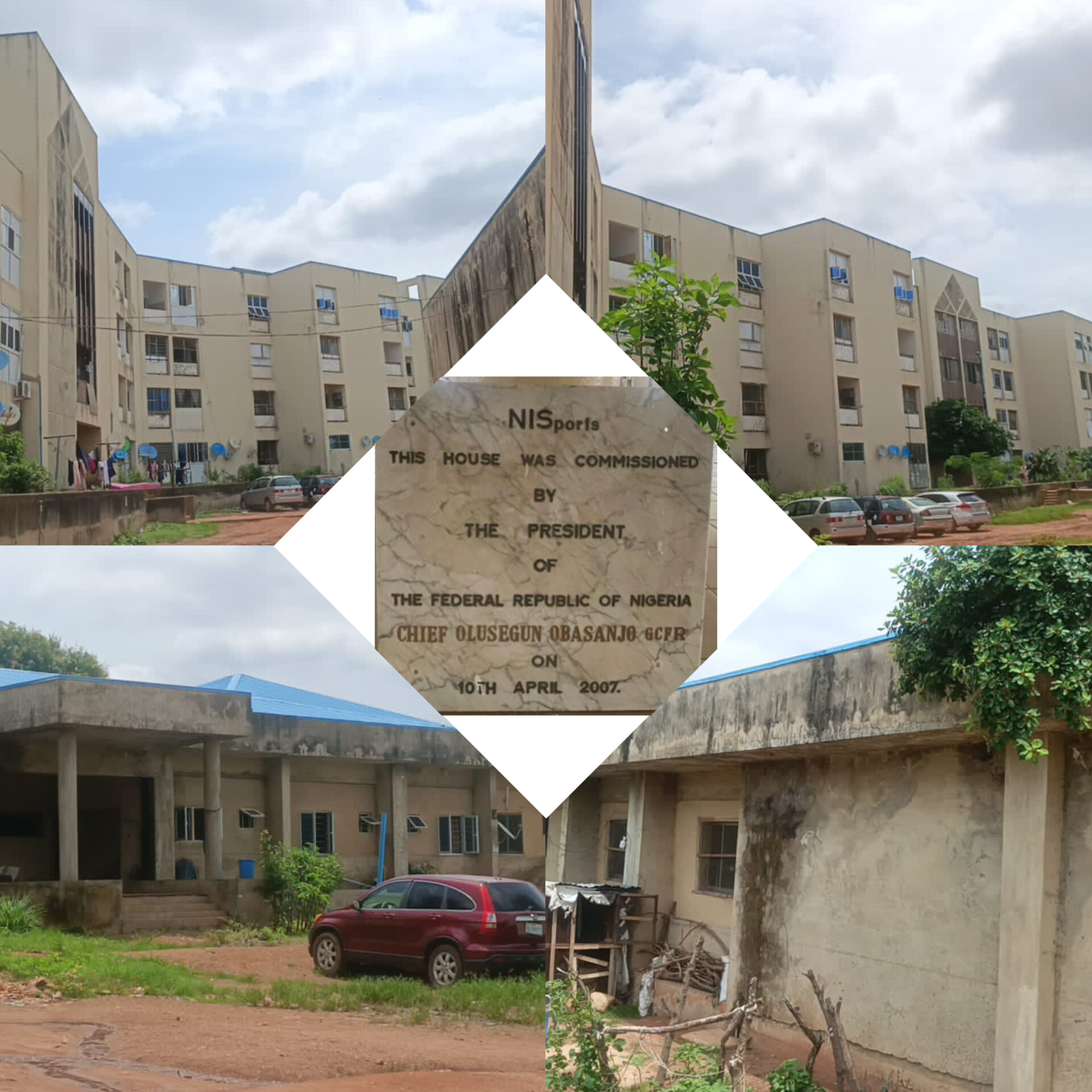
Inside the National Institute for Sports (NIS) in Abuja stands a massive 200-bed hostel originally built to accommodate coaches, referees, sports officials and paramedics expected to drive Nigeria’s sporting development.
Nearly two decades after its construction, however, the facility remains at the centre of a mystery that raises troubling questions about government assets, accountability and the management of public infrastructure.
Findings by SecretsReporters reveal that the hostel was among projects scheduled for commissioning on April 10, 2007, during the administration of former President Olusegun Obasanjo.
While the Athlete Development Centre within the institute was commissioned during the visit, the hostel was not.
Nineteen years later, no publicly available explanation has emerged as to why the facility was excluded from the commissioning ceremony.
Today, the building tells a different story.
Rather than housing athletes and sports personnel, the facility is occupied by dozens of residents who say they moved into what was once an abandoned structure after years of neglect.
NIS: Occupants Are Not Authorized
During a visit to the institute, a media aide to the current Director-General of NIS told this reporter that the hostel remains the property of the institute and that its current occupants are not authorised tenants.
According to him, the facility was left uncompleted and unoccupied for years, creating an opportunity for people to move into the building.
The aide said the occupants have since been directed to vacate the premises.
He further claimed that the inability of NIS to utilise the hostel for its intended purpose has forced the institute to incur additional costs in accommodating athletes elsewhere.
According to him, NIS has had to partner with external organisations, including the Nigeria Judicial Institute, to provide temporary accommodation for athletes during training programmes and events.
The official also alleged that some occupants had been making payments to unidentified persons or groups for access to the facility.
However, he acknowledged that the institute had not established who was allegedly receiving such payments.
Occupants Tell A Different Story
When this reporter visited the hostel, some residents rejected claims that they were paying rent for the facility.
Instead, they narrated how they allegedly gained access to the abandoned building.
According to several occupants interviewed, they paid N100,000 each before moving into the hostel between two and three years ago.
They claimed the building had become a hideout for suspected criminals who allegedly stripped parts of the structure and used the premises for unlawful activities.
Some residents said they took significant risks by moving into the abandoned facility despite security concerns.
According to them, the building lacked basic infrastructure, including access roads, electricity and water supply.
They alleged that they contributed personal funds to make parts of the facility habitable.
Several residents also claimed that they later received a request to collectively raise N5 million monthly, which they said was shared among occupants at approximately N23,000 per room.
According to their accounts, the payments were made for a limited period before they stopped after receiving information that the Federal Government intended to reclaim the property.
The residents further alleged that the initial N100,000 payments were made into a private account, although they declined to disclose the account details.
Management Denies Collecting Rent
To verify the claims, this reporter met officials of Package B Management, the entity responsible for overseeing the facility.
The management however denied collecting rent from the occupants.
Instead, officials argued that allowing people to occupy parts of the building was a practical response to worsening security challenges around the abandoned structure.
According to the facility manager, criminal elements had turned the hostel into a base for illegal activities, posing a threat to nearby sports infrastructure.
The manager maintained that security personnel were consulted before some individuals were allowed to reside within the premises.
He further stated that the N100,000 contribution mentioned by residents was intended to fund access roads, electricity and water connections rather than rent payments.
According to him, management did not receive the money.
The manager also disclosed that a former police officer in charge of the area allegedly obtained written undertakings from occupants agreeing to vacate the property whenever the government required it.
Efforts by this reporter to obtain a copy of the undertaking were unsuccessful. Police officials said the officer had since been transferred and no copy of the document could immediately be located.
Questions Without Answers
The investigation uncovered conflicting narratives but few definitive answers.
Was the hostel completed before the 2007 commissioning exercise?
Why was it left out of the inauguration programme?
Who authorised the occupation of the building?
Were payments collected from occupants and, if so, by whom?
Why has a public facility built for athletes remained unavailable for nearly two decades?
These questions remain unanswered.
For now, one fact is undisputed: a hostel built with public funds for Nigeria’s sports development has not served its original purpose since construction began almost 20 years ago.
In Part Two, this investigation follows the money trail behind payments allegedly made by occupants and examines who may have benefited from the occupation of the government-owned facility.


‘I’m watching their performance’ – Churchill after Meurer, Tonto snub on Father’s Day

Kebbi senator dumps APC for ADC over crisis

JUST IN: Kebbi senator dumps APC for ADC, says there is lack of justice in ruling party

Anambra First Lady Pushes Urgent Drive to End Mother-to-Child HIV and Hepatitis Transmission

Actress Georgina Onuoha blasts âtoxic masculinityâ among Igbo men, calls for action against domestic violence and child abuse

Obi condemns Sowore’s remand, warns against stifling dissent

APC primary: Ex-Ondo lawmaker sues IG, seeks N50m damages over arrest

 Investigation3 days ago
Update: Abia police arrest man caught on camera ass@ulting woman
- Investigation21 hours ago
He said he wanted to sleep with me, but I told him I am a married woman – Lady in viral video being ass@ulted by a man in Abia speaks
- World2 days ago
Russia burning as Ukraine launches massive attack on key waterway 160 miles from frontline
- Investigation3 days ago
Police detain TikToker following boyfriendâs death in Kano
- Investigation3 days ago
Most Nigerian women, their affection is for sale – Canada based man sparks controversy
- Breaking3 days ago
Trump unveils new Air Force One jet gifted by Qatar, calls it âflying White House.’
- Politics3 days ago
Ekiti 2026: Observers commend BVAS performance, raise concern over vote buying
- World8 hours ago
Russia launches nuclear drill in UK's backyard as Kremlin 'advocates use of atomic bomb'