News
FULL LIST: FIFA new rules ahead of 2026 World Cup

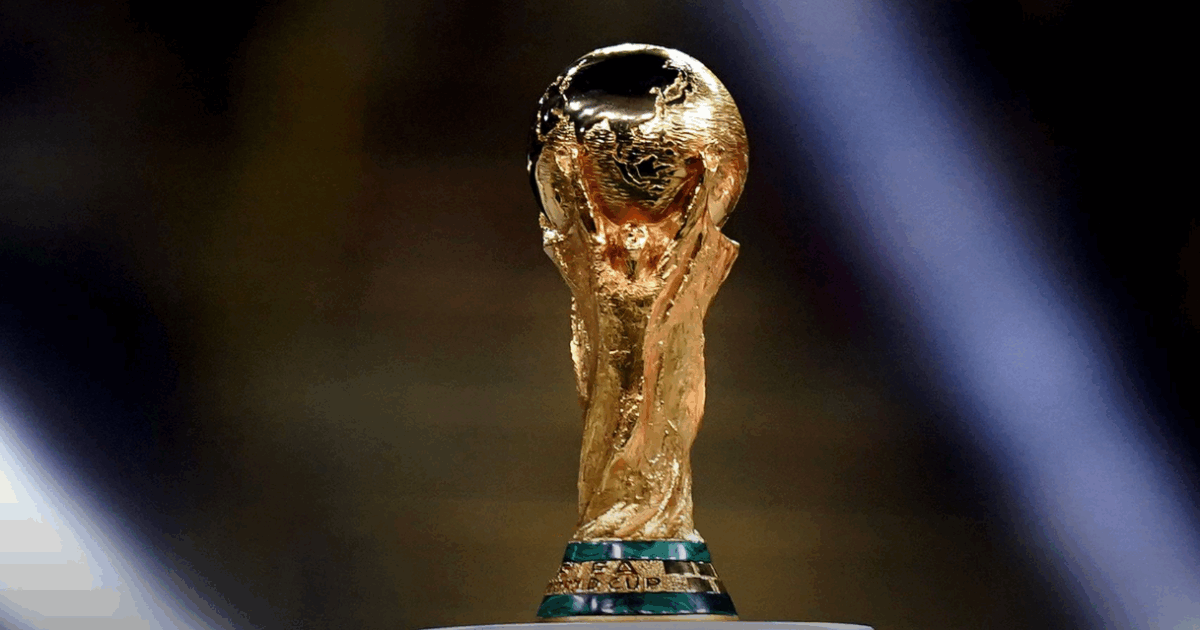
Ahead of the FIFA World Cup 2026, football’s law-making body, the International Football Association Board, has approved the biggest package of rule changes in several years.
The tournament will be the first major competition to use them.
According to a post obtained from FIFA’s website on Tuesday, these are the new rules to be deployed in the forthcoming global showpiece scheduled to be held in the United States, Canada and Mexico
1. Throw-in and Goal-Kick Countdown
To combat time-wasting:
* Referees will begin a visible 5-second countdown.
* If a throw-in is not taken in time, possession goes to the opposing team.
* If a goal kick is delayed, the opponents receive a corner kick.
2. 10-Second Substitution Rule
When a substitution is made:
* The player leaving must exit within 10 seconds.
* They must use the nearest boundary line.
* If they delay, the replacement cannot enter until the next stoppage after one minute of play has elapsed.
3. Injured Players Must Stay Off for One Minute
If play is stopped for treatment:
* The injured outfield player must leave the field.
* They cannot return until one minute after play restarts.
Exceptions include:
* Goalkeeper injuries
* Serious injuries
* Head injuries/concussions
* Goalkeeper-player collisions
* Certain penalty situations.
4. Expanded VAR Powers
VAR can now intervene in additional situations:
Incorrect Second Yellow Card
VAR may review a clearly incorrect second yellow that results in a red card.
Mistaken Identity
If the wrong player receives a yellow or red card.
Wrongly Awarded Corner Kick
VAR may correct a clearly incorrect corner-kick decision if the review is immediate.
Fouls Before Set-Piece Restarts
VAR may intervene if a foul occurred before the ball was put back into play.
5. Red Cards for Mouth-Covering Confrontations
A player who covers their mouth with a hand, arm, or shirt while confronting an opponent may receive a red card.
The measure was introduced to discourage discriminatory abuse and improve transparency.
6. Red Cards for Walk-Off Protests
Players who leave the field to protest a referee’s decision can be sent off.
Teams abandoning matches in protest may forfeit the game.
Team officials who encourage such actions can also be sanctioned.
7. Referee Body Cameras
Competitions may allow referees to wear chest-mounted or head-mounted cameras.
The competition organizer controls the footage and usage.
8. New Equipment Rules
Players may wear previously prohibited items if they are:
* Non-dangerous
* Properly covered
* Securely fastened. ([theifab.com][4])
9. Dropped-Ball Clarification
When play is stopped and restarted with a dropped ball:
* Possession should go to the team that would likely have had the ball if play had not been stopped.
10. Penalty “Double Touch” Clarification
The Laws now formally include guidance on accidental double touches by the penalty taker, following earlier IFAB clarification.
11. DOGSO Advantage Change
If a player commits an offence that denies an obvious goalscoring opportunity (DOGSO), but the referee plays advantage and a goal is scored:
* The offending player will not receive a caution because the goal was ultimately scored.
12. More Substitutes in International Friendlies
For senior international friendlies:
* Up to 8 substitutes are allowed.
* Teams may agree to increase this to 11.
-13. Hydration Breaks
At the World Cup:
* A three-minute hydration break may occur in each half.
* Usually around the 22nd minute.
* Referees have flexibility depending on match conditions.
-14. Existing Goalkeeper Time-Wasting Rule
Already introduced before the World Cup:
* Goalkeepers may hold the ball for a maximum of 8 seconds.
* Referees visibly count down the final 5 seconds.
* Exceeding the limit gives the opponents a corner kick.






MMA fighter steps in as passenger 'tries to open plane door' on Frontier flight

Princess Kate and Davina McCall speak about cancer experiences at charity reception
Princess Kate and Davina McCall speak about cancer experiences at charity reception

Dollar to Naira exchange rate today, June 2, 2026: Nigerian currency continues appreciation

MrBeast viral pilot Jabari Brown reportedly facing international investigation tied to alleged 577 pound cannabis seizure

Appeal court orders INEC to register LPP within 30 days
Quote of the day by Barack Obama: “You can’t let your failures define you – you have to let them…”

 Breaking2 days ago
I received a threatening call simply because I spoke about Nigeria bleeding, Russian-born actress Fari Elysian reveals
- Breaking1 day ago
Content creator Mark Angel weds again months after ex-wife did exposé on him and he admitted if he were his daughter he wouldn’t marry a man like himself (video)
- World2 days ago
Silence from the White House after Trump said he would make a "final determination" on Iran
- Breaking1 day ago
Father allegedly left baby daughter in bathtub filled with water while he scrolled on his phone in another room
- World1 day ago
Iran issues horror threat to attack Israel as Trump's ceasefire collapsing
- News3 days ago
IG promotes 17,952 junior police officers nationwide
- Breaking2 days ago
My 3rd wife attempted to st@b me, threatened to k!ll herself because I married a 4th wife – Man tells Oyo court
- Politics1 day ago
Tackle insecurity decisively, NDC senatorial aspirant urges Tinubu