News
Ebola: FG intensifies border screening, orders isolation for high-risk travellers

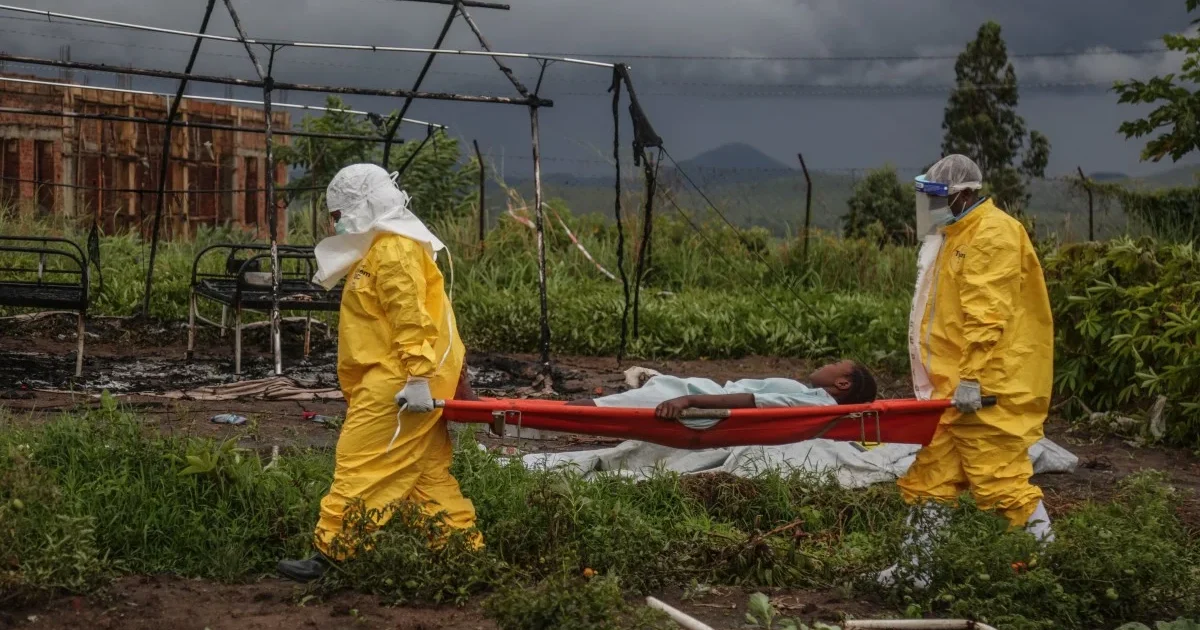
The federal government has intensified health screening at the country’s airports, seaports and land borders, announcing that travellers identified as high-risk or displaying symptoms associated with Ebola and other viral haemorrhagic fevers will be subjected to secondary screening, isolation and referral procedures.
The move comes amid growing concerns over the ongoing outbreak of the Bundibugyo strain of Ebola virus disease in parts of East and Central Africa and forms part of a broader national preparedness strategy aimed at preventing the disease from entering Nigeria.
In a statement issued on Tuesday, signed by the Assistant Director of Press and Public Relations, Ado Bako, the Federal Ministry of Health and Social Welfare said there is currently no confirmed Ebola case in Nigeria but stressed that heightened preparedness measures have been activated nationwide to safeguard public health.
“The Ministry wishes to reassure Nigerians that there is presently no confirmed case of Ebola Virus Disease in Nigeria. However, in line with the federal government’s commitment to strengthening national health security and preventing cross-border disease transmission, heightened preparedness measures have been activated nationwide,” the ministry stated.
The ministry said enhanced border surveillance remains a critical component of the government’s response, with health officials directed to strengthen screening and risk assessment procedures for all incoming travellers.
Among the measures announced are mandatory temperature checks using infrared thermal scanners and handheld thermometers, health declaration forms, travel history assessments and intensified risk profiling at designated points of entry.
The ministry said authorities had activated “enhanced traveller risk assessment and screening procedures at designated Points of Entry” and put in place “secondary screening, isolation and referral mechanisms for travellers presenting symptoms consistent with viral haemorrhagic fevers.”
The development signals a return to heightened vigilance at Nigeria’s borders, reminiscent of measures adopted during previous public health emergencies, including the 2014 Ebola outbreak and the COVID-19 pandemic.
To strengthen disease detection beyond the nation’s borders, the ministry said surveillance systems had been reinforced across the country through enhanced Integrated Disease Surveillance and Response activities, community-based surveillance networks and active monitoring of public health alerts.
According to the statement, “Enhanced Integrated Disease Surveillance and Response (IDSR) activities nationwide” and “strengthened event-based and community-based surveillance systems” are currently ongoing to ensure early detection of any suspected case.
The government also disclosed that Public Health Emergency Operations Centres had been activated, while Rapid Response Teams at national and sub-national levels had been placed on standby.
As part of efforts to prepare the healthcare system for a potential outbreak, hospitals and clinics have been directed to strengthen infection prevention and control measures, improve triage systems and ensure prompt reporting of suspected cases.
“Healthcare facilities nationwide have also been advised to maintain a high index of suspicion for viral haemorrhagic fevers, strengthen triage systems, promptly isolate suspected cases, and adhere strictly to established reporting protocols,” the ministry said.
The ministry urged Nigerians not to panic, stressing that the measures are precautionary and intended to ensure the country remains prepared for any eventuality.
It also advised members of the public to maintain regular hand hygiene, avoid direct contact with bodily fluids of symptomatic individuals, refrain from handling dead animals or bushmeat from unknown sources, and promptly report unusual illnesses or deaths to health authorities.
Nigeria is widely regarded as having mounted one of Africa’s most successful Ebola containment responses after the 2014 outbreak that began when an infected traveller arrived in Lagos from Liberia.
Through aggressive contact tracing, isolation of cases and coordinated emergency operations, the country contained the outbreak within months, recording 20 confirmed cases and eight deaths before being declared Ebola-free by the World Health Organisation.
The current concern centres on the Bundibugyo ebolavirus, one of the species known to cause Ebola virus disease in humans. Although less common than the Zaire strain responsible for several major outbreaks in Africa, Bundibugyo ebolavirus can cause severe illness characterised by fever, headache, muscle pain, weakness, vomiting, diarrhoea and, in some cases, bleeding.





Enugu teachers stage protest to the state government house, demand immediate release of abducted Oyo students and teachers (video)
Indian man to be deported from New Zealand after being caught in underage sex ring, says he would face stigma back home

‘I can no longer see with my eyes’ – Fuji star, Remi Aluko cries out amid battle with glaucoma [VIDEO]

Anambra NUT protests delayed rescue of abducted teachers, schoolchildren

Nigerian Navy at 70: Army, Air Force, Police, NDLEA, Customs, FRSC others unite with Navy for NNS Delta sports fiesta

TheBurntPeanut responds to Fortnite collab rumors after Epic teaser sparks debate

Kebbi gov unveils plans to review primary school teachers’ salaries

 Breaking2 days ago
I received a threatening call simply because I spoke about Nigeria bleeding, Russian-born actress Fari Elysian reveals
- Breaking1 day ago
Content creator Mark Angel weds again months after ex-wife did exposé on him and he admitted if he were his daughter he wouldn’t marry a man like himself (video)
- World2 days ago
Silence from the White House after Trump said he would make a "final determination" on Iran
- Breaking1 day ago
Father allegedly left baby daughter in bathtub filled with water while he scrolled on his phone in another room
- News3 days ago
IG promotes 17,952 junior police officers nationwide
- World1 day ago
Iran issues horror threat to attack Israel as Trump's ceasefire collapsing
- Breaking2 days ago
My 3rd wife attempted to st@b me, threatened to k!ll herself because I married a 4th wife – Man tells Oyo court
- Politics1 day ago
Tackle insecurity decisively, NDC senatorial aspirant urges Tinubu