National
Iboku leaders renew push for Bakassi reclamation

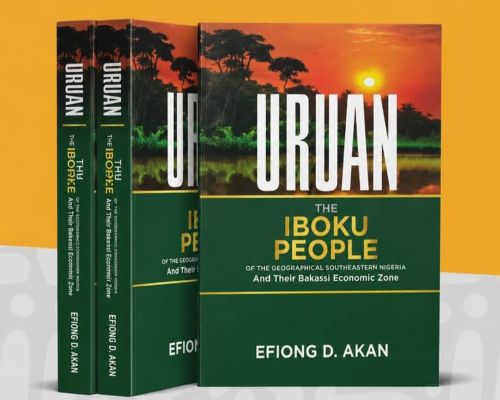
Nigeria’s controversial handover of the oil-rich Bakassi Peninsula to Cameroon following a 2002 judgment of the International Court of Justice (ICJ) at The Hague returned to the spotlight on Monday in Lagos, as renowned economist, public policy analyst and author, Chief Efiong Akan, urged legal experts among the Iboku people of Akwa Ibom State to pursue avenues for redress to end the plight of their kinsmen living across the border.
Akan was speaking at the presentation of his new book, Uruan: The Oboku People of Geographical Southeastern Nigeria and Their Bakassi Economic Zone.
Akan, a retired Group Executive Director of the Nigerian National Petroleum Corporation, stressed that fishing remains the principal occupation of the Iboku people, who historically maintained settlements on both sides of what is now divided territory.
However, since the handover by the administration of former President Olusegun Obasanjo, following the ICJ ruling in favour of Cameroon based on historical colonial agreements, Akan, who was part of the committee of elders instrumental to the creation of Akwa Ibom and Cross River states, said the Iboku people living in the ceded territory had faced hardship from Cameroonian authorities, with movements restricted and livelihoods undermined.
He challenged Iboku lawyers to “get our territory back,” arguing that the judgment was unfair because the same colonial powers that created the dispute through the 1913 Anglo-German Agreement effectively shaped the legal framework that determined the outcome.
“I think people should read the book. The people who caused the problem—Britain, France and Germany—were judges in their own case. We must get Bakassi back,” he said.
Chairman of the National Pension Commission, Dr Opeyemi Agbaje, who presented and reviewed the book, noted that while the Bakassi dispute may appear a “done deal” from economic or international relations perspectives, opportunities for redress could still exist.
He said that if the Uruan people seek the return of the territory, they would need to develop a comprehensive long-term strategy encompassing political, economic, social and religious dimensions.
Agbaje expressed the belief that history remains dynamic, even when circumstances appear settled, citing the example of Israel.
Speaking in the same vein, former Defence Adviser to South Africa, Rear Admiral Francis Dan Akpan (retd.), said the judgment ceding Bakassi to Cameroon was delivered without due consideration of the feelings and interests of the Iboku people.
According to him, the loss of Bakassi reflected Nigeria’s inability to clearly define its strategic interests, as well as the neglect of the region and poor understanding of its history.
Reviewing the book, Agbaje, who is also the Chief Executive Officer of RTC Advisory Services, praised the author’s efforts to preserve the heritage of the Iboku people for future generations.
He noted that the book argues that the Uruan people constitute the original Iboku stock, tracing their ancestry from the Middle East through Egypt, Nubia and Central Africa before settling in present-day Akwa Ibom and Cross River states. He said the work further contends that the Efik people of Calabar are historically part of the wider Iboku ethnic group, a claim likely to generate scholarly debate.
Agbaje also noted that the author rejects theories linking the Iboku to Igbo ancestry or portraying the Efik as one of the lost tribes of Israel, instead advancing a distinct migration narrative rooted in oral traditions and historical accounts.
Beyond ethnicity, he said, the book examines traditional institutions such as the Ekpe society, marriage customs, spirituality and the influence of Christianity on Uruan society, noting that Akan’s Christian worldview significantly shapes his interpretation of history.
The book also revisits the contentious Bakassi Peninsula dispute, arguing that the territory constitutes an ancestral economic zone of the Iboku people. According to Agbaje, Akan attributes Nigeria’s loss of Bakassi to diplomatic missteps and Cameroon’s long-term strategic planning.
Describing the work as “fascinating and educative,” Agbaje said it offers valuable insights into the complex ethnic history of southeastern Nigeria while providing a foundation for further academic research into the Uruan-Iboku past.
Dignitaries at the event included former Minister of Budget and Economic Planning, Senator Udo Udoma; renowned aviator and former Managing Director of the defunct ADC Airlines, Captain Augustine Okon; Most Reverend Solomon Okoro of the Presbyterian Church of Nigeria; founder of SO&U Advertising, Sir Udeme Ufot; Chairman of Barracuda Capital and Director at Seplat Energy, Obong Larry Ettah; and Managing Director of Cosmos Trade Africa, Tunji Olaniyi.


INEC moves to stop enforcement of order deregistering ADC, others

Nigeria’s porous borders fueling terrorism, other crimes – Ribadu

SpaceX to buy AI coding assistant Cursor for $60 billion

VP Shettima arrives Ado- Ekiti for APC mega rally

US used Iran-style covert transfers to move 90 million barrels of oil out of Gulf: Report

Yum! Brands sells struggling Pizza Hut in $2.7 billion deal

Tinubu’s wife inaugurates 10 roads in Makurdi, praises Alia’s infrastructure drive

 Investigation1 day ago
"If bandits kidnap my wife, I won’t pay ransom. I’ll remarry because they would have slept with her" – Nigerian man
- World2 days ago
Horror as girl, 5, kidnapped and raped while being driven home on motorbike by grandad
- Politics1 day ago
Governor Okpebholo congratulates Edo Queens, reaffirms commitment to sports development in Edo State
- Breaking2 days ago
I had s3x with my wife only 6 times, her pregnancy canât be mine – Man tells Kaduna court
- Breaking3 days ago
"I long for, at least, peace to mourn, but Euracare Hospital has robbed me even of that" â Author Chimamanda Adichie writes after court stalled inquest into son’s death
- Business2 days ago
FCT residents decry rising cost of tomatoes
- Breaking2 days ago
Anambra Govt confirms arrest of pastor accused of âwife-snatching and swappingâ, recover 11 babies
- News2 days ago
Kogi bans night travel, restricts okada operations over security concerns