World
Iran is hanging its sports stars, a fact its World Cup team know only too well

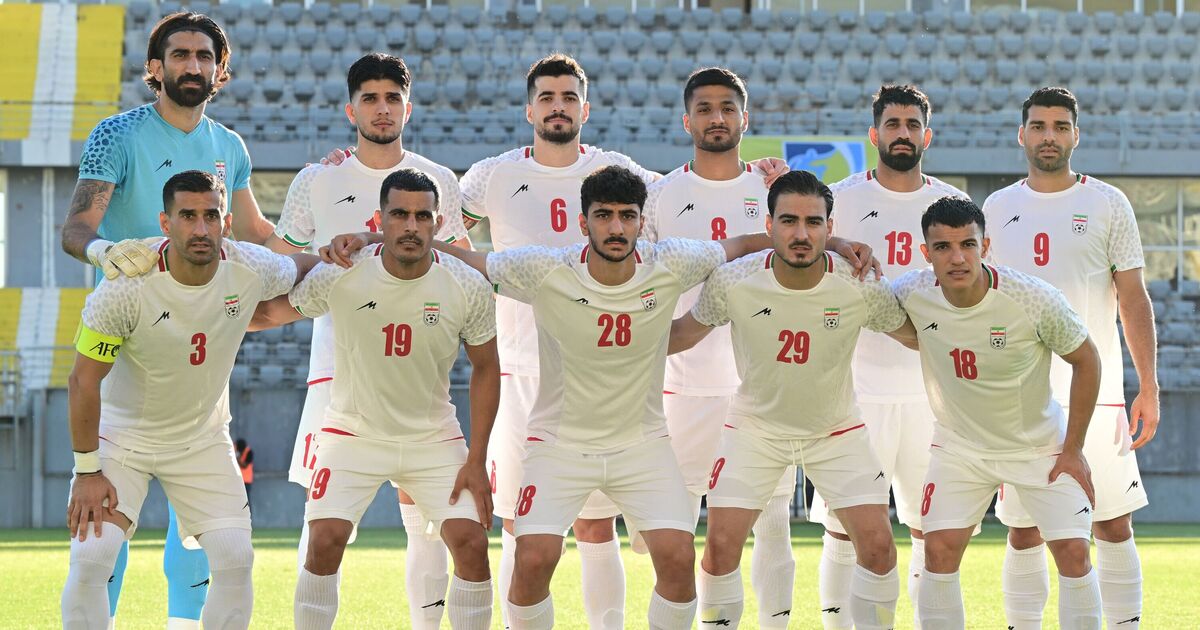
Iran national football team (Image: Getty)
With just one week to go before the World Cup kicks off in the United States, Iran’s national team has become the quintessential political football.
As players prepare for the biggest tournament in world football, in the shadow of a nasty, on-going conflict between the two nations, a growing international campaign is shining a spotlight on what critics describe as an escalating human rights crisis back home, with athletes among those caught up in a murderous wave of executions and political repression.
And today a joint statement signed by more than 20 leading sporting figures from around the world has accused Iran’s authorities of carrying out one of the most severe crackdowns in decades. The signatories include tennis legend Martina Navratilova, Olympic swimmer Sharron Davies (now Baroness Davies of Devonport), former Australia football captain Craig Foster and a host of Olympians, world champions and former national team stars. They issue a stark warning: Iran’s champions are being silenced, and the world must not look away.
The statement details that dozens of political prisoners have been ruthlessly executed in Iran since mid-March following what campaigners describe as showtrials based on forced confessions. Among those named are 19-year-old wrestling champion Saleh Mohammadi and 21-year-old karate champion Sasan Azadvar Joonaghan, both arrested during anti-government protests earlier this year.
The athletes behind today’s statement say Iran’s sporting community has paid a particularly heavy price for political dissent.
“Sport teaches discipline, courage and the value of freedom,” the statement says. “That gives us a moral authority and duty to defend the rights of the Iranian people, particularly their sports champions who are crying out for freedom.”
Iranian sports heroes have a long tradition of using their fame to stand against the Islamic dictatorship which came to power amid the Iranian Revolution in 1979. And in particular Iranian football’s complicated relationship with politics stretches back decades.
Among the most famous examples is Habib Khabiri, the revered defender who captained Iran and helped the country qualify for its first World Cup in 1978.
A gifted footballer and popular figure, Khabiri became one of the most prominent sporting figures to oppose the new authorities following the 1979 Islamic Revolution. Arrested and imprisoned, he was executed in July 1984 at the age of just 29.
Former teammates and fellow prisoners later revealed he had been tortured before his death. Initially buried in an unmarked grave, public pressure eventually led to a simple headstone being placed at his burial site in Tehran.
Journalist Faridun Shibani, who travelled with Iran’s national team during Khabiri’s playing days, later described him as a man of exceptional character.
“I fell in love with the morals of this young man,” he said. “Habib is one of the leaders in recognising and opposing the Islamic Republic.”
Another freedom campaigner was member of Iran’s Under-23 National Football Team, Mahshid Razaghi, also known as Hossein Razaghi. Also a talented defender, he represented Iran’s Under-23 National Team between 1977 and 1979. He was widely regarded as one of the most promising footballers of his generation during a Amir Nasr-Azadangolden era for Iranian football. In December 1980, Razaghi was arrested on charges of selling PMOI/MEK newspapers and giving a false name to the Revolutionary Committee. Sentenced to one year in prison, he was not released and spent nearly eight years in Evin, Ghezel Hesar, and Gohardasht prisons.In August 1988, during the mass executions of political prisoners, he was hanged in Gohardasht Prison in Karaj at the age of 34. A few days later, his brother Ahmad Razaghi was also executed in Evin Prison.
More recently another fullback Amir Nasr-Azadan, who played for leading Azerbaijan club Tractor, attracted worldwide attention after reports emerged that he had been sentenced to death in 2023 following street protests in support of who died in custody after being arrested for wearing her hijab “improperly”. While that sentence was later overturned, he remains imprisoned and faces a long jail term of 26 years for the crime of “waging war against god”.
The latest statement from international athletes also highlights the cases of other sports figures caught up in Iran’s political turmoil.
Among them is boxing coach and champion Mohammad Javad Vafaei Sani, who remains on death row, and wrestling star Navid Afkari, whose execution in 2020 sparked international outrage and condemnation from sporting bodies around the world.
But now, as the World Cup approaches, campaigners are hoping it is football’s global spotlight which can draw renewed attention to the situation.
More than 100,000 people are expected to gather in Paris on June 20 for a major demonstration highlighting executions, political prisoners and wider human rights concerns in Iran. Organisers say the march will also call for democratic change and international action.
The athletes behind the statement are urging governments, sporting federations and the United Nations not to remain silent.
“We call on the United Nations, international sports federations and governments to act immediately to save the lives of Iranian dissidents, including athletes,” the statement says.
“The world must not stand by while Iran silences its champions.”
For Iran’s footballers, the challenge ahead is a familiar one. On the pitch they will be expected to carry the hopes of a football-mad nation. Off it, they remain symbols in a much bigger struggle that continues to divide opinion, stir passions and place sport at the heart of one of the world’s most contentious political battles.
As the countdown to kick-off enters its final days, the spotlight on Iran may prove every bit as intense as the action on the field.


Visa Rules: UK varsities face ban on recruiting Nigerian, other foreign students

Alleged cyberbullying: Sowore opts to represent self in court

NDC Aspirant Urges Tinubu to Declare National Emergency Over Insecurity

Sowore boycotts defence in Tinubu cyberbullying case

Troops rescue six abducted travellers in Plateau, search for missing driver

NBA president condemns excessive bail conditions

ADC Governorship Candidate Suleiman Denies Withdrawal Rumours After Party Rift

 World3 days ago
Pilot of fighter jet downed over Iran previously shot down in Kuwaiti incident
- Breaking3 days ago
Your only wife will deal with you mercilessly in old age – Nigerian woman says as she encourages married men to marry more wives and father children with other women
- Breaking2 days ago
18-year-old teenager jailed for r@ping his 42-year-old aunty
- World2 days ago
Russian airstrikes hit Ukraine's capital Kyiv
- Breaking1 day ago
Young woman uses eggs and schnapps to place curse on man who lied to community members that he slept with her (video)
- World20 hours ago
Donald Trump sparks health panic as he 'falls asleep' in his chair live on TV
- National2 days ago
EXCLUSIVE: How Nigerian Soldiers Abandoned Yashikira In Kwara During Terrorists Attack, Relocated To Checkpoint To Extort N100 From Motorists
- News1 day ago
Sanwo-Olu promises excellent National Intermediate Games