World
Malaga horror as man nearly loses arm from spider bite

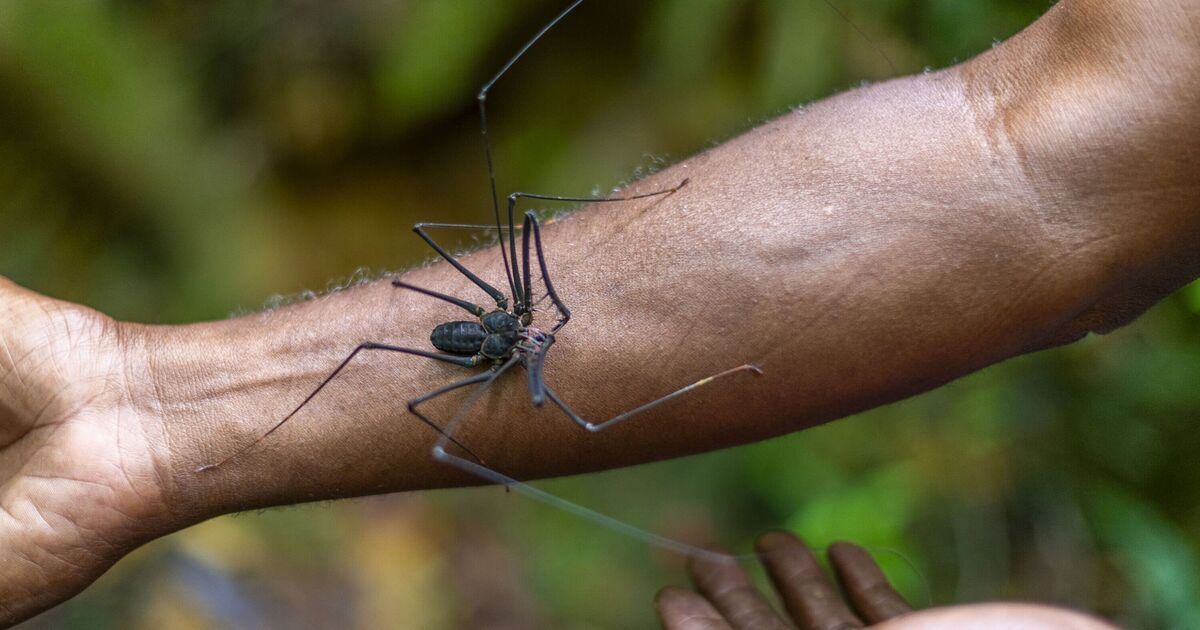
A man from the El Palo neighbourhood of Málaga is continuing his recovery after a severe reaction to a bite from a Loxosceles rufescens, with doctors warning the injury came close to costing him his arm. The incident happened while he was watering plants at a friend’s home when he suddenly felt “a sharp pain.” At first, he assumed it was nothing more than a mosquito bite, but within hours his condition deteriorated rapidly.
He developed a high fever reaching 39C, followed by intense swelling, a growing lump at the site of the bite, and later signs of tissue damage and necrosis spreading through the arm. Alarmed by the speed of the symptoms, the 37-year-old attended a local health centre where medics identified the injury as consistent with a spider bite. Based on its appearance, they believed it had been caused by a Mediterranean recluse spider. Doctors opened the wound to remove damaged tissue and treated him with antibiotics and pain relief.
Relatives described the scene in hospital as deeply distressing. “When they opened the wound, it was full of pus,” one family member said, adding that the condition worsened in the following days as fever and skin damage continued to develop.
Family members admitted they feared the worst during the most serious phase of the infection. “It was horrific; we’ve never seen anything like it,” one relative said. Another added, “I thought he was going to lose his arm,” as the tissue around the bite area darkened and began to die.
Although the man is now slowly improving and attending follow-up appointments, he remains off work while the wound continues to heal.
The spider involved, Loxosceles rufescens, is typically found in dark, undisturbed places such as storage areas or beneath objects like flowerpots. Its venom contains proteolytic enzymes that break down tissue, which can cause severe localised damage in rare cases.
However, experts stress that such incidents are uncommon. Raimundo Real, Professor of Zoology at the University of Málaga, said the bite is “not at all common” in Spain, explaining that the species does not usually attack humans and does not feed on blood. “It must have felt threatened,” he concluded.
He described the spider as one of the “most venomous” species in the Mediterranean region and confirmed that Málaga is “within its distribution area”, although sightings are rare. He added that the animal does not actively seek out humans and will only bite in self-defence if disturbed.
Real also noted that the injury is not technically a typical “bite”, since the spider lacks mandibles, but instead uses chelicerae to inject venom. The substance breaks down proteins in the skin, causing localised tissue destruction.
While the injuries can appear severe, he stressed that they are rarely fatal. “They are potentially dangerous,” the professor added, noting that early medical treatment usually leads to recover


ABU to strengthen distance learning delivery by leveraging digital technologies, says VC

Army rescues mother, baby after Kogi kidnapping attack

The magnetic wall that could replace drilling: A 29-year-old's breakthrough invention

NOLA Africa Pushes Menstrual Health Education for Teen Girls in Lagos Community Outreach

Osun Accord Party Chairman Shot in Suspected Targeted Attack in Osogbo

Cocoa farmers raise concern over persistent price volatility

First Lady donates vehicles to APC women leaders in opposition states

 World2 days ago
Pilot of fighter jet downed over Iran previously shot down in Kuwaiti incident
- Breaking3 days ago
Content creator Mark Angel weds again months after ex-wife did exposé on him and he admitted if he were his daughter he wouldn’t marry a man like himself (video)
- Breaking2 days ago
Young couple seen goofing around in prom video hours before the man k!lled the woman
- World3 days ago
Iran issues horror threat to attack Israel as Trump's ceasefire collapsing
- Politics3 days ago
Tackle insecurity decisively, NDC senatorial aspirant urges Tinubu
- News2 days ago
One Dead, Several Injured After Tragic Keke Crash in Jos
- Breaking1 day ago
18-year-old teenager jailed for r@ping his 42-year-old aunty
- World1 day ago
Russian airstrikes hit Ukraine's capital Kyiv