News
Transport costs: Sleep suffers as workers turn offices into homes

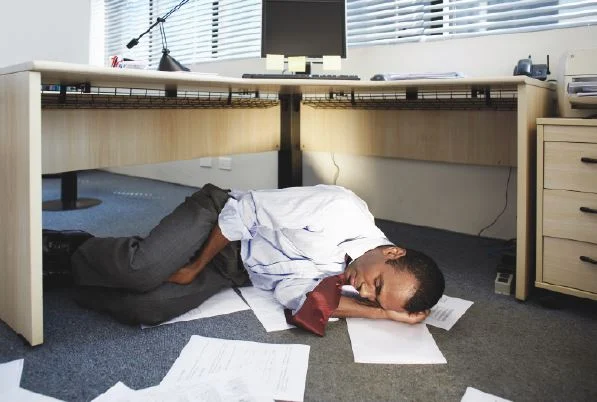
As transport fares soar, driven by rising petrol prices amid poor pay, worsening hardship and deepening poverty, many Nigerian workers are sacrificing sleep to cut costs—turning their offices into makeshift homes where they now spend Monday to Friday nights before reuniting with their families on weekends.
But behind this cost-saving measure lies a hidden health toll, as these workers face increased risks of cardiovascular diseases, including type 2 diabetes, obesity and heart disease as a result of chronic sleep deprivation. IDOWU ABDULLAHI reports
while most residents of Lagos Island were just beginning to stir from sleep at about 5:30 a.m., 28-year-old bank worker, Samson Adeyemi was already in the restroom of his office building, hurriedly brushing his teeth before colleagues arrived.
For nearly eight months, the customer service officer had turned a small corner of his office into a makeshift bedroom.
Unable to cope with the rising cost of transportation and accommodation in Nigeria’s commercial capital, he spends most weeknights in the office.
“I leave the office around 6 p.m. and resume by 7 a.m. the next day. If I go home to Ikorodu every day, I could spend over four hours in traffic and spend around N5,000 on transport daily. My salary cannot comfortably cover it anymore,” he told PidomNigeria Healthwise.
While the arrangement helps him save money from his N130,000 monthly salary, it comes at a personal cost.
Adeyemi said he rarely gets uninterrupted sleep because cleaning staff and overnight activities in the building frequently disturb his rest.
“You can never really sleep deeply or have quality sleep. I have to hide and wait till everyone leaves the building before I can prepare to sleep. Some of our bosses work late into the night, some leave the office around 10 or 11 pm.
“The air conditioning is turned off at night, and there is no proper place to lay your head. I sleep on an uncomfortable office chair. Also, security personnel move around the office building at night, and I have to avoid being caught. I wake up tired almost every day,” he lamented.
Beyond sleep deprivation, maintaining personal hygiene has become another daily struggle.
“There are days I cannot bathe properly before work because the office restroom is always busy early in the morning. Sometimes, I just wash my face and wear the same trousers longer than I should because carrying many clothes around is difficult,” Adeyemi said.
Unrefreshed sleep
Another employee of one of the first-generation banks, Chidinma Francis, faces a similar reality of waking up unrefreshed during weekdays.
After the removal of fuel subsidies and repeated increases in transport fares, commuting from her parents’ residence in Mowe, Ogun State, to Lagos Island became financially draining.
Unable to afford rent closer to work and unwilling to spend several hours in traffic daily, she began sleeping in the office.
The 26-year-old operations officer said, “There is no designated room or resting area. Most nights, I spread clothes on the floor just to sleep on. If you do not want to sleep on the floor, the alternative is to sleep on your desk, which is also uncomfortable. When I wake up in the morning after sleeping on my desk, I do have neck pain.
“Every time I get home on Fridays, my whole body aches. I usually experience body pains and often have to take medication during weekends for body aches.”
According to her, the poor sleep quality and difficulty maintaining proper hygiene have affected both my physical and emotional well-being.
“For example, if I want to brush my teeth in the morning, I cannot use the regular tap water because the Island water is salty. I have to use the dispenser water to brush my teeth. Also, if I want to wash my face, I have to use dispenser water because the regular water can cause rashes or leave spots on my face.
“I am always tired, and I get headaches frequently. Sometimes I feel irritable for no reason. There are days I don’t even feel refreshed after sleeping because I barely get up to five hours of sleep,” she explained.
Among thousands of Nigerian workers struggling with rising living costs, Adeyemi and Francis’ experiences, where quality sleep is being sacrificed to get by, are becoming common.
Across Lagos, Abuja, and other major cities, findings by PidomNigeria Healthwise show that workers are quietly transforming offices into temporary homes as housing costs, transportation expenses, and long commuting hours continue to rise.
Essential pillar of health
Sleep is a basic human need and is essential for good health, good quality of life, and being productive. Like nutrition and physical activity, sleep is also an essential pillar of health.
Sleep is a normal bodily process that allows the human body and brain to rest, according to the Cleveland Clinic.
It explains that stages of sleep fall broadly into two categories: rapid eye movement (REM) sleep and non-REM (NREM) sleep.
“Without enough quality sleep, your body and brain can’t work as they should,” the health website added,
In a study published in the PubMed Central journal,titled, Short- and long-term health consequences of sleep disruption,” the research highlighted the various health risks of long-term sleep deprivation.
“Long-term consequences for otherwise healthy individuals include hypertension, dyslipidemia, CVD, weight gain, metabolic syndrome, and T2DM. There is also evidence that sleep disruption may increase the risk of certain cancers and death in males and suicidal adolescents. Long-term sleep disruption may also worsen the symptoms of a variety of gastrointestinal disorders,” the researchers said.
The World Health Organisation says adults require at least seven hours of quality sleep each night for optimal health.
Data from the World Sleep Society shows that sleep problems constitute a global epidemic, affecting the health and well-being of up to 45 percent of the world’s population.
The WSS data also revealed that 46 percent of individuals who suffer from frequent sleep disturbances report missing work or making critical errors while on the job, compared to just 15 percent of healthy sleepers.
Studies by the National Sleep Foundation indicate that individuals who sleep well are up to 20 per cent more efficient and 30 per cent less likely to make costly mistakes at work or school.
Also, a study published in the Journal of Sleep Health found that workers who slept less than six hours per night were 40 per cent less productive than those who get recommended duration.
According to the Nigerian Medical Association, over 60 per cent of patients reporting chronic fatigue and stress-related illnesses in hospitals in the cities note inadequate sleep as a contributing factor.
Meanwhile, a comprehensive study involving over 1,000 Nigerian adults, conducted in July 2024, found that many Nigerians score barely above 50 percent on standard global sleep health metrics.
The study, which surveyed respondents from all 36 states and the Federal Capital Territory, identified sleep duration as the weakest sleep health dimension, with most adults failing to get the recommended 7 to 9 hours of sleep per night.
The war between the United States and Iran, which began in March 2026, has taken a toll on Nigerians, as the prices of petroleum products, food items and other essentials continue to rise daily.
PidomNigeria Healthwise reports that in Lagos and across the Federal Capital Territory, petrol now sells for between N1,300 and N1,450 per litre, while diesel costs more than N2,000 per litre, reflecting the impact of global oil price movements.
The price hike, driven by global market pressures and currency fluctuations, has significantly increased transportation costs. Many Nigerian workers lament that they now spend more than 70 per cent of their income on transportation amid the rising cost of living.
Noticeable trend
Reports on housing by The PidomNigeria have consistently shown that Lagos remains one of Nigeria’s most expensive cities for renters, particularly low-earning employees.
A report by Knight Frank revealed that residential rents in Lagos continued to rise despite eased headline inflation in the second half of 2025, with notable increases recorded in some locations compared with H2 2024.
Aside from unaffordable rents, transport costs have surged significantly following increases in fuel prices, which jacks up amounts spent on transportation by workers earning N150,000 and below monthly to around N50,00 to N70,000 for those who commute daily.
In Lagos, particularly, daily commuting can consume several hours, leaving workers who stay in suburban areas like Ikorodu, Epe, Badagry, Iyana Ipaja, and Abule-Egba with little time for adequate rest.
Speaking with PidomNigeria Healthwise, some commercial drivers claimed there had been a noticeable trend in Lagos’ transport patterns.
A commercial bus driver, Idris Saka, who plies the Ikorodu-Lagos Island route, said Monday mornings are now among the busiest periods of the week.
According to him, large numbers of workers heading towards Lagos Island, Victoria Island and Ikoyi carry backpacks and small travel bags.
“Monday mornings and sometimes, Sunday nights, the buses and bus parks are packed. You see people carrying office bags and another small bag that looks like they are travelling. Many of them are office workers going to the Island,” he said.
Saka noted that passenger traffic most times drops after Monday.
“From Tuesday to Thursday, the rush is not the same. The roads are still busy, but the number of people travelling from the suburbs to the Island reduces. Then by Friday evening, everywhere becomes crowded again because those same workers are returning home after spending most of the week in Lagos,” he added.
Another middle-aged driver, Innocent Okafor, who operates the Berger-CMS route, shared a similar observation.
Okafor said the commuting pattern suggests that many workers now spend several days away from their homes to reduce transport costs and avoid Lagos’ traffic.
“Especially very early on Monday mornings, there is a serious rush towards Victoria Island, Ikoyi, and Lagos Island. On other weekdays, business slows down a bit because many of those workers are already around their offices.
“It may be to save cost or avoid Lagos traffic. But on Friday evening, you’d clearly see that many people are staying close to work during the week and only going home for weekends,” he explained.
Workers sacrifice quality sleep
For some employees, sleeping at work appears to be the only practical option to navigate worsening economic realities.
More than five workers who spoke with PidomNigeria Healthwise shared how they are sacrificing quality sleep to stay afloat.
For a 35-year-old project manager, Seyi Adebayo, sleeping at work began as a temporary arrangement when he joined his company in the Ikoyi area of Lagos in 2024.
Two years later, it has become a routine.
“I told myself it would only be for a few months. But the more I save 50,000 monthly towards rent, the more rent increases in Lagos. As I speak to you, I’ve only been able to save around N800,000, and despite that, I couldn’t get a decent apartment on the mainland area closer to the island. Before I realised it, I had spent almost two years sleeping in the office during weekdays,” he said.
The arrangement, however, has taken a toll on his health.
“I am constantly fatigued. Even on weekends when I try to rest and sleep, I don’t feel recovered. Sometimes I struggle to concentrate during meetings. Even at home, I’m hardly able to focus for long to keep a proper conversation going,” he added.
Similarly, a marketing executive in Victoria Island, Blessing Ideye, said irregular sleep patterns had affected her productivity and mood.
She said, “I sleep around four to five hours every night at the office. There is constant noise that interrupts my sleep, and the chairs and table are not comfortable for sleeping. I am always stressed, even after just waking up. There’s always back, neck, body pain and constant headaches.
“And my appetites have taken a hit as I eat mostly junks at night because I don’t want people seeing me around after the close of business.
“Sleeping at the office has impacted my personal life and family relationships because I now spend reduced time with family, and communications with loved ones have dropped. When other colleagues leave the office after closing hours, I always feel isolated and bored.”
On personal hygiene while sleeping overnight at work, the 26-year-old said, “The bathroom there is very small. There is no tap where you can fetch water; there is only a shower, and the shower barely works properly. The water trickles out bit by bit.
“Besides, the office is on the Island, and the water quality is not good. It often feels like salty water. Even when you use soap and a sponge, it takes a long time before the soap rinses off your body because the shower runs so slowly, almost drop by drop.
“All these things make life uncomfortable. It is not convenient at all. It is very different from being in your own home, where you have your personal space and freedom.”
On his part, 34-year-old financial analyst, Shola Emmanuel, said the consequences of sleeping at the office have extended beyond fatigue.
“I developed recurring back pain from sleeping on office furniture, and I sleep less than 5 hours. I’m always sleep-deprived. I also gained weight because my eating and sleeping schedules became irregular,” he said.
The 34-year-old, who got married in early 2025, said being away on weeknights was already threatening his marriage.
“I live in Sango Ota, and I work at VI, so commuting every day is not something I can afford. I leave home very early on Monday and return late on Friday. By the time I get home, I’m always tired and just want to sleep. On Saturdays, I go for choir practice, and on Sundays, we go to church. I barely have time for my wife, and that’s causing misunderstanding already,” he said.
The names and identities of the workers spoken to by PidomNigeria Healthwise have been changed to protect their jobs.
However, health experts say the long-term consequences of sleep deprivation may be far more costly than the financial savings measures.
Why sleep matters— Experts
Public health and mental health experts who spoke to PidomNigeria Healthwise explained that sleep is not merely a period of rest but a critical biological process that allows the body and brain to recover.
The experts warned that poor-quality sleep, even when it appears sufficient in duration, can have serious health consequences.
They explained that frequent interruptions during sleep prevent the brain from completing essential restorative processes.
According to the physicians, when we talk about healthy sleep, we are referring to good-quality sleep that lasts between seven and nine hours.
A Consultant Public Health Physician at the University of Ilorin Teaching Hospital, Kwara State, Dr. Mojirola Fasiku, explained that people sleeping in offices are often exposed to environmental and circumstantial disturbances that reduce sleep quality.
“That type of sleep is usually not quality sleep. They may sleep on a chair or in an uncomfortable position, which does not provide proper rest,” she said.
Explaining the importance of sleep, Fasiku said, “Sleep refreshes the body. It helps people reason better, supports healthy blood vessel function, and improves concentration compared to those who do not get adequate sleep.
“Research has shown that people who sleep well generally enjoy a better quality of life. They are more productive, think more clearly, and are less likely to become ill or develop chronic diseases compared to people who do not sleep well.”
On workers struggling with poor hygiene, Fasiku said, “They may develop skin infections, including fungal infections. Some may develop scabies and other skin-related conditions resulting from inadequate bathing and poor hygiene practices.”
Cardiovascular disease risk
Fasiku explained that research has linked chronic sleep deprivation to increased risks of hypertension, obesity, diabetes, cardiovascular disease, and weakened immunity.
“Regarding the long-term effects, if this pattern continues over time and a person consistently gets less than six hours of quality sleep, the person may be at risk of developing high blood pressure, diabetes, and obesity. These conditions have all been linked to long-term sleep deprivation.
“Some people may also go on to develop cardiovascular diseases such as hypertension, heart attack, and stroke. These are among the major long-term consequences of chronic sleep deprivation,” she said.
Also speaking, a Consultant Family Physician and International Board Certified Lifestyle Medicine Physician at the Lagos State University Teaching Hospital, Ikeja, Dr. Eniola Afolabi-Obe, warned that sleep deprivation can also have immediate adverse effects on an individual’s physical, mental, and emotional well-being.
According to the expert, people who do not get adequate sleep often wake up feeling tired, with the effects persisting throughout the day.
“As we all know, the body has an internal clock that tells us when it is time to wake up and when it is time to sleep. This internal clock is known as the circadian rhythm. When there is disruption to the circadian rhythm, sleep patterns are affected,” she said.
Afolabi-Obe noted that insufficient sleep significantly affects attention and concentration, making it difficult for individuals to remain focused at work.
The expert said sleep deprivation can reduce productivity at work and increase the likelihood of errors, mistakes, and accidents.
According to her, sleep-deprived persons may also experience mood changes, including irritability and emotional instability, which can affect their interactions and overall quality of life.
Premature death risk
The family physician said that when sleep deprivation accumulates over a long period, chronic conditions develop, including the risk of premature death.
“Sleep plays an important role in regulating hormone functions and immune functions. As a result, sleep-deprived individuals may experience a decline in immune function. A lot of the time, people do not notice these effects immediately. However, after a prolonged period of sleep deprivation, these conditions begin to manifest,” she said.
Afolabi-Obe added, “We also know that mortality rates are higher among people who are chronically sleep deprived.
“They are at greater risk of premature death. In addition, they are more prone to early cognitive decline. As they grow older, they tend to develop cognitive problems earlier than people who get adequate sleep.”
Sleep-deprived workers risk depression, anxiety – Psychiatrist
A Consultant Psychiatrist, Dr Sunday Amosu, said a lack of sleep can contribute to the development or exacerbation of mental health conditions, such as depression, anxiety, and mood disorders.
Amosu, who is the Head of Drug Addiction Treatment Education Research at the Federal Neuropsychiatric Hospital, Aro, Abeokuta, Ogun State, maintained that sleeping in an uncomfortable environment, such as a workplace, may take a toll on workers’ mental health.
To address this problem, the psychiatrist said, “It is essential to raise awareness about the importance of sleep and to encourage people to prioritise their rest, even when they are facing difficult circumstances.
“This may require a shift in cultural attitudes and the implementation of policies that support workers’ well-being.
“It is also important to recognise that not everyone has the same access to resources that can help them get a good night’s sleep,” he said.





One killed as armed men attack Benue community

US Air Force scrambles to rebuild MQ-9 reaper fleet after heavy combat losses

Dateline 2027: When terrorism becomes a political strategy

Who is Han Seong-sook? South Korea first likely woman Prime Minister in 20 years

“Sustain pressure for release of abducted Ogbomosho pupils” – Rep member begs security agencies

Saved by the barrel: Why crude hasn't hit the $200 mark

Transport costs: Sleep suffers as workers turn offices into homes

 World2 days ago
Donald Trump sparks health panic as he 'falls asleep' in his chair live on TV
- News3 days ago
WHO Warns Unsafe Food Behind Millions of Illnesses and Deaths Worldwide
- Breaking1 day ago
Woman shares flimsy reason that made her breakup with her boyfriend who was âperfectâ
- Breaking2 days ago
"Are you not ashamed to post this?" Politician called out after sharing project she commissioned in her Constituency
- Business3 days ago
Alpha10 unveils Halal Fund to support MSMEs
 News3 days ago
INTERPOL Nabs Accountant at Lagos Airport After Months on the Run Over ₦150m GRA Burglary Case
 Business3 days ago
IFC, Standard Chartered launch $300m finance facility
- News3 days ago
Police secure final forfeiture of ₦2bn assets linked to alleged fraud scheme