Breaking
US and Iran exchange fire as Trump seeks changes to proposed deal to end war

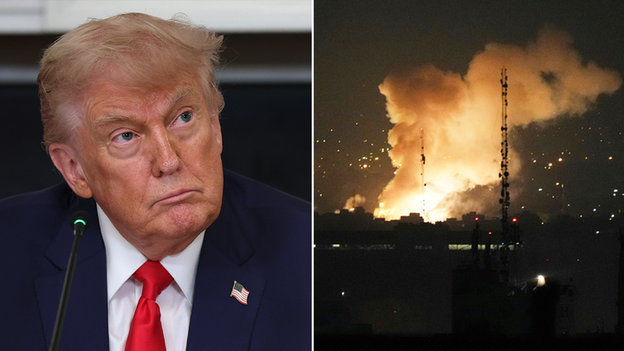
The United States carried out what it described as “self-defence” strikes inside Iran over the weekend as President Donald Trump pushed for changes to a proposed agreement aimed at extending the ceasefire and reopening the Strait of Hormuz.
.....
According to US Central Command (CENTCOM), the strikes targeted Iranian radar systems and command-and-control sites in response to what it described as aggressive Iranian actions, including the alleged downing of a US MQ-1 drone operating over international waters.
“US fighter aircraft swiftly responded by eliminating Iranian air defences, a ground control station, and two one-way attack drones that posed clear threats to ships transiting regional waters,” CENTCOM said.
Meanwhile, Iran’s Islamic Revolutionary Guard Corps (IRGC) claimed it launched strikes against a US air base allegedly used in attacks on a telecommunications tower on Sirik Island. Iranian state media reports did not specify which base was targeted.
The announcement came shortly after Kuwait reported intercepting drone and missile attacks.
Despite an existing ceasefire established in early April, Iran and the US have repeatedly exchanged fire in recent weeks. Similar incidents last week also saw Kuwait report missile and drone activity linked to Iran, raising concerns over regional stability despite the ceasefire remaining in place.
At the centre of ongoing negotiations is a memorandum of understanding designed to formally end hostilities and create a pathway for broader talks on unresolved issues.
Trump reportedly requested several revisions to the proposed agreement following consultations with advisers on Friday, extending negotiations further.
“Iran really wants to make a deal, and it will be a good one for the U.S.A. and those that are with us,” Trump wrote on Truth Social after confirmation of the latest strikes.
While the exact changes remain unclear, officials said Trump wants stronger commitments regarding Iran’s nuclear programme and guarantees surrounding the reopening of the Strait of Hormuz.
US allies in the Gulf region have reportedly been briefed on the discussions, while one foreign official familiar with the matter suggested the changes are largely aimed at securing stronger assurances rather than altering the framework itself.
This Video Is Trending Right Now 👇
Click here to watch the video
Trump has also expressed concern over possible financial relief for Iran, wary of comparisons to previous agreements he has criticized.
Although Trump previously described the agreement as “largely finalized,” no final decision emerged after Friday’s White House discussions.
Iranian Parliament Speaker Mohammad Bagher Ghalibaf said Tehran would not approve any agreement until its rights are fully protected.
“The soldiers of the diplomatic battlefield have no trust in the words and promises of the enemy. What matters to us is tangible achievements that we must obtain, in exchange for which we will fulfil our commitments,” he said.
Meanwhile, sources revealed an Iranian ballistic missile was intercepted last week near Ali Al Salem Air Base in Kuwait, causing minor injuries due to falling debris.
US lawmakers have also questioned how practical parts of the proposed agreement may be, particularly regarding securing the Strait of Hormuz and limiting Iran’s regional capabilities.
The continued tensions have placed additional pressure on global energy markets.
National Economic Council Director Kevin Hassett said the United States still has significant oil reserves available to help stabilise prices.
“There’s plenty of runway. There’s a lot of pressure on Iran to finally agree to the president’s terms,” he said.
The Strategic Petroleum Reserve reportedly declined by another 9.1 million barrels between May 15 and May 22, while average US gasoline prices stood at $4.34 per gallon on Sunday.
Analysts say oil supply chains may require up to two months to normalise if an agreement is reached and restrictions in the Strait of Hormuz are lifted.
Rising energy costs have continued to influence public sentiment about the economy, with recent polling showing many Americans remain concerned about inflation and household finances.
For more Naija celebrity news and updates, keep following Gist News for the latest Naija celebrity news and trends in Newspaper Nigeria Headlines.
Naija gist news
latest Naija gist
Naija news live


Gunmen kill two, abduct 30 travellers in Kogi

Alpha Morgan Bank Delivers Historic Performance, Posts N1.9 billion PBT in First 10 Months of Operations
Alpha Morgan Bank Delivers Historic Performance, Posts N1.9 billion PBT in First 10 Months of Operations

Brooklyn landlord says he lost $325,000 as tenant stayed without paying rent

Tricycle operator sentenced to death for murder in Anambra

Bandits attack Kaduna mosque, k!ll worshipper, abduct several others

Tackle insecurity decisively, NDC senatorial aspirant urges Tinubu

 Breaking2 days ago
Nigeria confronted with outcomes of institutional neglect — Tunde Bakare
- News2 days ago
Seyi Makinde clinches APM presidential ticket
- World2 days ago
Raheem Sterling arrested for suspected drug driving amid ‘strain from career’
- Politics2 days ago
Osun NNPP concedes 50% of legislative tickets to female candidates
- News2 days ago
Saraki urges young women to prioritise education, skills for economic independence
- World2 days ago
Trump lashes out after removal of his name from Kennedy Center- 'System is rigged'
- News2 days ago
Liverpool confirm exit of head coach Arne Slot
- World2 days ago
5/30: Saturday Morning