Society
24,000 treated for suspected cholera in Borno

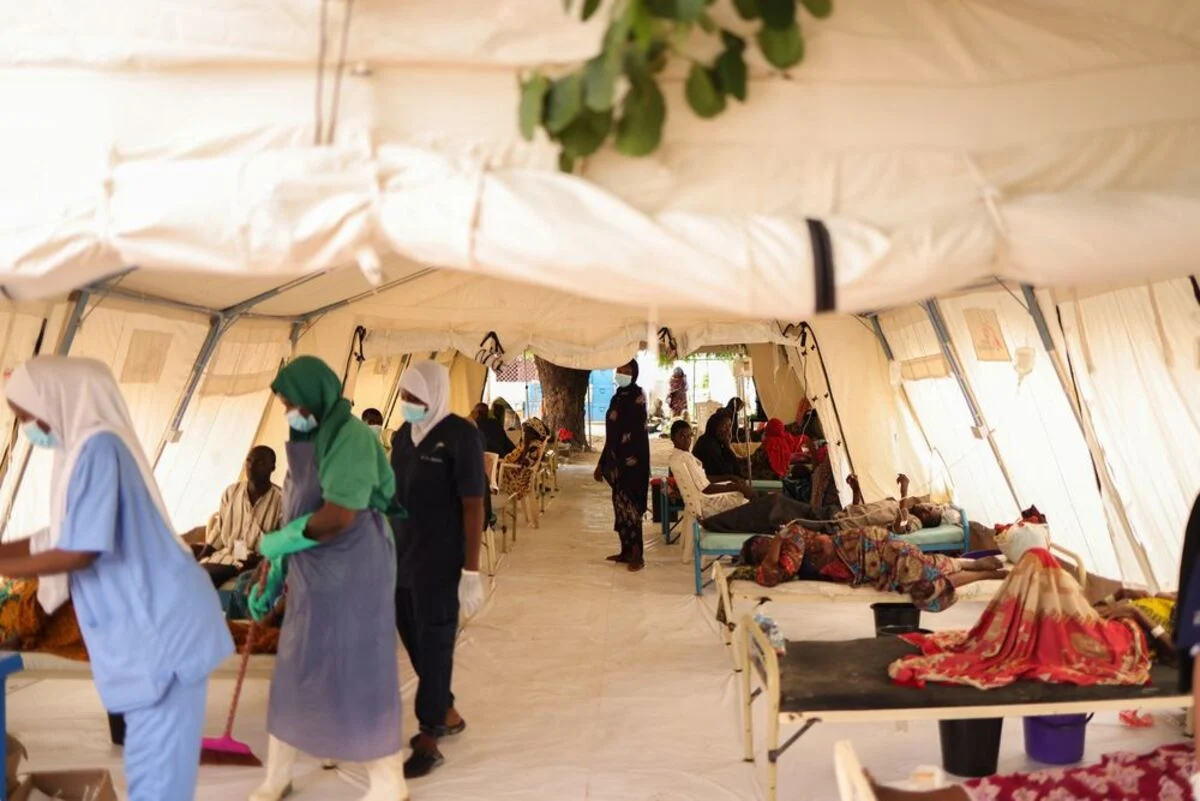
No fewer than 24,000 people have been treated for suspected cholera in Borno State, north-eastern Nigeria, as thousands of people have been affected by a rapid surge in suspected cases, leaving healthcare facilities overwhelmed while healthcare workers struggle to keep pace.
The disclosure was made by the humanitarian health organisation Médecins Sans Frontières (MSF), also known as Doctors Without Borders, in its latest report on the situation.
Among those affected is 13-year-old Muhammad Usman, who was brought by ambulance to the MSF-supported Cholera Treatment Centre (CTC) in Maiduguri after developing symptoms.
“He started vomiting, had diarrhoea and complained of stomach pain,” said Hadiza Ali, Muhammad’s mother. “Later, he lost consciousness. We realised it could be cholera.”
Muhammad is one of thousands of people affected since the first patients with suspected cholera were reported on 1 May 2026. Infections have risen rapidly, driven by overcrowded informal settlements, limited access to safe drinking water, inadequate sanitation and poor waste management.
As of 12 July, the Borno State Ministry of Health (MoH) had reported more than 35,500 patients with suspected cholera and 198 deaths in the state.
Cholera is an acute bacterial infection of the intestine that spreads through contaminated food and water, causing severe watery diarrhoea and dehydration. Without prompt treatment, the disease can become life-threatening within hours.
As transmission has intensified, MSF is responding to the surge in collaboration with health authorities and other humanitarian organisations.
Across Borno State, MSF now supports two Cholera Treatment Centres and five Cholera Treatment Units — specialised facilities providing inpatient care for people with severe symptoms of suspected cholera — alongside 17 oral rehydration points offering treatment closer to affected communities.
As of 12 July 2026, MSF had treated more than 24,000 patients with suspected cholera since responding to the surge, with more than one in four presenting with severe symptoms.
“We have significantly expanded our response over the past two months, but transmission is still spreading faster than efforts to contain it, mainly due to a lack of access to clean water, sanitation and healthcare,” said Bienfait Tombola, MSF project medical coordinator in Maiduguri.
While many communities are aware of suspected cholera cases, understanding of how the disease spreads remains limited.
Kyari Ali, 65, sought treatment at the CTC after suddenly developing diarrhoea and severe weakness.
“Many people in my family and community have suspected cholera. I even have relatives who are also here in the treatment centre,” said Kyari. “I don’t know how I got the disease; I don’t know how cholera spreads.”
To increase understanding of cholera, MSF has expanded community awareness campaigns alongside other preventive measures, such as infection prevention measures, healthcare worker training and improvements to water and sanitation, including the chlorination of water at key collection points.
In early July, health authorities, supported by MSF, conducted an oral cholera vaccination campaign that reached more than 2.6 million people.
Despite significant efforts to curb transmission, many communities, particularly those living in informal settlements, still lack access to clean water, sanitation and healthcare, allowing transmission to continue.
The outbreak has also spread beyond Borno into neighbouring Plateau State, where the MoH had reported 102 patients with suspected cholera as of 12 July 2026.
With health facilities under sustained pressure and new infections continuing to emerge, strengthening access to clean water, sanitation, surveillance and timely treatment is critical.
Furthermore, vaccination campaigns must urgently be expanded across affected areas to help slow transmission and prevent further loss of life.


FDA Shuts Down Amasaman Sachet Water Company Over Unlicensed Operations, Poor Hygiene Conditions

Their Dads Are Pals Despite Political Differences. They See a Lesson in That.

How arsonists used cats to spread Italy’s wildfires

Boko Haram recruits kidnapped children after losing fighters – Presidency

Comedian/actor, MC Lively set to wed his woman, Dumebi James; shares their pre-wedding photos

Standoff with Iran prompts a nuclear deal with Saudi Arabia

Woman paraded in Enugu community for allegedly force-feeding human faeces to child in her care

 Society3 days ago
Pepper Seller Caught On Camera Applying Pepper On Newborn Baby As Rituals To Usher Her Into The Business
- Society3 days ago
2026 Ballon d’Or: Top 4 players to win award after World Cup final revealed
- Investigation1 day ago
65-year-old married female teacher blindfolded and tied 10-year-old schoolboy to bed before having s3x with him
- World3 days ago
Spain earns $51 million for World Cup win and runner-up Argentina gets $34 million as total payout for all 48 teams hits record-high $871 million
- Investigation1 day ago
"I ‘m fine and healthy" – Video of late Mary Habila debunking her d3ath rumours 3 days before she d!ed at Umahi’s residence
- Investigation1 day ago
âBusinesses are dy!ng in South Africa. Nobody is making money – South African man decries low patronage days after anti-immigrant protest
- Investigation3 days ago
Choirmaster sentenced to 25 years imprisonment for r@ping 16-year-old girl during âdeliveranceâ in Anambra
- Investigation2 days ago
âResurrection of the Christâ writer reveals actor Mel Gibsonâs dark spiritual warning about âPassionâ sequel