World
At least 18 people die in bid to reach Spanish enclave of Ceuta

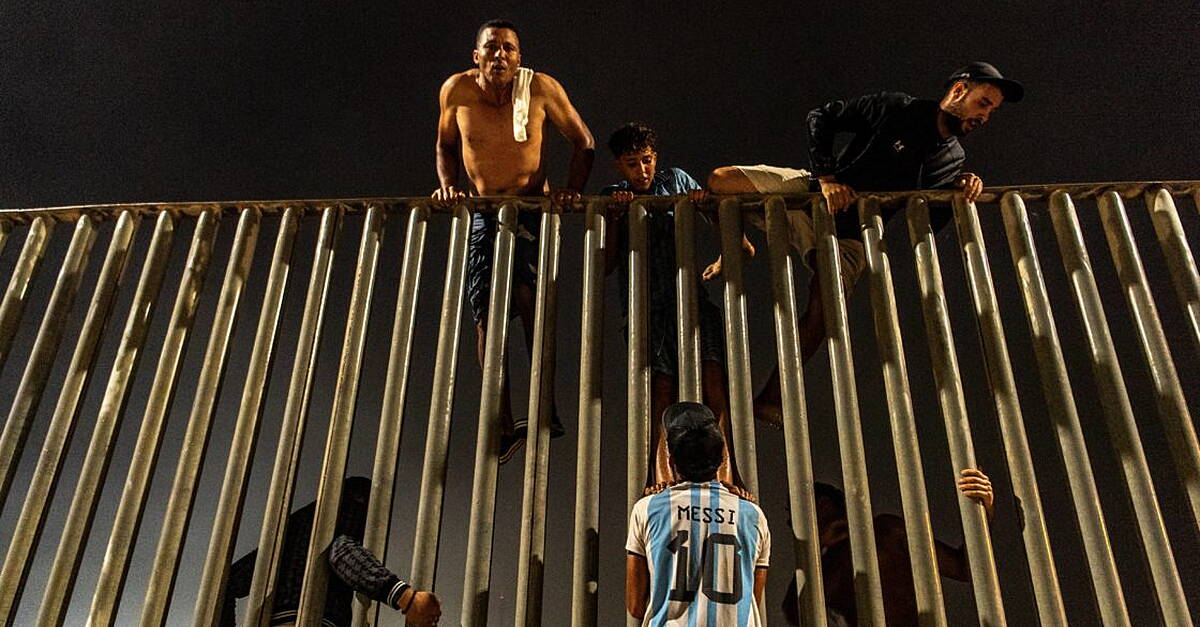
At least 18 migrants have died trying to reach the Spanish territory of Ceuta after thousands of people breached the frontier with Morocco and poured in.
The border crisis boiled over on Thursday and overnight. Spain’s state broadcaster RTVE broadcast images of burned cars on the Moroccan side of the border after reported clashes.
Rachid Sbihi, who leads a local workers association representing Civil Guard officers, called the situation a “serious humanitarian crisis”, saying thousands of migrants, including unaccompanied children, were left sleeping in parks and on pavements, while others roamed the streets aimlessly.
“People are still entering. The reinforcements that have arrived are only helping the injured and other humanitarian efforts,” he said. “It’s chaotic.”
Among the 18 who died, many drowned, Mr Sbihi said, but some were also killed in a stampede to cross the breakwater fence at Tarajal, an urban beach near a border checkpoint with Morocco.
Ahmed Karim, a 33-year old Moroccan, said he had crossed into Ceuta because of the lack of jobs in his country.
“Many people want to go to Europe, America, but they don’t have the opportunity,” Mr Karim said.
On Friday morning, the waters near the border fence were littered with buoys as crowds of mostly young men were amassed near the crossing.
Spanish Prime Minister Pedro Sanchez is expected to join interior minister Fernando Grande-Marlaska in a visit to Ceuta on Friday.
French interior minister Laurent Nunez said France would strengthen border checks with Spain, writing on X that he had activated the Rapid Intervention Border Force.
Video footage on Thursday showed throngs of people, mainly Moroccans, walking around the breakwaters onto local roads. While most appeared to be young men, there were also families with women and small children. Some migrants were also attempting to return to Morocco, according to a freelance photographer working for the Associated Press.
Moroccan authorities have not publicly commented on the crossings, and Morocco’s Interior Ministry did not respond to requests for comment.
It was not immediately clear what prompted so many people to cross into Ceuta.
Spain is a main point of arrival into Europe for migrants seeking better economic opportunities or an escape from violence in their home countries.
To reach Ceuta, located on the northern African coast, migrants often swim from the Moroccan town of Fnideq, covering about three miles to reach Spanish territory. Others attempt the crossing from the nearby town of Belyounech, where the distance is shorter.
Migrants from Morocco also attempted to cross into Melilla, Spain’s other territory at the tip of North Africa.

There was widespread chaos in Bni Nsar, the Moroccan town bordering the Spanish territory, where migrants clashed with police, throwing rocks and setting police vehicles on fire, according to local media and rights groups. They reported injuries among security forces and the arrest of dozens of people attempting to cross.
Omar Naji of the local branch of the Moroccan Association of Human Rights, who regularly monitors migration attempts and helps families identify bodies, told AP that attempts to cross into Melilla had already been recorded in recent weeks. However, the latest surge appeared to have been driven by the situation in Ceuta.
Like Ceuta, Melilla is a Spanish autonomous city on the North African coast. Many Moroccans consider both cities to be occupied territory.
Migrants often try to enter Melilla by scaling the 19ft fence separating the enclave from Morocco. In 2022, thousands of sub-Saharan migrants attempted to cross the border that way, and dozens died in one of the deadliest such incidents on the route.
The escalation at the frontier between Spain and Morocco comes after a surge in migrants attempting to reach the territory, mainly by swimming, on Wednesday.
Ceuta authorities had previously linked the surge to a Spanish Supreme Court ruling earlier this month that barred authorities from immediately returning migrants who arrive by sea without due process. The ruling does not apply to migrants who enter Spain by land, including by climbing over the border fence.

But some activists in Morocco expressed doubt that the ruling was behind the surge, arguing most migrants would have been unaware of such legal decisions.
Juan Jesus Vivas, the head of Ceuta’s regional government, had called for the national government to declare an emergency on grounds of national security, asking for more police and for the army to be deployed on the border “to guarantee the inviolability of the frontier and citizen safety”.
He had warned that migrant reception centres were already overwhelmed on Wednesday, with hundreds of people sleeping on the streets. Thousands or even tens of thousands are believed to have arrived since then.
Spain’s Interior Ministry, which tracks irregular migration, would not confirm the number of migrants who had made it to Ceuta in the past few days but said it would publish its next migration report on Monday.
Spanish media, citing unnamed government and security sources, estimated between 30,000 and 49,000 migrants had crossed in the past 24 hours.
A member of Spain’s civil guard said that 49,000 people were estimated to have crossed. That is more than half of Ceuta’s nearly 84,000 population.
Legislation covering a declaration of national emergencies does not consider migration flows as a risk to national security, according to the ministry, which said government agencies are “co-ordinating to respond with speed and efficacy to the situation in Ceuta”.
Ceuta has been a Spanish possession since 1580. Its mixed population of Christians and Muslims, Spanish and Moroccan residents and day workers, lives in relative harmony behind a border fence that many desperate migrants from across Africa attempt to cross for a better life in Europe.


FG to stop electricity subsidy payments from 2027

Gehgeh Breaks Silence on Viral Wedding Drama, Reveals What Really Happened

Court jails two Chinese nationals 50 years for illegal mining

German Court Delivers Landmark Ruling Against AI Music Firm Suno, Citing Copyright Infringement

Bandits attack Catholic Bishopâs residence and abduct seminarian in Benue

Oloyede Leaves JAMB, Reveals Next Move After 10 Years in Office

New JAMB Registrar assumes office, declares war on malpractice

 Breaking3 days ago
ââDo not shake hands”- UNILAG shares anti-r@pe advisories to female students
- World2 days ago
My daughter’s squishy toy burst on her legs. We ended up in the emergency room.
- National3 days ago
EXCLUSIVE: Police Indict Unity Bank Cooperative Officials in ₦85 Million Fraud Investigation
- National2 days ago
FG Exceeds 2024 Borrowing Target by ₦4.79tn as Debt Hits ₦12.62tn
- Society3 days ago
Transfer: Beşiktaş deny receiving Saudi bid for Ndidi
- National3 days ago
Kaduna 2027: PDP’s Bawa unveils running mate
- Investigation3 days ago
Nigerian woman di£s of cardiac arrest while visiting the UK
- World3 days ago
Who Wins (and Who Loses) in the Democrats’ New 2028 Primary Calendar?