World
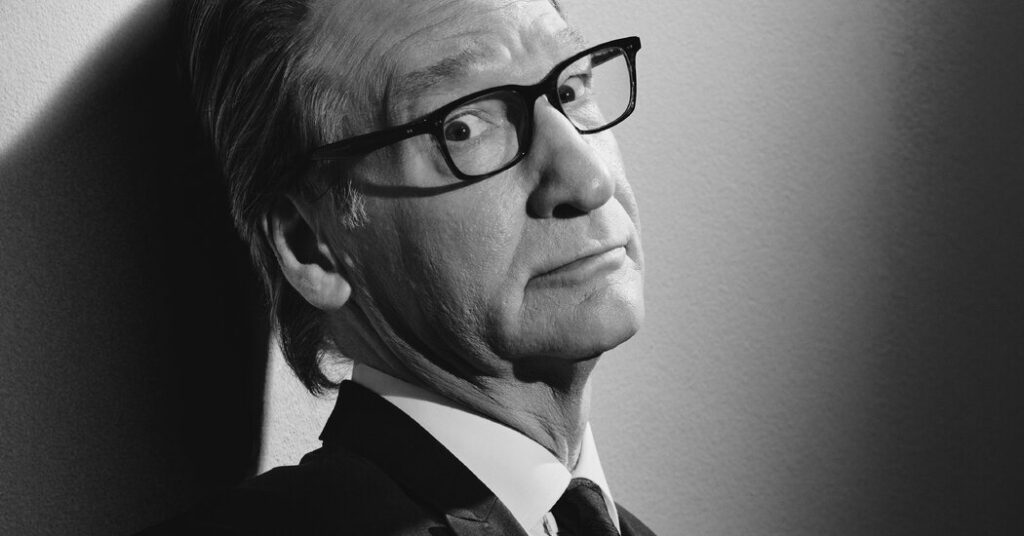
Bill Maher Feuded With Trump. Did He Get the Last Laugh?

This Video Is Trending Right Now
Bill Maher tapes his podcast, “Club Random,” in an elaborate man cave on his sprawling property in the hills above Los Angeles. He once described the recording studio as a “discothèque”; a man cave, he said, is “for a married guy,” a fate the 70-year-old comedian has spent a lifetime avoiding.
Outfitted with a pool table, a full bar, a stripper pole and a glowing “Politically Incorrect With Bill Maher” sign, a remnant of the brash late-night talk show he hosted from 1993 to 2002, the place is equal parts 1970s rec room, psychedelic speakeasy and Hollywood prop warehouse. In the bathroom, a life-size robot modeled on the comedian Whitney Cummings lies sprawled in a tub wearing a tie-dye “Club Random” shirt, a blunt dangling from its lips.
The podcast debuted in 2022 and is Maher’s attempt to approximate how he talks when there are “no cameras, no audience, no network,” in contrast to his HBO show, “Real Time With Bill Maher,” which is now in its 24th season. To reinforce the illusion, during taping only Maher and his guest are allowed inside the studio. (Remotely operated cameras, some hidden in the walls, capture the conversation for the video version of the show.) The format invites a freewheeling intimacy lubricated by a side table overflowing with liquor bottles, drinking glasses, joints, lighters and smoking accessories. Jerry Seinfeld, who has been friends with Maher since the late 1970s, when they were young stand-ups in New York, told me he mostly watches the podcast to see “the clinking and clanking and maneuvering” as host and guest negotiate the tabletop chemistry experiment. In a bizarre 2023 episode, the actor Richard Dreyfuss slowly slid out of his armchair, sprawled at an angle while discussing incest.
Maher invited me to his discothèque in late May, about a month before he was slated to receive the Mark Twain Prize for American Humor, often considered comedy’s highest honor. Being feted by his peers was unfamiliar territory; he rarely tires of tallying the awards he hasn’t received. Though he has been nominated for more than 40 Emmys, he has won only once, as a producer for the HBO series “Vice” — a drought he has called a “soft cancellation.” He has a long memory for perceived slights. When I brought up a 2008 Radar profile that featured him nailed to a crucifix (a reference to his religion-skewering documentary, “Religulous”), he replied, “I was supposed to be on the cover.” It went to Shannen Doherty instead.
The Mark Twain Prize would go a long way toward rectifying those injustices. Maher would be the prize’s 27th recipient, joining the ranks of Richard Pryor, Steve Martin, Tina Fey and last year’s winner, Conan O’Brien. Emmys, schmemmys. But Maher still wasn’t entirely sure it would happen. He has spent years locked in a public feud with President Trump — and, in one final surprise, Trump installed himself as chairman of the John F. Kennedy Center for the Performing Arts, which administers the award in conjunction with Netflix, where the ceremony streams each year. Would Trump intervene, turning Maher’s long-awaited honor into another chapter in their public psychodrama?
Their fraught history predates the last decade of political surrealism. In 2013, after Trump spent years demanding that Barack Obama prove where he was born, Maher offered $5 million to a charity of Trump’s choosing if he could prove he wasn’t “the spawn of his mother having sex with an orangutan.” Trump’s lawyer sent over a copy of his birth certificate, “demonstrating that he is the son of Fred Trump, not an orangutan,” then unsuccessfully sued when no check arrived. Maher spent the next decade as one of Trump’s loudest Cassandras, routinely insulting him — “conscienceless scumbag,” “syphilitic monkey” — and warning, correctly, that he wouldn’t concede an electoral loss.
Then came the plot twist that scrambled everyone: The antagonists shared a steak dinner. In March 2025, Kid Rock brokered a sit-down at the White House that Maher saw as a practical attempt to puncture the bubble around the president. “It’s an administration of ‘people are saying,’” he told me. “If that’s how the president gets his information … then be one of the people saying things.”
But when he recounted the meeting 12 days later on “Real Time,” many viewers thought he had too many nice things to say. He called Trump “gracious and measured” and far more self-aware in private than the “crazy person” he plays on television. Though Maher added that “it doesn’t matter who he is in a private dinner with a comedian — it matters who he is on the world stage,” many people, including Maher’s friend Sean Penn, questioned the emphasis on Trump’s likability. “I didn’t understand that,” Penn told me.
Others couldn’t get past Maher’s accepting the dinner invitation at all. Among them was another friend, Larry David, who was so outraged that he wrote a New York Times guest essay titled “My Dinner With Adolf.” Their relationship hasn’t recovered. Seinfeld, who remains friends with the two men, told me that “they both got kind of bugged out.” (In a line worthy of “Seinfeld,” he added that the rift didn’t keep him up at night: “Their friendship doesn’t really do anything for me.”)
If Trump hoped Maher might soften toward MAGA, he had misread his guest. Within weeks, Maher was calling the president’s first 100 days a disaster with “probably 100 things to legitimately hate.” By early 2026, Trump had declared the dinner a “total waste of time” — and Maher a “jerk” and a “highly overrated LIGHTWEIGHT.”
Their long-running pas de deux reached its most exquisite contradiction with the Mark Twain Prize. Ted Sarandos, co-chief executive of Netflix, told Maher in January that he would receive it, but when The Atlantic broke the news two months later, Karoline Leavitt, the White House press secretary, called it “fake news” and insisted that Maher “will NOT be getting this award.”
Maher thought that was the end of it. “Trump gets what he wants,” he told me. But the Kennedy Center soon confirmed that he would receive the prize after all. Maher said he was as confused as anyone: “It’s very unclear who’s in charge.”
A Kennedy Center representative declined to comment on the selection process except to tell me that “incomplete details were prematurely shared with [The Atlantic] while discussions were still ongoing.” When I sought clarity from Sarandos, he described the Mark Twain Prize as a collaboration between Netflix and the Kennedy Center, though he said that in the years Netflix has aired the ceremony, the prize has always gone to the streaming service’s preferred candidate. And he added that Trump, who as Kennedy Center chairman could have blocked the selection, personally approved Maher’s.
“There was never a moment — and I talked to him a few times about this — when he wasn’t in support of Bill being the honoree,” Sarandos said of Trump, adding that he thinks the president, despite everything, “respects the back and forth” between the men. (The White House did not reply to several requests for comment.)
On the day of my visit to “Club Random,” Maher — who would take to crossing his fingers on air when the prize was mentioned — was happy to distract himself with work. That meant interviewing Spencer Pratt, who had evolved from reality-TV villain and online crystal merchant into an unlikely Los Angeles mayoral contender.
Maher’s podcast guests make for an eclectic bunch. He had recently interviewed Billy Idol, the comedian David Cross, the former N.F.L. star Marshawn Lynch, the celebrity neuroscientist Andrew Huberman and his “brother from another stoner” Woody Harrelson.
Maher was clearly intrigued by Pratt, a right-leaning political novice who eschewed campaign advisers and was polling well enough that many people believed he would make the November runoff. (He didn’t.) Their episode was notable for the moment Maher told Pratt, “Your campaign is fire,” a play on the wildfire that destroyed his home and inspired his mayoral bid — and for how often the candidate used the words “naked” and “poop” to describe homelessness in Los Angeles, prompting Maher to tell me afterward that he doesn’t see much of either. “I guess that’s my privilege,” he said.
Maher then joined an employee in an impromptu rendition of “There’s No Business Like Show Business,” a fitting choice for a man who has been a fixture on television for six presidencies. But he knew he had another veteran showman to contend with, one whose genius for attention was matched only by his unpredictability.
He hoped Trump wouldn’t be tempted by one last plot twist.
Later that same week, on a perfect Southern California Saturday, I met Maher for a 2 p.m. brunch at the Polo Lounge in the Beverly Hills Hotel. The late hour was no accident: Maher is a night owl who rarely wakes before 10 a.m.
“You’ve never been to the Polo Lounge?” he asked, genuinely incredulous, when I confessed unfamiliarity with the menu. He ordered scrambled eggs and “super-duper crispy” bacon that he told our waiter should practically bounce “off the floor.” We disagreed about bread; Maher declared it “for losers” just as I told the waiter, “Yes, please.” I was relieved I didn’t order fries because Maher positioned the small ketchup jar out of view behind the breadbasket and then instructed the waiter to remove the jar altogether.
Maher comes across as remarkably unguarded in person, and I was struck by how little daylight there was between the condiment-averse man next to me and the one I’ve watched for decades on television. The jokes came steadily, including when I tested my phone’s recording device to make sure I wouldn’t misquote him.
“I’ll probably get in more trouble for being accurately quoted,” he deadpanned.
Maher has few conversational limits. Despite his penchant for revisiting well-worn themes — wokeness, atheism, kids these days — he is intellectually omnivorous and is just as comfortable discussing politics as philosophies of change or the extraterrestrials he has become convinced are watching us.
“Aliens are here, and A.I. will kill us all — unless the aliens stop the A.I.,” he told me the previous night after interviewing the astrophysicist Neil deGrasse Tyson about his book “Take Me to Your Leader” on “Real Time.” In an earlier episode, during the “New Rules” editorial that closes each show, Maher apologized to any aliens watching on behalf of America’s “hotheads, shitheads, manosphere morons, meatheads. And that’s just the conservatives — don’t get me started on the woke!”
I enjoyed spending time with Maher. At the same time, I found him prickly, self-satisfied and mostly unwilling to afford good faith to his critics. He copped to the first charge while we reminisced about one of his favorite Democrats, the famously curmudgeonly congressman Barney Frank, who struck me as both easily irritable and surprisingly sweet when I profiled him nearly two decades ago.
“So what?” Maher said of the idea that Frank was prickly. “So am I.”
When the conversation turned to Bari Weiss, the editor in chief of CBS News and a former New York Times opinion journalist — Maher is a fan of The Free Press, the publication she founded after leaving The Times — he said, “I feel like I helped make her.” (In response, Weiss told me: “Bill is like a father to me, if my father smoked weed, hated God and dated models. I love him.”) Maher has also taken credit for helping start the careers of Arianna Huffington, Kellyanne Conway and Ann Coulter, a longtime friend who, despite Maher’s having called her books “horrible venom,” told me she gets along with him because she “likes crotchety people” and thinks “he’s genuinely funny, even when making a joke at my expense.”
Maher sometimes struggles to take jokes as easily as he delivers them. He seems constitutionally incapable of feigning amusement, which speaks well to his authenticity but is less helpful when someone lobs an opaque joke in his direction on national television. That’s what happened at the Golden Globes in January, when the comedian Wanda Sykes, promising to do the job of “two mediocre white men,” told him: “Bill Maher, you give us so much. But I would love a little less. Just try less.”
An awkward reaction shot should have been the end of that, but as Sykes recalled on a podcast, Maher complained to her about the joke as they waited by the valet stand after the show. “See?” she said she told him. “You’re doing exactly what we said in the joke. We need less of this.” (Maher disputed her account: “There was no beef, no animosity.”)
The exchange reflects a recurring dynamic: Maher often annoys fellow comedians. After he criticized Dave Chappelle for his comments about free speech at the 2025 Riyadh Comedy Festival, Chappelle unloaded during a Netflix special. “I’m so [expletive] tired of his little smug, cracker-ass commentary,” he said. “Smug” is an adjective frequently attached to Maher.
At the Polo Lounge, he brought up something I told him a few days earlier: that several of my friends who had long been fans of his had stopped watching “Real Time” in recent years, worn down by his relentless drumbeat against wokeness and Gen Z fragility. “My response to you canvassing your friends, and them telling you they don’t watch me anymore, is eye roll,” he said.
When confronted with criticism, he sometimes adopts a rhetorical move reminiscent of Trump’s “many people are saying” refrain, appealing to unnamed supporters as evidence that his critics don’t speak for everyone. In an earlier interview, he told me there is “a very impressive list” of notable people who watch “Real Time” and are “very appreciative for something they see as uniquely filling a niche they need filled in their lives.”
But he conceded that my friends weren’t aberrations; he said he has lost progressive fans over the last decade and doesn’t particularly miss them. They’ve been replaced by what he calls “much more open-minded people and conservatives.” According to HBO, “Real Time” averages 3.3 million domestic viewers across platforms, slightly more than “Last Week Tonight With John Oliver,” its significantly more progressive counterpart.
Maher casts many of his critics on both the left and the right as trapped in ideological bubbles that leave them blind to their own side’s excesses and hypocrisies and unable to see what he views as a drift toward extremes. At the same time, he insists that he is bubbleless and has barely budged ideologically over the years. He has variously described himself as a libertarian, an “old-school liberal” and, in a 1996 Playboy essay, a “reluctant conservative.”
On a 2023 episode of “Real Time,” he told Elon Musk, “You and I are both in that little group of people — maybe it’s a bigger group now — who are called conservative [but] who haven’t really changed.” The following year, Maher wrote in his best-selling book “What This Comedian Said Will Shock You” that “I’m still the same unmarried, childless, pot smoking libertine I always was — I have many flaws, but you can’t accuse me of maturing.”
Arianna Huffington told me that she has been trying to change Maher for years. In her case, she hoped to persuade him to have a family and give faith a chance, losing battles if there ever were two. But she also describes him as a devoted, loyal friend who has been there for every milestone in her life. I heard similar accounts from many other friends, including Penn, who told me that Maher is “disarmingly sensitive and kind.” He added, “You get used to the public vibe, but then there’s this other side that’s also readily available” to the closest people in his life.
The comedian Nikki Glaser spent 30 minutes on the phone gushing to me about why Maher was such a fitting recipient of the Mark Twain Prize — “He’s so deft, he’s so intelligent and he’s not placating a crowd,” she said — as well as his loyalty as a friend. He was the first person she called after a particularly bad breakup, she said, because she knew he would be honest with her. She told me she feels closer to him after they disagree about something, whether it’s therapy (she’s a fan, he’s skeptical) or how often to apologize for a joke (she says often, he says rarely).
More than anything, she admires his willingness to be himself. “He gets so much judgment from his peers, and I imagine it hurts his feelings,” she said. “But he just persists.” His instinct to tell the truth as he sees it outweighs his need for others to feed his ego. Besides, she added, unable to resist a roast from afar, “he has the young women he dates to do that!”
As the Mark Twain Prize ceremony approached, Maher, still worried about a potential Trump veto, secured “Real Time” interviews with two men who know the man better than most: his former and current vice presidents, Mike Pence and JD Vance.
“I think we have a lot in common,” he told Pence, who was there to promote a new book. “Like, we both know it’s kind of hard to stay friends with Donald Trump.”
“You’ve actually spent more time with him lately than I have, Bill,” Pence quipped.
The friendly, bipartisan vibe continued with Vance, who also had a book to plug. Though Maher briefly challenged him over Iran, ICE and election denialism (“That [expletive] has to stop,” he said), the interview was noteworthy for its amicability. Vance seemed as relaxed as I’ve ever seen him on television and was delighted when Maher said his own vote might be “in play” in 2028. The pair shared laughs and agreed that Democratic Socialists are bad.
As Maher often does with conservative guests, he commended Vance for taking his “beating like a man” while lamenting that “the people I vote for … won’t talk to me.” He pointed to former Vice President Kamala Harris as one of many Democrats who had declined his invitation to appear on “Real Time.” But calling his interview style a “beating” is a stretch. Maher has a reputation as a combative interviewer who rarely lets guests finish a sentence, but it’s overstated — especially since 2020, when he cut the show’s middle panel portion to two guests from three in part so conversations could breathe.
Billy Martin, one of the many writers and producers who have been at Maher’s side for decades, said “Real Time” works best when panelists “disagree in an interesting and respectful way” or, alternatively, “agree, but for different reasons.” A good example of the first category was the February pairing of the Texas Democratic Senate candidate James Talarico and the conservative Colorado congresswoman Lauren Boebert, during which the two Christians with very different worldviews clashed over whether the Ten Commandments belong in public schools with a mix of conviction, humor and conspicuous civility.
When the panelists are good sports, “Real Time” makes for crackling television. Rare is the guest who better matches Maher’s gift for toggling between bawdy humor and sober debate than the Democratic strategist and ABC News contributor Donna Brazile, who has made 14 appearances on “Real Time.” She flirts relentlessly with him — “You really piped me up, baby” — and in May playfully kissed in the direction of her fellow panelist, Representative Dan Crenshaw, prompting the Republican congressman to laugh and say: “Make it weird. Make it weird.”
Maher punctuates most panel discussions with a comic interlude that can alternatively leave his panelists doubled over with laughter or shaking their heads in disbelief. One of this season’s best came in April when, after praising Trump for criminal-justice reforms that he said made it “easier to smoke pot,” Maher offered a list of ways to “tell if you are part of a too-boozy administration.” Chris Cuomo could barely keep it together as Maher ticked them off: “If everybody does a shot every time the Strait of Hormuz opens back up.” If you “keep slurring your ethnic slurs.” “If everyone keeps asking: ‘Do you think Hunter Biden left any more cocaine lying around?’”
Maher’s willingness “to make you cringe” and “hit every third rail,” in the words of Brazile, has sometimes exacted a price. ABC didn’t renew “Politically Incorrect” after Maher said this only days after the Sept. 11 attacks, prompting a wave of outrage: “We have been the cowards, lobbing cruise missiles from 2,000 miles away. That’s cowardly. Staying in the airplane when it hits the building, say what you want about it, it’s not cowardly.”
In a 2017 episode of “Real Time,” Maher used a racial slur when he responded to an invitation from Senator Ben Sasse to “work in the fields,” calling himself a “house [expletive]” — which had some calling for his firing. When Maher apologized, Brazile encouraged people to “accept his contrition and move on.”
Maher’s instinct to test the limits of acceptable discourse also helps explain his longest-running on-air relationship. No guest has appeared more often on “Real Time” than the conservative, gay writer Andrew Sullivan, whose 31 visits reflect shared affinities, including cannabis, a mutual distaste for Trump-style populism and a tendency to infuriate many on the left while typically supporting Democratic presidential candidates in the end. Though they’ve diverged over Israel, with Maher regularly defending the war in Gaza while Sullivan has landed in a more conflicted place, they remain largely aligned on transgender issues, arguing that youth gender medicine and trans participation in women’s sports reflect an activist movement that has overplayed its hand.
Dan Savage, the sex columnist and podcast host who has appeared 18 times on the show, is a Maher admirer and credits him with being an early and outspoken supporter of same-sex marriage. But he noted that Maher has a habit of discussing transgender topics without transgender guests. “He needs to start having some trans men and women on the show to talk about trans stuff” rather than “just wanting to find out what gay men think,” Savage told me.
Another complaint among some who otherwise like Maher is that he has been slow to recalibrate as the threats to free speech evolve. The CNN host Fareed Zakaria, a “Real Time” regular, credits Maher with being a crucial champion of free speech whose work has helped Americans “break out of their ideological silos.” But he added that Maher, Bari Weiss and other critics of “illiberalism and cancel culture on the left, which absolutely does deserve to be attacked,” have been less vocal as Republicans increasingly use “state power to blackmail universities, defund research and regulate what can be taught.”
The criticism gets at one of Maher’s central tensions: how to reconcile his staunch defense of free speech with his distaste for elite universities, which he has likened to “Korean re-education camps” that “just make you stupid.” That’s despite his having attended Cornell University, where he sold marijuana and studied English and history. (“I watch the History Channel like most guys watch Pornhub.”)
Responding to an audience question after a show in August 2025 about Trump’s pressure campaign against universities, Maher criticized the administration’s efforts to defund academic research but said he wasn’t “totally against” its broader offensive against elite colleges because “academia needed a hot poker up the ass.”
When I asked him if he might devote more airtime to how some conservative lawmakers seem intent on creating their own “re-education camps,” he said he most likely would but defended not having done so: “I mean, I only have one hour a week.”
Those arriving for the Mark Twain Prize ceremony on a humid evening in late June were greeted by a massive tarp covering the stretch of facade that, until recently, displayed a mouthful of a name: The Donald J. Trump and John F. Kennedy Memorial Center for the Performing Arts.
Trump’s name was added after the center’s board rechristened the building, but a federal judge had recently ordered the change undone. A Kennedy Center spokeswoman said the tarp was there because of the “maintenance needs of the marble and soffit panels.” Many suspected that the real maintenance was psychological. Trump himself was nowhere to be seen; the show could go on.
Inside, the crowd resembled an improbable political mash-up, fitting both Maher’s idiosyncratic politics and Trump’s cultural takeover of the center. Representing the right were Pam Bondi, Howard Lutnick, Dr. Mehmet Oz and a man I didn’t recognize who complained to his female companion, “I can’t believe I’m in a theater named after a [expletive] Democrat.” Among the expletive Democrats: Representative Ro Khanna and Senator John Fetterman, who, like Maher, has become a disappointment to many on the left. Both had appeared on “Real Time” in recent weeks.
There were comedians, too, though Maher’s lineup of presenters — Louis C.K., Jay Leno and Whitney Cummings — was thinner than most. The Daily Beast called it “the least comedic group of presenters in the show’s 28-year history.” By comparison, last year’s ceremony honoring Conan O’Brien had appearances by Stephen Colbert, John Mulaney, David Letterman, Adam Sandler, Sarah Silverman, Will Ferrell and Nikki Glaser. (Glaser told me she couldn’t attend Maher’s ceremony because of a scheduling conflict.)
Much like during O’Brien’s tribute, which was filmed not long after Trump took control of the Kennedy Center in 2025, the president was a preferred comedic target. Cummings, for instance, said he would have attended had he not been “caught in sex traffic” and dared the crowd to “enjoy this fall’s three-month run of ‘White Hamilton.’” (The ceremony is now streaming on Netflix.)
Louis C.K., going for sincerity over punchlines, called Maher “allergic to bullshit” and said he “doesn’t need you to think he’s a good guy — but he is.” He thanked the honoree for throwing him “a rope” after his “career took a turn — downward,” delivering the final word with the dry understatement he specializes in.
Woody Harrelson tried to match the professional jokesters, channeling the spirit of many of Maher’s former liberal fans by roasting his friend: “I’ve known Bill a long, long time — since back when he was funny!” Jay Leno’s funniest line was aimed at Maher’s longevity. “Do you know who his very first guest on ‘Politically Incorrect’ was? Mark Twain!”
Maher took the stage in a blue pinstripe suit and was immediately interrupted by Trump, played by the impersonator Matt Friend, who kicked off a funny prepared bit in which the president’s ego was on display in absentia. “I get so many more laughs than this guy!” Friend said. Maher proceeded to work in his Emmy drought (“Is it something I said? It’s everything I said”), describe his career as an attempt to “lead a backlash to groupthink,” thank his fans and “haters” and insist that the prize would not be his swan song. (His contract with HBO runs through 2028.) The crowd rewarded him with a prolonged standing ovation.
A few minutes later, I joined Maher on the Kennedy Center terrace, where the floodlit Lincoln Memorial and the moon were the brightest points in the thick summer night. If he is right, and aliens are indeed watching us, they had happened upon a memorable scene: conservatives and progressives awkwardly sharing cocktails while extolling the virtues of free speech, Harrelson passing joints — and Maher, looking more content than I had ever seen him, gazing up at the night sky.
“Oh, wow, a full moon,” he said, sounding more like an awe-struck child than a professional contrarian.
After a lifetime of feeling underappreciated, he had won one of the biggest prizes of them all — and still couldn’t quite believe it. “I was on the red carpet tonight, waiting for the hammer to fall,” he told me. “But now, as they say in show business, it’s in the can.”
Benoit Denizet-Lewis is a contributing writer for the magazine, an associate professor at Emerson College and the author, most recently, of “You’ve Changed: The Promise and Price of Self-Transformation.”


Minister of Interior behind APC crisis – Ondo Commissioner alleges

Democrats’ Top Senate Candidate in Maine Won’t Support Schumer for Leader

Pastor Sentenced to Death for Killing Daughter Accused of Witchcraft in Cross River

Kenya’s Communications Authority Mandates New Licensing for ICT Equipment Importers

Bride-To-Be, Groom-To-Be Among New Victims Recovered After Jigawa Boat Tragedy

Kebbi: FRSC arrests 39 vehicles over traffic offences

US Military names and releases pictures of 2 Soldiers k!lled during Iranian strikes in Jordan

 Society1 day ago
2026 Ballon d’Or: Top 4 players to win award after World Cup final revealed
- Society1 day ago
Pepper Seller Caught On Camera Applying Pepper On Newborn Baby As Rituals To Usher Her Into The Business
- World2 days ago
Spain earns $51 million for World Cup win and runner-up Argentina gets $34 million as total payout for all 48 teams hits record-high $871 million
- Investigation3 days ago
US President Trump questions Thomas Tuchelâs tactics in England World Cup loss to Argentina
- Society3 days ago
Prosecution Presents Evidence Against Adu-Boahene in GH¢49.1 Million Trial-Deputy AG Says
- Investigation3 days ago
Iâll retire and get a tattoo of our manager if Spain win World Cup 2026 – Spanish defender, Cucurella
 Investigation3 days ago
Police arrest four over mob k!ling, exhume victimâs remains for autopsy
- Investigation3 days ago
Iran will teach USA âunforgettable lessonsâ – Iranian Supreme Leader