News
Blackouts: Group urges urgent national grid overhaul

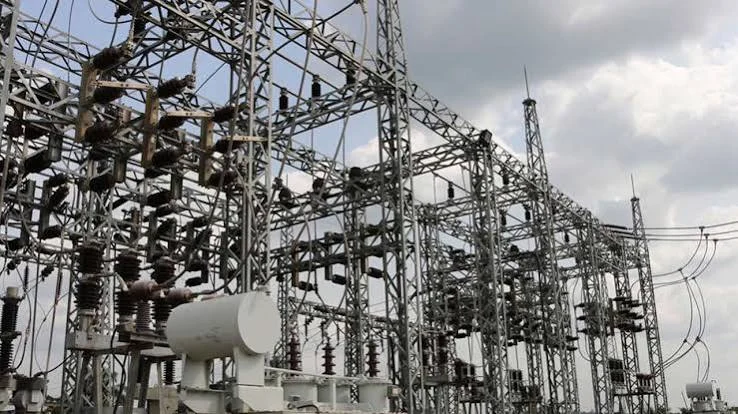
Power sector advocacy group, PowerUp Nigeria, has called on the Federal Government to urgently overhaul the national grid, warning that persistent blackouts are crippling the economy, forcing manufacturers off the grid and undermining Nigeria’s industrial competitiveness.
The Executive Director of PowerUp Nigeria, Adetayo Adegbemle, made the call in a statement, arguing that the country’s electricity crisis has become a major economic threat due to repeated national grid failures and weak infrastructure.
According to him, Nigeria’s electricity problem extends beyond inadequate supply to the persistent collapse of the national grid, which he said has suffered repeated failures over the years.
“Let’s dispense with the euphemisms. Nigeria does not have a ‘power supply challenge.’ It has a national grid that has failed at least 222 times between 2010 and 2022, with a dozen more collapses recorded across 2024 and 2025 alone.
“What it actually represents is a market and an infrastructure base that has been allowed to decay for a generation, while successive administrations treated the grid as a line item rather than the strategic asset that determines whether Nigerian industry can compete at all,” he said.
Adegbemle lamented that unreliable electricity had compelled manufacturers to rely on self-generation, thereby increasing production costs and weakening the electricity market.
He said more than 60 per cent of manufacturing firms have exited the national grid, opting instead for captive generation: “That exodus is not a footnote; it is the market’s verdict on grid reliability, delivered in the only currency that matters: capital allocation. Manufacturers now spend upward of N45tn annually on diesel, petrol and captive gas generation, money that, redirected into the grid, could have funded the very transmission and stability upgrades the sector needs.”
The power expert warned that the trend was eroding the financial viability of electricity market participants and worsening Nigeria’s economic losses.
“This is not a utilities problem. It is a solvency problem for the entire electricity value chain and, by extension, a competitiveness problem for Nigerian industry,” he stated.
While acknowledging reforms introduced under the Electricity Act 2023, Adegbemle argued that the legislation had yet to translate into a more reliable national grid.
He mentioned that the newly announced Grid Asset Management Company is a reasonable instrument in isolation. However, he argued that “adding another agency to a sector already thick with overlapping mandates does nothing to fix the underlying commercial failures: non-bankable power purchase agreements, chronic gas supply shortfalls, and a liquidity chain that breaks down at multiple points before cash ever reaches a generation company’s balance sheet”.
He also cautioned against pursuing ambitious energy transition targets without first strengthening the country’s transmission infrastructure.
Drawing lessons from South Africa and Egypt, Adegbemle said both countries demonstrated that reliable electricity supply was achievable through sustained reforms, transparency and strong governance.
“What both demonstrate is that grid reliability is a governance output, not a resource endowment, and that Nigeria’s constraint has never primarily been capital or technical know-how but the absence of a sustained, transparently reported turnaround plan that survives changes in political leadership,” the statement read partly.
He urged the Federal Government to create incentives that would encourage industries to reconnect to the national grid, prioritise investment in transmission infrastructure and guarantee the operational independence of the Nigerian Independent System Operator.
“The government must design credible incentives – tariff structures, offtake guarantees, and cross-subsidy mechanisms – that make grid power commercially rational for industrial anchor tenants to return to, rather than continuing to lose them to captive generation by default. Transmission investment and spinning reserve capacity need to be funded and sequenced ahead of, not alongside, renewable energy targets that the current network cannot absorb,” he added.
Urging greater accountability in the power sector, Adegbemle said Nigeria’s electricity industry is not constrained by inadequate installed capacity, funding commitments, or reform policies, but by a longstanding inability to implement reforms effectively and enforce accountability for their execution.
“The question for Abuja is not whether the playbook exists. It is whether there is the political will to run it,” he submitted.





FULL LIST: 48 Properties Linked To Ex-AGF Malami, Including Rayhaan University, Hotels, Forfeited To Nigerian Govt

UK: Man charged with murder after Indian woman stabbed to death at home in London

Horrific video shows men trapped inside train as intense wildfire closes in

FG begins fresh count of Nigeria’s out-of-school children

Quote of the day by Augustus: 'We write our names in the sand and then the waves roll in and…'

NCAA Bars Pilot, Grounds Aircraft After Asaba Road Landing Incident

Blackouts: Group urges urgent national grid overhaul

 Investigation3 days ago
Each and every one of you is guilty РDanish aid worker Anja Ringgren Lov̩n slams Nigerians filming malnourished child accused of being a witch in viral video
- National2 days ago
Gbajabiamila: I borrowed N400 million to buy appointment in Tinubu’s government, says Adeyemi
- Society20 hours ago
35-Year-Old Man Breaks Down In Tears Like A Baby At Roadside After Wife Reportedly Goes Missing At Kasoa Market
- Investigation2 days ago
Veterans demand â¦250,000 Minimum Wage for soldiers
- Investigation15 hours ago
Suspected ISWAP logistics supplier arrested with food items bound for terrorists in Borno
- Investigation2 days ago
Female teacher admits to having s£x with boy, 16, as she splits from husband who first exposed her misconduct.
- Investigation2 days ago
Twelve people arrested after âextreme right-wing terror threatâ against Islamic event in UK
- National16 hours ago
JUST IN: Senate to give N10million each to families of security operatives, teachers killed in Oriire rescue