Investigation
Court stops EFCC from probing Oyo finances

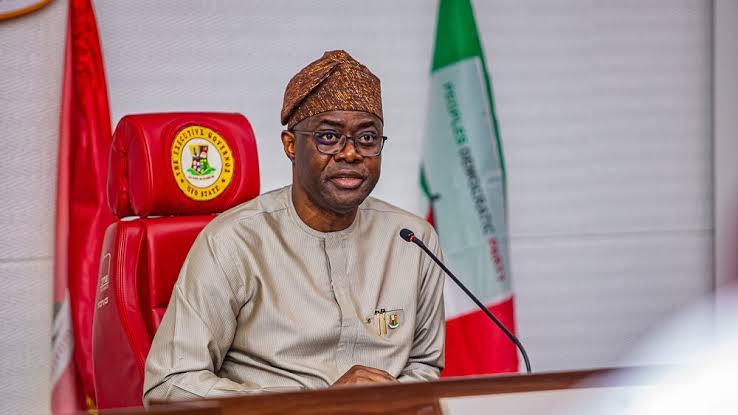

A Federal High Court in Ibadan has barred the Economic and Financial Crimes Commission (EFCC) from continuing its planned investigation into the finances of the Oyo State Government, ruling that the agency’s request for financial records lacked a proper legal basis.
Delivering judgment, Justice Nkeonye Maha held that the EFCC’s request amounted to a speculative “fishing expedition” rather than an investigation founded on specific allegations of wrongdoing.
The court also nullified the commission’s June 2, 2025 letter addressed to the Oyo State Accountant-General, which sought extensive financial records from the state government. The ruling followed a suit filed by Oyo State Governor Seyi Makinde, the state’s Attorney-General and the Accountant-General, who challenged the legality of the EFCC’s request.
According to a statement by the governor’s Special Adviser on Media, Sulaimon Olanrewaju, the court ruled that while the EFCC has the legal authority to investigate financial crimes, its powers must be exercised in line with the Constitution and the rule of law.
The judge held that requests for information must be reasonable and linked to identifiable allegations of wrongdoing, adding that Section 38 of the EFCC Act only permits the commission to obtain information for the investigation of offences under the Act and does not authorise broad or speculative inquiries into government finances.
Justice Maha found that the commission’s request was excessively broad and failed to provide the level of specificity required to justify such a wide demand for official records. “His Lordship noted that the constitutional rights of the plaintiffs to fair hearing could not be trampled upon under the guise of investigation,” Olanrewaju said.
The statement explained that the dispute began after the EFCC requested documents including copies of all contracts awarded by the Oyo State Government and details of payments made to contractors from 2021 up to the date of the request.
The state government argued that the request was oppressive, unreasonable and too extensive, considering the large number of contracts executed during the period.
Represented by the Oyo State Attorney-General, Abiodun Aikomo, the government maintained that although the EFCC possesses investigative powers, those powers remain subject to constitutional protections and cannot override the right to fair hearing. It also argued that anti-corruption investigations should be based on credible allegations and evidence rather than sweeping demands covering several years of government transactions.
According to the statement, the state had earlier written to the EFCC asking it to identify the contractors or companies under investigation so that the relevant documents could be provided.
“The government subsequently wrote to the EFCC, requesting the commission to specify the contractors or companies under investigation so that appropriate documents could be provided. When the EFCC failed to respond, the state filed the suit,” the statement said.
In its defence, the EFCC argued that Section 38 of its establishing Act empowers it to demand information from individuals, public institutions, corporations and other organisations during investigations.
However, the court rejected that position, ruling that the commission’s investigative powers are not unlimited and must be exercised within constitutional boundaries. Justice Maha further held that law enforcement agencies must establish a legitimate investigative basis before compelling the production of official documents.


19-year-old lay in wait, stabbed California gallery owner over and over, authorities say

Super Eagles goalkeeper Maduka Okoye’s Baby Mama preparing to sue over alleged fake DMs

CNN’s Kasie Hunt throws Scott Jennings’ prediction about his old boss back in his face

Stop spiritualising autism, experts urge ahead of 2026 GTCO conference

Rapper Soulja Boy tells Judge heâs not sure 3-year-old is his child

When Justice Is Only Available to Those Who Can Pay

Trump finalizes new tariffs on dozens of countries

 Investigation2 days ago
65-year-old married female teacher blindfolded and tied 10-year-old schoolboy to bed before having s3x with him
- Investigation2 days ago
âBusinesses are dy!ng in South Africa. Nobody is making money – South African man decries low patronage days after anti-immigrant protest
- World3 days ago
Trump Is Caught in the Trap He Set
- Investigation2 days ago
"I ‘m fine and healthy" – Video of late Mary Habila debunking her d3ath rumours 3 days before she d!ed at Umahi’s residence
- National2 days ago
INEC Officials Accused of Demanding ₦2,000 for PVCs in Onitsha [VIDEO]
- National2 days ago
CBN opened domiciliary accounts for Gbajabiamila-linked PFIPC on accountant-general’s order before N400 million bribe probe: Cardoso
- Investigation2 days ago
âl did not k!ll him, he d!ed on top of me" – Sani Abacha’s mistress says
- Investigation3 days ago
âTreat us like human beingsâ â Lady calls out South Korean Embassy in Lagos over visa application experience