News
ECOWAS anti-graft agencies operationalise new pact – EFCC boss

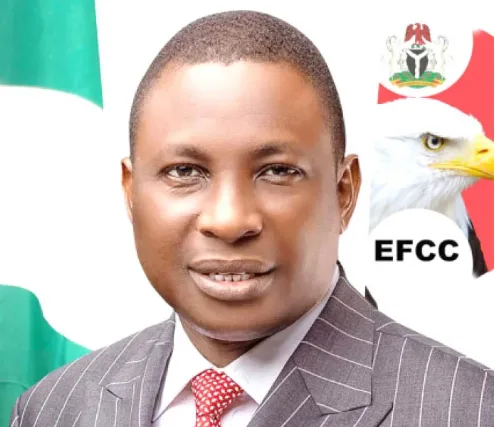
Members of the Economic Community of West African States have begun operationalising a regional anti-corruption protocol adopted by West African anti-graft agencies to strengthen cross-border investigations, intelligence sharing and asset recovery across the sub-region.
The EFCC Chairman and President, Network of National Anti-Corruption Institutions in West Africa, Ola Olukoyede, disclosed this on Tuesday at the maiden edition of the NACIWA Leadership Conference in Abuja.
Olukoyede said the protocol, adopted during the Network of Anti-Corruption Institutions in West Africa’s Annual General Assembly held in October last year, had moved from policy to implementation.
He explained that the framework allows member countries to exchange intelligence, conduct joint investigations and provide mutual support in tracking illicit financial flows and recovering stolen assets.
“We have a protocol which we drafted and adopted during our Annual General Assembly last year. We have begun to operationalise that protocol. That protocol allows for exchange of information, cross-border investigation and cross-border support, and we have operationalised that,” he said.
According to him, the implementation has already produced results, with anti-corruption agencies across the region exchanging intelligence and assisting one another in tracing illicit financial flows and assets.
“We have had cases where we exchanged information with our counterparts from other West African countries, and it is actually working. We have had cause to assist one another to trace illicit financial flows and assets to our various countries, and they have been quite supportive. Each country is gaining from that synergy and cooperation”, Olukoyede added.
He explained that the leadership conference was convened to implement resolutions reached during last year’s Annual General Assembly, stressing that it differed from the annual meeting.
“What we had last year was the Annual General Assembly. What we are having now is a leadership conference pursuant to the resolution taken during the Annual General Assembly. This conference is operationalising those resolutions,” he said.
Olukoyede also noted that Nigeria was leading regional efforts due to its position as the current president of the West African anti-corruption network and its strategic role within the ECOWAS sub-region.
He said the conference would deepen collaboration among anti-corruption agencies, particularly in tackling terrorism financing and illicit financial flows through coordinated intelligence sharing.
Speaking on the changing nature of graft, Olukoyede said criminal networks now operate with little regard for national borders, while illicit funds can be moved across multiple jurisdictions within seconds.
He noted that while digital platforms and emerging technologies have opened up new avenues for development, they have simultaneously created fresh opportunities for fraud, concealment, manipulation and other financial crimes.
The chairman singled out artificial intelligence as a defining force reshaping how information is generated, analysed and deployed.
He said AI holds significant promise for detection, intelligence gathering, risk assessment and institutional efficiency, but cautioned that it also raises pressing questions around governance, ethics, accountability, data integrity and organisational readiness.
“Our institutions cannot confront twenty-first-century corruption with twentieth-century structures, processes and assumptions,” Olukoyede said, adding that this concern was reflected directly in the programme under consideration.
His comments come as the EFCC continues to push reforms aimed at strengthening Nigeria’s anti-graft framework, in line with the Tinubu administration’s Renewed Hope agenda on accountability and economic crime.
Also speaking, Sierra Leone’s Anti-Corruption Commissioner, Francis Ben Kaifala, said the conference would strengthen cooperation among anti-graft agencies by promoting the exchange of best practices and improving joint investigations across borders.
Kaifala said the regional network had significantly improved coordination among member countries, making it easier to launch collaborative investigations without the bureaucratic delays that previously hampered anti-corruption efforts.
Similarly, Ghana’s representative from the Commission on Human Rights and Administrative Justice, Theophilus Tetteh Cio, said the conference would enhance regional cooperation against cross-border corruption, noting that crimes increasingly transcend national boundaries and require collective action by anti-corruption institutions across West Africa.




How Vietnamese pop star Lynda stays in the banh mi game

US firm submits Tinubu’s forfeiture case records to Trump, congress [PHOTO]

Zinedine Zidane appointed head coach of France National Team

Trump comes off nonchalant, ‘We feel very badly, but—’

Tinubu congratulates UK’s new Prime Minister, seeks stronger bilateral ties

Outgoing British High Commissioner praises Tinubu’s economic reforms

Defence Minister Speaks on Alleged Resignation After Meeting With Tinubu

 Society2 days ago
2026 Ballon d’Or: Top 4 players to win award after World Cup final revealed
- Society2 days ago
Pepper Seller Caught On Camera Applying Pepper On Newborn Baby As Rituals To Usher Her Into The Business
- World2 days ago
Spain earns $51 million for World Cup win and runner-up Argentina gets $34 million as total payout for all 48 teams hits record-high $871 million
- Investigation9 hours ago
65-year-old married female teacher blindfolded and tied 10-year-old schoolboy to bed before having s3x with him
- Society3 days ago
Prosecution Presents Evidence Against Adu-Boahene in GH¢49.1 Million Trial-Deputy AG Says
- Investigation3 days ago
Iran will teach USA âunforgettable lessonsâ – Iranian Supreme Leader
- Society2 days ago
Nigerian Lady Weeps Uncontrollably On Social Media As Her Bank Account Gets Hacked, Life Savings Wiped Out Except ₦194
- Investigation10 hours ago
"I ‘m fine and healthy" – Video of late Mary Habila debunking her d3ath rumours 3 days before she d!ed at Umahi’s residence