News
Electricity subsidy gulps N358bn amid blackouts

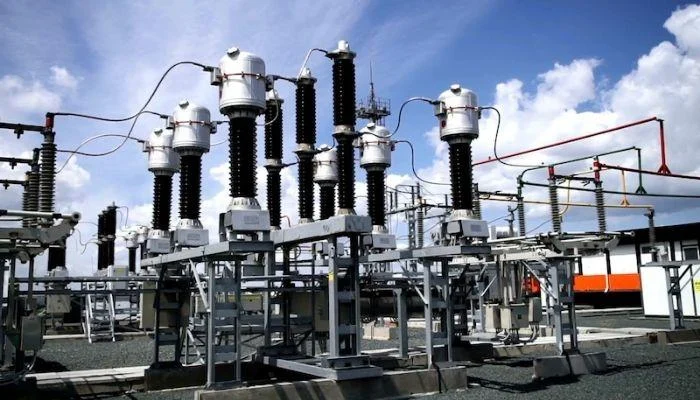
The Federal Government is to pay N358.32bn on electricity subsidies in the first quarter of 2026 despite persistent blackouts and operational challenges in the power sector, with the subsidy bill averaging over N119bn monthly as the government continues to freeze end-user tariffs.
The Nigerian Electricity Regulatory Commission disclosed this in its First Quarter 2026 report, stating that the subsidy arose from the Federal Government’s decision to retain electricity tariffs at the July 2024 rates instead of implementing cost-reflective tariffs.
According to the report, the tariff shortfall stood at N126.48bn in January, N116.34bn in February and N115.50bn in March, bringing the total subsidy for the quarter to N358.32bn.
NERC explained that although the subsidy declined by N60.46bn or 14.44 per cent from the N418.79bn recorded in the fourth quarter of 2025, the government will still finance more than half of the industry’s generation costs.
“It is important to note that due to the absence of cost-reflective tariffs across all DisCos, the government incurred a subsidy obligation of N358.32bn; this represents a N60.46bn (-14.44 per cent) reduction in FGN subsidies compared to 2025/Q4 (N418.79bn).
“The government subsidy accounted for 51.95 per cent of the total GenCo invoice, which is a 0.08pp decrease compared to 2025/Q4, when the subsidy accounted for 52.03 per cent of the total GenCo invoice. The key driver of this reduction in FGN subsidy obligation is the decrease in energy offtake of the DisCos by -8.56 per cent between 2025/Q4 and 2026/Q1.”
The commission clarified that the lower subsidy payment did not result from the introduction of cost-reflective tariffs but rather from a decline in electricity purchased by the distribution companies during the quarter.
According to NERC, electricity generated during the quarter attracted invoices worth N689.72bn. However, because the Federal Government continued to subsidise tariffs, the Nigerian Bulk Electricity Trading Plc invoiced the distribution companies only N331.40bn, while the balance of N358.32bn was borne by the government.
“The NBET invoice payable by the DisCos for 2026/Q1 was only N331.40bn because the FGN has taken responsibility for approximately 52 per cent (N358.32bn) of the total generation costs in the form of subsidies arising from the freezing of end-use customer tariffs at the rates payable in July 2024,” the report said.
It explained that under the current market arrangement, electricity subsidies are applied at source through the DisCos’ remittance obligation, with the unpaid portion of generation costs to be settled directly by the Federal Government.
“In the absence of cost-reflective tariffs, the government undertakes to cover the resultant gap (between the cost-reflective and allowed tariff) in the form of tariff subsidies.
“For ease of administration, the subsidy is only applied to the generation cost payable by DisCos to NBET at source in the form of a DisCo’s Remittance Obligation. NBET directly invoices the portion of GenCo costs not covered by DRO (tariff subsidy) to the Federal Ministry of Finance for immediate settlement,” it stated.
NERC further warned that the current subsidy regime leaves the Federal Government exposed to uncertain and potentially rising financial obligations, saying, “The open-ended nature of the subsidy exposes the FGN to indeterminate subsidy obligations due to volumetric risk and changes in generation costs arising from changes in the generation mix, particularly with an increase in thermal generation.”
The commission noted that all three supplementary tariff orders issued during the quarter retained end-user tariffs at the rates payable in July 2024, in line with the Federal Government’s electricity subsidy policy.
Despite the huge subsidy outlay, electricity supply weakened during the quarter. According to the report, average available generation capacity fell by 17.45 per cent from 5,400.38MW in the fourth quarter of 2025 to 4,457.96MW in the first quarter of 2026. Total electricity generated also declined by 9.64 per cent to 8,883.47GWh, while average hourly generation dropped by 7.64 per cent to 4,112.72MWh/h.
The report also disclosed that the national grid suffered two disturbances during the period, resulting in widespread blackouts. “There were two incidents of system disturbance on the National Grid in 2026/Q1. A total collapse occurred on 23 January 2026, and a partial collapse of the grid occurred on 27 January 2026,” the commission stated.
According to NERC, the total collapse resulted from the separation of the busbar at the Sapele Transmission Station, while preliminary investigations indicated that the partial collapse was caused by inadequate reactive power support required to maintain grid voltage stability.







Mum's horror death on family boat trip – killed by giant stingray

Top Nigerian Newspaper Headlines For Today, Sunday, 5th July, 2026

University Student poisons Boyfriend after accusing him of forcing her to have 3 abortions and dumping her

Ogoni National Congress Backs Talks With Nigerian Govt To End 33-Year Conflict With Oil Industry

World Cup: You’ve lifted hopes of Africa – Atiku congratulates Morocco

Three injured as troops repel terrorist attack on Zamfara military base

'JUST&T MARRIED' Swift, Kelce host massive New York wedding bash

 Society3 days ago
Iyabo Obasanjo clarifies father’s real age
 National22 hours ago
Against Nigerian Law, CBN Deputy Governor Emem Usoro Allows Her Eleven Years Old Twin Daughters To Be Company Boss
- Investigation3 days ago
Eight de@d and 13 injured after being hit by truck ‘being driven by child’
- Breaking3 days ago
Panelists and guests on a podcast burst into laughter after 54-year-old US woman âmarriedâ to a 36-year-old Nigeria-based man, who she sends money to every month, laments about lack of love from him
- World3 days ago
WW3 fears explode as Cuba warns Donald Trump it's 'preparing for war'
- Investigation3 days ago
â15k from someone in the US who promised me âbig moneyâ feels somehowâ â X user sparks debate
- Investigation3 days ago
Man who took sister-in-law to court over his brotherâs £5m fortune lands huge bill after losing battle
- Investigation2 days ago
Inside American businessman Michael Rubinâs annual White Party with A-list celebrities in attendance (photos/video)