Society
FG seeks to eliminate Nigeria’s export of raw cocoa beans to boost revenue

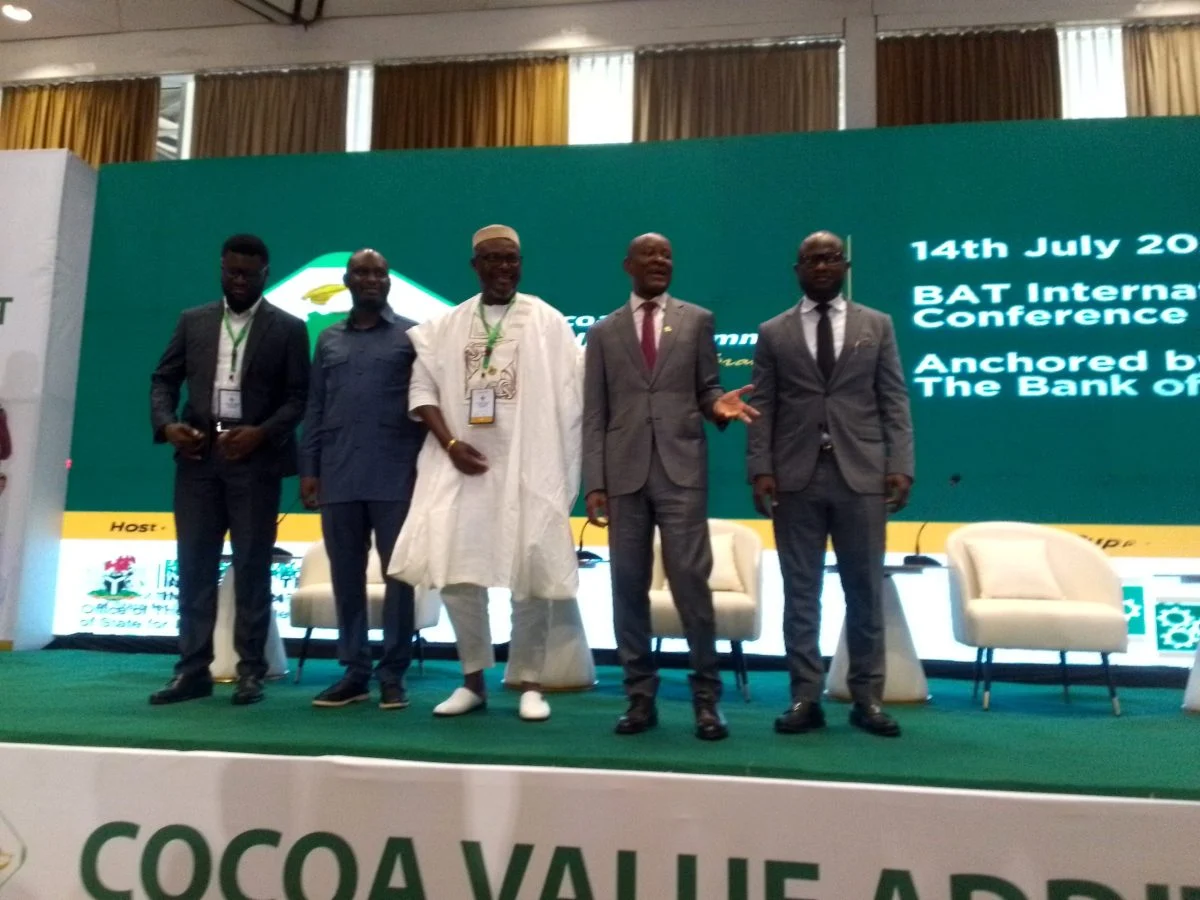
The Federal Government is seeking to end the era of raw cocoa bean exports in a bid to boost Nigeria’s revenue generation through value addition in the cocoa sector.
Speaking at the Cocoa Value Addition Summit in Abuja, the Minister of State for Industry, Senator John Owan Onoh, said, “Within the Nigeria Industrial Policy 2025, we have made agro-industrial value addition a national priority, and cocoa is its proving ground.
“We are adopting the Cocoa Value Addition Accord: a compact between the Federal Government, the governors of our cocoa-producing states, our farmers’ and industry associations, our research institute and our development bank.
“It carries names, numbers and dates. It establishes a Delivery Council, which I will chair personally, and it will be measured every year.”
He said, “We are opening the financing gates. The Bank of Industry will establish dedicated windows for cocoa processing investments, with priority given to projects that carry smallholder farmers along. To every investor in this hall, I say: the era of admiring Nigeria’s potential is over. The Deals Room of this summit is where admiration becomes term sheets.
“We commit to traceability not as a burden imposed from abroad but as an asset built at home: a national system that knows our farmers by name and our farms by coordinates, so that the compliance the world demands becomes the trust the market rewards, and so that the premium for that trust reaches the farm gate and not merely the boardroom,” the minister stated.
In his address, the Managing Director of the Bank of Industry (BOI), Dr Olasupo Olusi, explained that a cocoa tree takes three to five years to bear fruit.
“So the planting finance must carry grace periods matched to the tree.
“We call on our partners in primary agriculture, such as the Bank of Agriculture and others, to co-finance and de-risk the segment alongside institutions like the Bank of Industry. A grinder must buy a year’s supply of cocoa beans within a four-month window at world prices, requiring hundreds of millions of dollars in seasonal finance for a single mid-sized plant.
“So we will convene with commercial banks and our development partners through structured commodity finance, warehouse receipts, export prepayment and working capital facilities built around the crop cycle.
“Processing plants and ingredient production lines also require patient long-term capital, with tenures of at least seven to 10 years, and most commercial bank balance sheets cannot provide such facilities.
“But BOI exists to provide this kind of financing. In 2025, we disbursed more than ₦164 billion to over 3,500 agro-processing and food-processing businesses, financing factories, mills, pack houses and cold-chain facilities, while linking nearly 48,000 smallholder farmers to the industrial value chain.”
He said some critical investments are too large or too complex for any single firm to finance.
“This is why we will explore financing shared physical and digital platforms. Imagine a cocoa value addition park in the cocoa belt, with shared processing lines, quality laboratories, reliable power supply, effluent treatment facilities and digital traceability.
“Such a platform will serve many processors at once and give even the smallest Nigerian processor access to infrastructure that is usually reserved for the largest players.
“Beyond our balance sheet at the Bank of Industry, we are mobilising blended finance through many of our development partners, providing concessional and patient capital supported by guarantees and risk-sharing arrangements.
“An example is the nearly €16 million credit facility we received from the European Investment Bank this year to support the development of Nigeria’s cocoa sector. This will help Nigerian processors compete more fairly with multinationals that have access to cheaper capital.
“And because finance alone is not enough, we will pair capital with business development support, technical advisory services and enterprise training, strengthening costing, quality standards and export documentation capabilities that often hold good businesses back even when capital is available.
“BOI will provide the tenor and structure, while the market carries the price risk. Above all, the Bank of Industry will not approach cocoa as a lending programme. We will approach it as the development of an ecosystem.
“We will advocate for our partners in this room to finance the nurseries, farmer cooperatives and warehouses, while BOI finances the grinding plants, ingredient factories, packaging lines, quality laboratories, chocolate entrepreneurs and the machinery that turns cocoa beans into globally recognised brands.
“Industrial transformation is never one investment; it is many investments reinforcing one another. Our role is not only to provide capital but also to build markets, convene partners and act as a catalyst for private investment,” the managing director said.
The global cocoa market is estimated to be worth more than $165 billion. Although Nigeria supplies a significant share of the world’s raw cocoa beans, the country earns only a fraction of the market’s value because of its limited capacity to export processed cocoa products.


Nigerian Military begins review of doctrine to tackle emerging security threats

2027: APP condemns alleged invasion of NFC town hall meeting, attack on members in lmo

Police arrest suspected cultist in Kwara, recover locally made pistol

Oyo police arrest two suspected kidnappers, rescue five-year-old girl unhurt

2027: APC Chieftain Reveals Why Tinubu Retained Shettima as Running Mate

LAUTECH Hospital Visits Rescued Pupils After 56 Days in Captivity

FCT: Judiciary budget intact, projects not to negatively influence you – Tinubu assures judges

 Investigation2 days ago
Each and every one of you is guilty РDanish aid worker Anja Ringgren Lov̩n slams Nigerians filming malnourished child accused of being a witch in viral video
- National2 days ago
Gbajabiamila: I borrowed N400 million to buy appointment in Tinubu’s government, says Adeyemi
- Investigation3 days ago
Parents to pay â¦50,000 to register each child for WAEC or NECO SSCE as govt approves 82% increase
- Investigation1 day ago
Veterans demand â¦250,000 Minimum Wage for soldiers
- Investigation3 days ago
âI disagree with youâ – Isaac Fayose knocks Remi Tinubu over calls for singers Davido, Burna Boy, Asake to help poor Nigerians
- Investigation2 days ago
Twelve people arrested after âextreme right-wing terror threatâ against Islamic event in UK
- Investigation2 days ago
Female teacher admits to having s£x with boy, 16, as she splits from husband who first exposed her misconduct.
- Investigation1 day ago
Court remands man for impregnating own daughter in Adamawa














Society
FG seeks to eliminate Nigeria’s export of raw cocoa beans to boost revenue
The Federal Government is seeking to end the era of raw cocoa bean exports in a bid to boost Nigeria’s revenue generation through value addition in the cocoa sector.
Speaking at the Cocoa Value Addition Summit in Abuja, the Minister of State for Industry, Senator John Owan Onoh, said, “Within the Nigeria Industrial Policy 2025, we have made agro-industrial value addition a national priority, and cocoa is its proving ground.
“We are adopting the Cocoa Value Addition Accord: a compact between the Federal Government, the governors of our cocoa-producing states, our farmers’ and industry associations, our research institute and our development bank.
“It carries names, numbers and dates. It establishes a Delivery Council, which I will chair personally, and it will be measured every year.”
He said, “We are opening the financing gates. The Bank of Industry will establish dedicated windows for cocoa processing investments, with priority given to projects that carry smallholder farmers along. To every investor in this hall, I say: the era of admiring Nigeria’s potential is over. The Deals Room of this summit is where admiration becomes term sheets.
“We commit to traceability not as a burden imposed from abroad but as an asset built at home: a national system that knows our farmers by name and our farms by coordinates, so that the compliance the world demands becomes the trust the market rewards, and so that the premium for that trust reaches the farm gate and not merely the boardroom,” the minister stated.
In his address, the Managing Director of the Bank of Industry (BOI), Dr Olasupo Olusi, explained that a cocoa tree takes three to five years to bear fruit.
“So the planting finance must carry grace periods matched to the tree.
“We call on our partners in primary agriculture, such as the Bank of Agriculture and others, to co-finance and de-risk the segment alongside institutions like the Bank of Industry. A grinder must buy a year’s supply of cocoa beans within a four-month window at world prices, requiring hundreds of millions of dollars in seasonal finance for a single mid-sized plant.
“So we will convene with commercial banks and our development partners through structured commodity finance, warehouse receipts, export prepayment and working capital facilities built around the crop cycle.
“Processing plants and ingredient production lines also require patient long-term capital, with tenures of at least seven to 10 years, and most commercial bank balance sheets cannot provide such facilities.
“But BOI exists to provide this kind of financing. In 2025, we disbursed more than ₦164 billion to over 3,500 agro-processing and food-processing businesses, financing factories, mills, pack houses and cold-chain facilities, while linking nearly 48,000 smallholder farmers to the industrial value chain.”
He said some critical investments are too large or too complex for any single firm to finance.
“This is why we will explore financing shared physical and digital platforms. Imagine a cocoa value addition park in the cocoa belt, with shared processing lines, quality laboratories, reliable power supply, effluent treatment facilities and digital traceability.
“Such a platform will serve many processors at once and give even the smallest Nigerian processor access to infrastructure that is usually reserved for the largest players.
“Beyond our balance sheet at the Bank of Industry, we are mobilising blended finance through many of our development partners, providing concessional and patient capital supported by guarantees and risk-sharing arrangements.
“An example is the nearly €16 million credit facility we received from the European Investment Bank this year to support the development of Nigeria’s cocoa sector. This will help Nigerian processors compete more fairly with multinationals that have access to cheaper capital.
“And because finance alone is not enough, we will pair capital with business development support, technical advisory services and enterprise training, strengthening costing, quality standards and export documentation capabilities that often hold good businesses back even when capital is available.
“BOI will provide the tenor and structure, while the market carries the price risk. Above all, the Bank of Industry will not approach cocoa as a lending programme. We will approach it as the development of an ecosystem.
“We will advocate for our partners in this room to finance the nurseries, farmer cooperatives and warehouses, while BOI finances the grinding plants, ingredient factories, packaging lines, quality laboratories, chocolate entrepreneurs and the machinery that turns cocoa beans into globally recognised brands.
“Industrial transformation is never one investment; it is many investments reinforcing one another. Our role is not only to provide capital but also to build markets, convene partners and act as a catalyst for private investment,” the managing director said.
The global cocoa market is estimated to be worth more than $165 billion. Although Nigeria supplies a significant share of the world’s raw cocoa beans, the country earns only a fraction of the market’s value because of its limited capacity to export processed cocoa products.
- Investigation2 days ago
Each and every one of you is guilty РDanish aid worker Anja Ringgren Lov̩n slams Nigerians filming malnourished child accused of being a witch in viral video
- National2 days ago
Gbajabiamila: I borrowed N400 million to buy appointment in Tinubu’s government, says Adeyemi
- Investigation3 days ago
Parents to pay â¦50,000 to register each child for WAEC or NECO SSCE as govt approves 82% increase
- Investigation1 day ago
Veterans demand â¦250,000 Minimum Wage for soldiers
- Investigation3 days ago
âI disagree with youâ – Isaac Fayose knocks Remi Tinubu over calls for singers Davido, Burna Boy, Asake to help poor Nigerians
- Investigation2 days ago
Twelve people arrested after âextreme right-wing terror threatâ against Islamic event in UK
- Investigation2 days ago
Female teacher admits to having s£x with boy, 16, as she splits from husband who first exposed her misconduct.
- Investigation1 day ago
Court remands man for impregnating own daughter in Adamawa

