News
Government Slashes Textbook Fees Ahead of New Ranking System

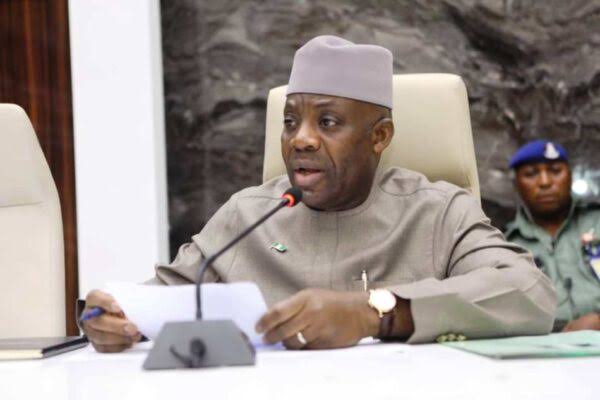
(Education minister, Tunji Alausa. Photo Credit: TVC News)
In an effort to lessen the financial strain on stakeholders prior to the Federal Government’s National Textbook Ranking System’s implementation, the Nigerian Educational Research and Development Council has lowered the cost of textbook assessment and ranking and ordered that publishers who previously paid the higher assessment fees be reimbursed.
Prof. Salisu Shehu, the Executive Secretary of the Council, personally signed the statement announcing the decision, which was made public in Abuja on Wednesday.
According to the statement, the assessment fee has been reduced from N2,000 to N1,500 per page, while the ranking fee has been reviewed downward from N1 million to N750,000 per textbook title.
Prof. Shehu said the revised charges take immediate effect and are intended to support publishers and authors participating in the new textbook evaluation process.
He also announced that publishers who had already paid the previous assessment fee of N2,000 per page would receive refunds of the excess payment, adding that the procedure for processing the refunds would be announced soon.
The Council added that publishers and authors submitting textbooks for assessment are to make payments based on the revised rates with immediate effect, urging publishers, authors and other stakeholders in the book industry to comply with the new fee structure.
The fee reduction comes as the Federal Government prepares to commence the National Textbook Ranking System, a major education reform introduced by the Minister of Education, Dr Tunji Alausa, to improve the quality of instructional materials used in Nigerian schools.
Under the policy, which takes effect from September 2026, only textbooks assessed, approved and ranked by NERDC will be permitted for classroom use, while unranked textbooks will no longer be allowed in schools.
Speaking on the initiative when it was unveiled, Alausa said the policy was designed to tackle the proliferation of substandard textbooks and ensure that learners and teachers have access only to high-quality, curriculum-compliant learning materials.
He explained that while NERDC would continue to exercise its statutory responsibility of approving textbooks, approval alone would no longer be sufficient, as every approved textbook would now undergo a rigorous national evaluation and ranking by expert committees before being recommended for classroom use.
The National Textbook Ranking System is one of the key reforms being implemented by the Federal Ministry of Education under the Renewed Hope Agenda to improve the quality of basic and secondary education.
The ministry has also launched nationwide learning assessments, revived abandoned Unity College e-libraries, expanded digital learning infrastructure, and introduced measures aimed at addressing learning poverty, which the government estimates affects about 42 million Nigerian children.
Officials said the textbook ranking policy is expected to strengthen quality assurance, promote excellence in educational publishing, and ensure that only the best instructional materials are used in classrooms across the country.








Manpower President: The future of work question that even CEOs can’t answer

Lead Africa’s Blue Economy future, SIFAX Group charges young Nigerians

23-year-old woman d!es after man falls from 12 story apartment and lands on her; He survives

Married female teacher accused of having ‘bondage sex’ with 9-year-old boy until he was 14

Otti defends Tinubu’s reforms, says hardship fallout of past mismanagement

Senate Moves to Bring Traditional Medicine Into Nigeria Healthcare Law Debate

‘Dancing really nice’: Republican openly mocked as he echos Trump’s ‘obliterated’ claim

 Society2 days ago
Pepper Seller Caught On Camera Applying Pepper On Newborn Baby As Rituals To Usher Her Into The Business
- Society2 days ago
2026 Ballon d’Or: Top 4 players to win award after World Cup final revealed
- Investigation24 hours ago
65-year-old married female teacher blindfolded and tied 10-year-old schoolboy to bed before having s3x with him
- World3 days ago
Spain earns $51 million for World Cup win and runner-up Argentina gets $34 million as total payout for all 48 teams hits record-high $871 million
- Society3 days ago
Nigerian Lady Weeps Uncontrollably On Social Media As Her Bank Account Gets Hacked, Life Savings Wiped Out Except ₦194
- Investigation1 day ago
"I ‘m fine and healthy" – Video of late Mary Habila debunking her d3ath rumours 3 days before she d!ed at Umahi’s residence
- Investigation3 days ago
Woman allegedly k!lls husbandâs mistressâ two-month-old baby in Benue
- Investigation3 days ago
Olise surpasses Peléâs long-standing mark as he sets new World Cup assist record