National
How Nigeria secured $30b Paris Club debt relief — Okonjo-Iweala

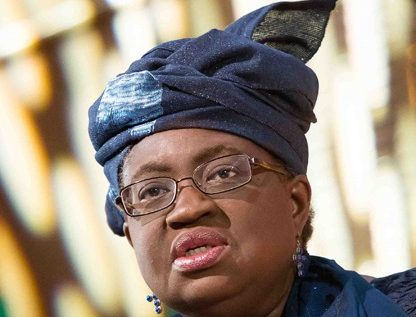
The Director-General of the World Trade Organisation (WTO), Ngozi Okonjo-Iweala on Wednesday in Abuja recounted how a deliberate communication strategy helped Nigeria secure the landmark $30 billion Paris Club debt relief during the administration of former President Olusegun Obasanjo.
She spoke at the public presentation of: “The Pain and the Promise,” a book by communications expert and public affairs analyst, Paul Nwabuikwu.
Okonjo-Iweala reflected on her time as Minister of Finance, saying she was brought in from the World Bank in 2003 to help restore Nigeria’s public finances, including negotiating the elimination of the country’s estimated $30 billion debt owed to the Paris Club of creditors.
According to her, the ambitious reform agenda required Nigerians to understand and support difficult economic policies.
She said: “I had been brought in from the World Bank to help straighten up and strengthen Nigeria’s weak finances, including getting rid of the $30 billion of the country’s debt owed to the Paris Club.
“To do this work, I knew Nigeria would have to undertake serious economic reforms of the type that would demand understanding and sacrifices from Nigerians.”
Okonjo-Iweala said one of the key pillars of the reform programme was effective public communication, which informed her decision to recruit Nwabuikwu into the economic team.
“One important component in my mind then was that we would need a crack communications person or team to help us reach Nigerians, to explain all of this in simple language. That is where Paul came in,” she said.
Okonjo-Iweala described Nwabuikwu as “smart, articulate, compassionate, a terrific writer and communicator,” adding that his communication strategy played a significant role in the success of the reform agenda.
“I can say without fear of contradiction that we wouldn’t have had as much success with the reform programme if we had not had a masterful steering of communications from Paul,” she said.
The WTO DG explained that Nwabuikwu understood that reforms in a democracy required more than policy implementation.
“Reform is not just about writing new laws and enforcing new policies. It’s about persuading people, explaining trade-offs and building enough trust that governments can keep pushing through obstacles,” she added.
She also lamented that Nigeria’s persistent ethnic, religious and regional divisions continued to slow national development, adding that the country would struggle to achieve sustainable prosperity unless Nigerians forged a common national consensus that transcended sectional interests.
“Until Nigerians can overcome the ethnic, religious and regional divides embedded in our society to forge a social compact that agrees key directions for the nation, directions that remain steady no matter who is in government, I think Nigeria will find it difficult to move forward at the pace required to create enduring prosperity for our people,” Okonjo-Iweala said.
She said talent existed across every part of the country and urged Nigerians to prioritise competence over and above ethnic or regional considerations.
The WTO DG said: “I believe in talent from every corner of Nigeria. There’s no place in Nigeria that doesn’t have talented people. I don’t care what part of the country you come from. I just wanted you to do your job and do it professionally.”
Reviewing the book, Okonjo-Iweala described it as a compelling reflection on Nigeria’s political, economic and social evolution over the past 35 years.
She said the 300-page publication combined public commentary, personal memories and historical reflections to present what she called “a portrait of a generation in the life of the most interesting, if the most chaotic, country in the world.”
She recommended the book, particularly to young Nigerians, saying it would help them better understand the country’s history and contemporary challenges.
In 2005, Nigeria secured an unprecedented $18 billion debt relief deal from the Paris Club, wiping out about 60 percent of its roughly $30 billion total bilateral debt.
The historic agreement was finalised under President Olusegun Obasanjo’s administration and completed on April 21, 2006.
Also speaking, former Minister of Aviation, Osita Chidoka, said Nigeria needed critics who understood implementation, public officials who respected criticism and citizens willing to bridge the gap between both worlds.
“There is pain, and I must say we all know that much of it is self-inflicted and not necessarily prolonged, but there is also promise in our people, in our creativity, and in the possibility of that thoughtful engagement,” he said.


Body of Benchers Moves to Regulate Admission, Warns Against Decline in Legal Standards

JUST IN: Otedola acquires another N222.2bn shares in First HoldCo

Police arrest three suspects for k!lling 51-year-old man over witchcraft allegation in Bauchi

Help! I Took Air India’s Rebooking Advice, and It Cost Me $2,000.

Abia Sparks Controversy With ₦200m Billboard Fee for Presidential Candidates

Lagos presents land allocation letters to 98 communities

First African Church Mission Disowns Alleged New Board, Warns Public Against Fake Publications

 Investigation3 days ago
ââDo not shake hands”- UNILAG shares anti-r@pe advisories to female students
- Investigation3 days ago
âOne of my colleagues took the HIV prevention injection, Lenacapavir, and started experiencing this reaction shortly afterâ â Nigerian nurse
- News3 days ago
Ìṣẹ-Ekiti Celebrates 25 Years of Purposeful Leadership as Arinjale Marks Coronation Anniversary
- Society3 days ago
H1 2026: FCMB Group sustains performance, Reports 99% growth in profit before tax to ₦157.3 billion
- Investigation3 days ago
Bandits abduct 13 passengers on JosâKano highway, police rescue 9
- Investigation3 days ago
Tinubu will run for third term if Good keeps him alive â Babachir Lawal claims
- Investigation3 days ago
Fugitive drug kingpin, ex-intâl footballer bag 24 years jail term for cocaine importation
- Society3 days ago
“We Have Done Everything Possible for Peace, But Adwoa Safo Wants GH¢3.7 Million Before Releasing Our Father’s Body” — Nana Kwadwo Safo Akofena