News
Inclusive governance, community ownership key to Kaduna peace – Gov

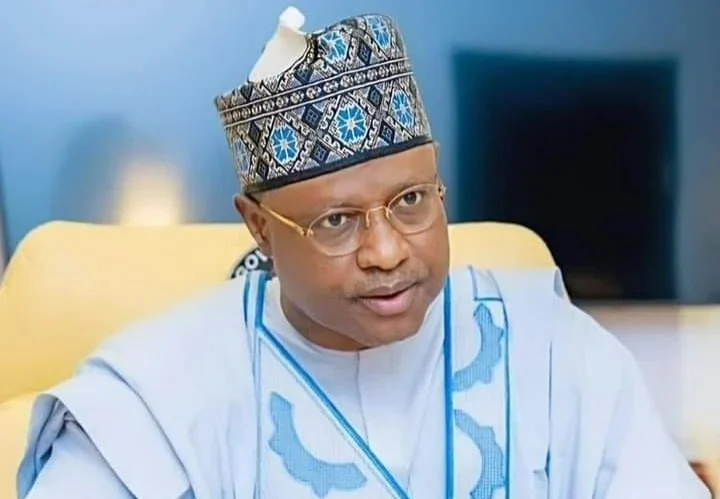
Kaduna State Governor, Uba Sani, on Tuesday attributed the relative peace recorded in the state over the past three years to an inclusive governance model anchored on justice, equity and community participation.
He, therefore, urged other states battling insecurity to address the root causes of their peculiar challenges rather than adopt a one-size-fits-all approach.
The governor said states seeking to replicate the Kaduna peace model must first identify the drivers of insecurity within their domains and ensure that local communities take ownership of peace-building initiatives.
Sani stated this while receiving members of the National Economic Council Implementation Monitoring Committee on a courtesy visit at Sir Kashim Ibrahim House, Kaduna.
He said his administration inherited a huge trust deficit between the government and the people on assumption of office in May 2023, stressing that rebuilding public confidence became its first priority.
“When we came into office, there was a lot of trust deficit between the government and the people. That was the first thing we addressed,” the governor said.
He explained that his administration also prioritised justice, equity and fairness, arguing that politicians had exploited divisions along ethnic and religious lines for personal interests.
According to him, “conflict entrepreneurs” hiding under the guise of religion and ethnicity had for years fuelled violence across Kaduna State.
“The security challenges in Kaduna State used to comprise ethno-religious crises on one hand and kidnapping and banditry on the other.
“From our statistics and data, we realised that we lost more lives as a result of religious crises in Kaduna State than even banditry. That is why we sat down and carefully examined the situation,” he said.
The governor maintained that his administration had successfully addressed ethno-religious conflicts through inclusive governance and equitable distribution of projects across the 23 local government areas.
“I make bold to say that there has never been any incident of ethno-religious crisis in Kaduna State since I became governor on May 29, 2023,” he declared.
Sani described the Kaduna peace model as a home-grown and community-driven initiative that had also led to a significant reduction in kidnapping and banditry.
He disclosed that several state governments had approached Kaduna to understudy the model but advised them against merely copying it without understanding the unique causes of insecurity in their states.
“What do we tell them? You have to relegate politics and focus on governance. When we came in, we said the issue of politics was over.
“We focused on governance. It has nothing to do with political affiliation, religious affiliation or geography,” he said.
Highlighting the impact of improved security, the governor said over 500,000 hectares of farmland previously abandoned because of insecurity had been reclaimed, enabling thousands of farmers to resume cultivation.
He added that more than 100 schools earlier shut in frontline local government areas had been reopened, while over 150 primary healthcare centres previously closed because of insecurity were now fully operational.
“Today, as we are speaking, we have reclaimed over 500,000 hectares of land that were abandoned because of insecurity. Our farmers have gone back to their farms.
“When we came in, over 100 schools were abandoned in some frontline local government areas because of insecurity. As we are speaking, we have opened all our schools.
“Our primary healthcare facilities, more than 150 of them, were closed because of insecurity. Today, all of them have been opened and are operational,” he said.
Sani said his administration’s development agenda remained focused on education, healthcare, agriculture and infrastructure.
He noted that Kaduna had emerged as a leader in skills-based education, revealing that about 4,300 trainees had graduated from the state’s vocational institutes with certifications issued by the National Board for Technical Education.
According to him, the state had also reduced the number of out-of-school children from about 550,000 by returning at least 300,000 children to classrooms.
“Education is one of our major priorities. That is why we have consistently allocated at least 26 per cent of our annual budget to the sector since we came into office,” he said.
On healthcare, the governor said Kaduna had upgraded all its 255 primary healthcare centres to Level 2 status and remodelled 16 out of 20 moribund secondary healthcare facilities.
He added that the state had completed a 300-bed specialist hospital, which he described as one of the best-equipped health facilities in Northern Nigeria.
Speaking on agriculture, Sani said the sector contributes about 43 per cent of Kaduna State’s Gross Domestic Product and employs approximately 60 per cent of its workforce.
He disclosed that the state’s agriculture budget had increased from N1.4bn in 2023 to about N123bn, representing 13 per cent of the state budget, exceeding the 10 per cent benchmark set under the 2014 Malabo Declaration.
“We are leading today in maize production in Nigeria, we are leading in tomato production, and we are leading in ginger production,” he claimed.
The governor further disclosed that his administration distributed 900 trucks of fertiliser free of charge to more than 240,000 smallholder farmers last year and planned to repeat the intervention within the next week.
He also said Kaduna was the first sub-national government in the country to establish a Special Agro-Processing Zone, describing the initiative as a major step towards boosting agricultural value addition, agro-industrialisation and food security.
The Kaduna peace model is the state government’s conflict resolution and community engagement framework introduced by the Sani administration to address longstanding ethno-religious tensions, banditry and kidnapping.
The model emphasises dialogue, inclusive governance, community ownership of peace initiatives and equitable distribution of development projects.
Kaduna, which witnessed recurring communal and religious violence for decades, has in recent years projected the initiative as a template for sustainable peace-building and post-conflict recovery.






Fed Medicaid freeze brings accountability to California, Minnesota — finally

World Cup: Scaloni speaks on conflict within Argentina squad before final defeat to Spain

PDP Has No Presidential Candidate — Iyabo Obasanjo

Ondo govt, African Cleanup Initiative partner to promote environmental sustainability

Zendaya gives cheeky 3-word response to fan’s marriage proposal at ‘Spider-Man’ event

Mark Lamb wins Arizona House primary despite sex scandals

Toddler, 2, in critical condition after being found unconscious in Long Island family pool

 Society2 days ago
2026 Ballon d’Or: Top 4 players to win award after World Cup final revealed
- Society2 days ago
Pepper Seller Caught On Camera Applying Pepper On Newborn Baby As Rituals To Usher Her Into The Business
- World2 days ago
Spain earns $51 million for World Cup win and runner-up Argentina gets $34 million as total payout for all 48 teams hits record-high $871 million
- Investigation17 hours ago
65-year-old married female teacher blindfolded and tied 10-year-old schoolboy to bed before having s3x with him
- Society3 days ago
Nigerian Lady Weeps Uncontrollably On Social Media As Her Bank Account Gets Hacked, Life Savings Wiped Out Except ₦194
- Investigation18 hours ago
"I ‘m fine and healthy" – Video of late Mary Habila debunking her d3ath rumours 3 days before she d!ed at Umahi’s residence
- Investigation12 hours ago
âBusinesses are dy!ng in South Africa. Nobody is making money – South African man decries low patronage days after anti-immigrant protest
- News3 days ago
Nigerians yet to benefit from higher crude prices — Olatide