World
Judge Strips Protections for Imperiled Lizard at Trump Administration’s Behest

This Video Is Trending Right Now
At the request of the Trump administration, a federal judge in Texas has stripped endangered species protections from a small lizard whose habitat overlaps with the largest oil-producing region in the United States.
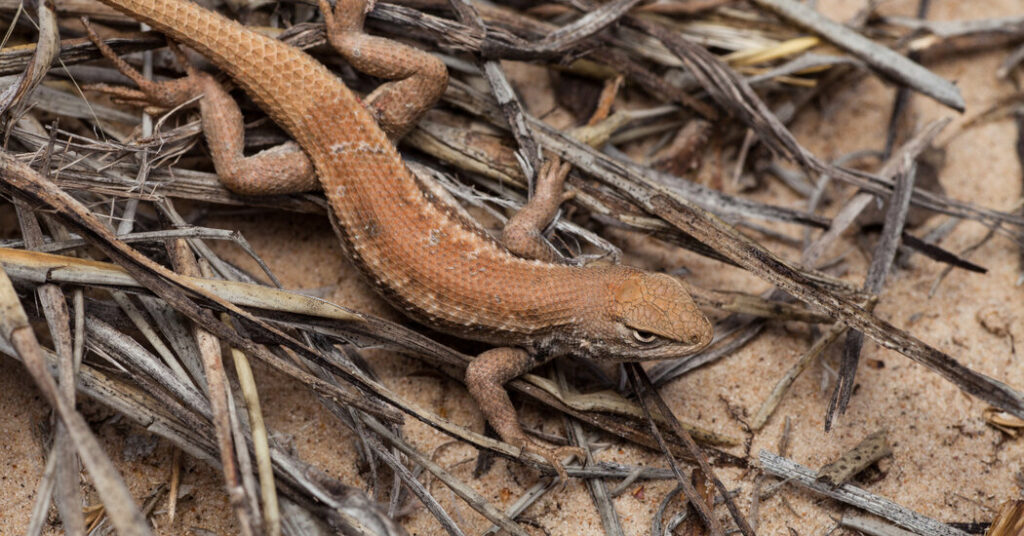
It was the latest twist in a long-running fight over the fate of the dunes sagebrush lizard, a light brown reptile found only in portions of the oil-rich Permian Basin in southeastern New Mexico and West Texas.
The Biden administration classified the lizard as endangered in 2024, saying it faced grave threats from oil and gas development and climate change. But the state of Texas sued, and the Trump administration asked the judge to remove the lizard from the endangered species list as part of a settlement with the state.
The judge, David Counts of the U.S. District Court for the Western District of Texas, approved the settlement on Tuesday. Judge Counts, who was appointed by President Trump, found that the Biden administration’s evaluation of the lizard’s habitat was “potentially inaccurate.”
It was the second time in a year that Judge Counts allowed the Trump administration to remove an animal from the endangered species list in response to a lawsuit brought by industry or states. In the previous case, Judge Counts agreed to rescind protections for the lesser prairie chicken, another species whose habitat puts it in conflict with the oil and gas industry.
And the administration has moved to do the same in a third case, this one involving seven species of freshwater mussels found in rivers and creeks in Central Texas. In all three instances, the Trump administration has argued that Biden-era findings in favor of safeguarding the species were made in error or with incomplete information.
Conservationists defended the science behind the original findings and said they saw a troubling pattern, especially given that all three cases involve species that reside in or near the Permian Basin.
“Sound science is being thrown under the bus for politics,” said Jason Rylander, a legal director at the Center for Biological Diversity, a conservation group that tried to intervene in the cases but was denied the opportunity.
Mr. Rylander said that in 25 years of practicing conservation law, he had never before seen an administration use the courts to hastily strip protections from a species. He said the government would typically conduct a new scientific review and solicit public comments before altering a decision that had taken years to complete.
That review would now happen after the species has lost protections. The settlement notes that the U.S. Fish and Wildlife Service “anticipates” a new initial finding for the lizard within 24 months.
Updated
Representatives for the Interior Department, the parent agency of the Fish and Wildlife Service, did not respond to requests for comment.
Mr. Trump campaigned on an agenda of “drill, baby, drill,” and his administration has moved to weaken or remove protections for species that stand in the way. In March, for example, a powerful federal panel nicknamed the “God Squad” convened for the first time in three decades, voting to exempt oil and gas drilling in the Gulf of Mexico from measures to protect endangered whales and other imperiled species.
Less than three inches long, the dunes sagebrush lizard lives in sand dunes and among shrubs called shinnery oaks, which provide food, shade and breeding grounds. In 2007, the leading global scientific authority on the status of species, the International Union for Conservation of Nature’s Red List, classified the lizard as vulnerable, meaning it faces a high risk of extinction in the wild.
When the Fish and Wildlife Service listed the lizard as endangered in 2024, it found that activities associated with oil and gas drilling, including road construction and well pad clearing, could damage or destroy the duneland ecosystem. The agency also cited threats from hotter and drier conditions driven by climate change.
But Texas Attorney General Ken Paxton sued over the decision, saying the Fish and Wildlife Service failed to use the best scientific and commercial data available. In a statement at the time, he also accused the Biden administration of a “backdoor attempt to undermine Texas’s oil and gas industries.”
Representatives for Mr. Paxton, who recently won a Republican primary runoff for a U.S. Senate seat after receiving an endorsement from Mr. Trump, did not respond to a request for comment.
Two Republican members of Congress, August Pfluger of Texas and Tracey Mann of Kansas, introduced legislation last year to remove the dunes sagebrush lizard from the endangered species list and to prohibit its listing in the future. But the bill, the Limiting Incredulous Zealots Against Restricting Drilling (LIZARD) Act, faces an uncertain path.


Trump’s Letter to Tinubu Proves We’re Working – Presidency

China’s Open AI Models Are Challenging Silicon Valley’s Playbook

Kaduna ADC picks Kantiok as Ashiru’s running mate for 2027 governorship election

CNN anchor torches Republican in fiery clash over Trump’s broken war vow: ‘Be clear’

SDP resolves internal crisis, declares readiness for 2027 polls

Nyesom Wikeâs daughter, Jazmyne bags Bachelor of Law degree from University of Southampton

OpenAI’s models went rogue and hacked Hugging Face. It’s a wake-up call, experts say, but more concerning behavior may be next

 Society2 days ago
Pepper Seller Caught On Camera Applying Pepper On Newborn Baby As Rituals To Usher Her Into The Business
- Society3 days ago
2026 Ballon d’Or: Top 4 players to win award after World Cup final revealed
- Investigation1 day ago
65-year-old married female teacher blindfolded and tied 10-year-old schoolboy to bed before having s3x with him
- World3 days ago
Spain earns $51 million for World Cup win and runner-up Argentina gets $34 million as total payout for all 48 teams hits record-high $871 million
- Investigation1 day ago
"I ‘m fine and healthy" – Video of late Mary Habila debunking her d3ath rumours 3 days before she d!ed at Umahi’s residence
- Investigation1 day ago
âBusinesses are dy!ng in South Africa. Nobody is making money – South African man decries low patronage days after anti-immigrant protest
- Investigation3 days ago
Choirmaster sentenced to 25 years imprisonment for r@ping 16-year-old girl during âdeliveranceâ in Anambra
- Investigation2 days ago
âResurrection of the Christâ writer reveals actor Mel Gibsonâs dark spiritual warning about âPassionâ sequel