Breaking
Lagos State AIDS Control Agency makes clarification after the state recorded the highest number of reported HIV cases among Nigeria’s 36 states in 2025

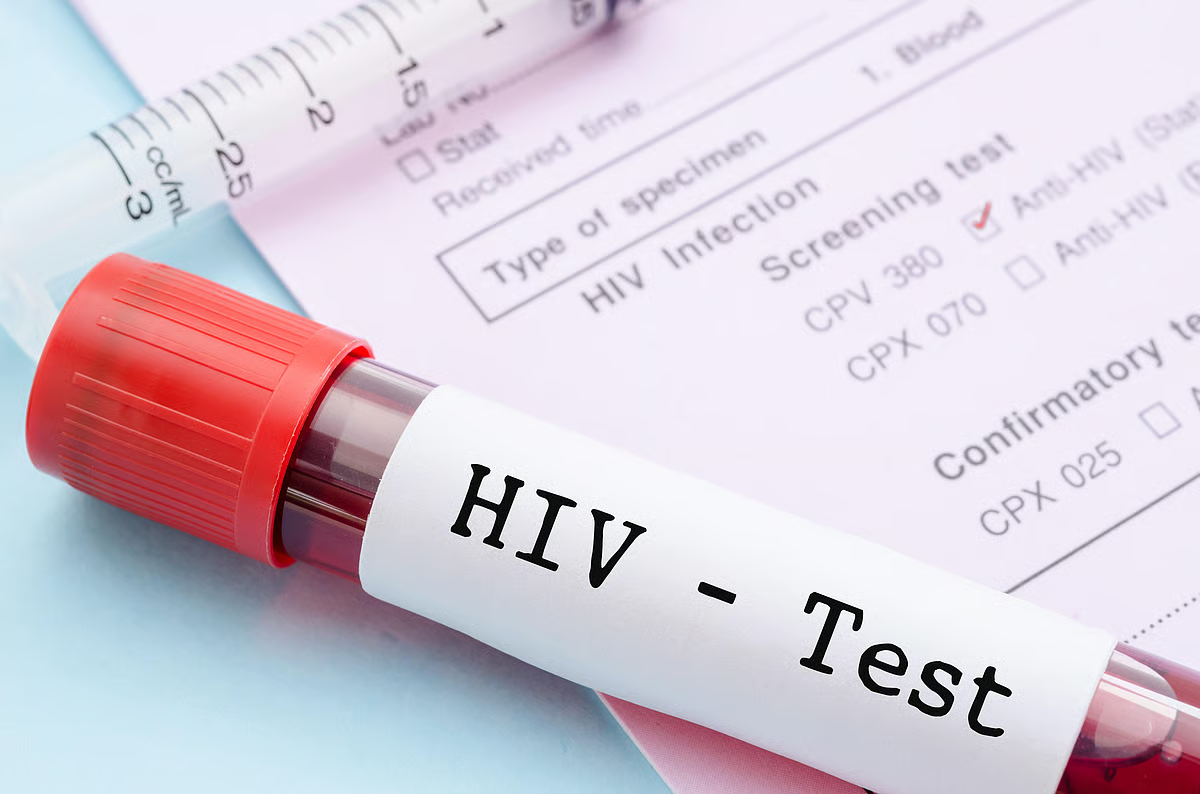
The Lagos State AIDS Control Agency (LSACA) has clarified that reports stating the state recorded 10,430 HIV cases in 2025 do not indicate 10,430 new infections, but rather the number of people diagnosed through expanded HIV testing services during the year.
.....
The agency issued the clarification following reports based on the Federal Ministry of Health and Social Welfare’s State of the Health of the Nation Report 2025, which showed Lagos recording the highest number of reported HIV cases among Nigeria’s 36 states and the Federal Capital Territory.
According to the report, Lagos recorded 10,430 cases, followed by Rivers with 6,287, Kano with 6,106, Akwa Ibom with 5,413, Taraba with 4,854 and Benue with 4,804. Anambra recorded 4,468 cases, while Kaduna, Adamawa and the Federal Capital Territory completed the top 10 with 3,659, 2,989 and 2,764 cases respectively.
Other states reporting more than 2,000 cases included Cross River, Sokoto, Abia, Imo, Delta, Borno, Ogun, Plateau, Niger and Ebonyi, while Ekiti recorded the lowest figure with 462 cases. In its statement, LSACA stressed that the reported figure represents individuals who tested positive and were documented through HIV testing programmes in 2025, many of whom may have been living with the virus long before receiving a diagnosis.
“The 10,430 cases should not be interpreted as 10,430 new HIV infections that occurred in 2025. Rather, they represent individuals who were diagnosed and recorded through HIV testing services during the year,” the agency said.
This Video Is Trending Right Now 👇
Click here to watch the video
LSACA explained that Lagos’ status as Nigeria’s commercial hub and most populous state contributes to the high number of diagnoses, as residents, workers, students and visitors from across the country seek healthcare services in the state.
The agency also attributed the figures to Lagos’ extensive HIV surveillance, testing and reporting systems, which it said are among the strongest in the country. “As testing services continue to expand and more people come forward to know their HIV status, more previously undiagnosed cases are identified and linked to life-saving treatment.
“The reported figure should therefore be viewed as evidence of the state’s robust HIV case-finding efforts, expanded access to testing and improved reporting systems, not as an indication that the HIV epidemic is out of control in Lagos,” the statement added.
Meanwhile, data from the National Data Repository showed that Nigeria recorded 20,838 newly diagnosed HIV cases between January and March 2026, with Lagos recording 2,298 cases during the period, followed by Benue with 1,949, Akwa Ibom with 1,159, Rivers with 1,137 and Anambra with 1,013.
The clarification comes as the Federal Government continues efforts to strengthen the country’s HIV response. In March, the government announced a $346 million co-financing commitment for HIV, tuberculosis and malaria programmes in 2026, while also launching Lenacapavir, a long-acting injectable medication for HIV prevention.
For more Naija celebrity news and updates, keep following Gist News for the latest Naija celebrity news and trends in Newspaper Nigeria Headlines.
Naija gist news
latest Naija gist
Naija news live


2027: Peter Obi is inconsequential – Kenneth Okonkwo

Aviation varsity won’t become conventional institution, FG declares

Rivers State overhauls school registries: What the new digital system changes

Osun guber: INEC seeks Ooni’s support for peaceful poll

Tax cuts, pension overhaul and sick leave reforms: Germany launches sweeping economic overhaul

OPM extends lifeline to South African returnees with free housing, skills training

Gbajaniamila: I’m sick, on medication – Adeyemi breaks silence on PFIPC controversy

 World2 days ago
Boy, 3, pulled alive from rubble six days after Venezuela earthquake disaster
- Society8 hours ago
Iyabo Obasanjo clarifies father’s real age
- Society1 day ago
Outrage As Video Of Primary Schoolgirls Smoking And Drinking Surfaces Online
- Breaking1 day ago
Nigerian nun in tears as she’s released after being arrested by ICE while walking to Mass in the US (video)
- Investigation3 days ago
Phone snatchers st@b 300-level varsity student to d3ath in Abuja
- Investigation3 days ago
WhatsApp to let users chat without sharing phone numbers
- Investigation3 days ago
US disclosure on neutralised 199 jihadists refers to May operation â DHQ
- Investigation2 days ago
V!olence against women declines from 9% to 5% in six yearsâ UN Women