World
Legionnaires’ Outbreak on Upper East Side Is Over, N.Y.C. Officials Say

This Video Is Trending Right Now
The health authorities reassured New Yorkers on Friday that they could walk around Manhattan’s Upper East Side without worrying about catching Legionnaires’ disease, declaring the end of an outbreak that had killed seven people and infected 92.
Dr. Alister Martin, the city’s health commissioner, said at a news briefing that enough time has passed with no new cases to conclude that this summer’s outbreak has been stanched.
Most of the 92 cases were diagnosed in the first eight days of July, with only three cases discovered after July 15. The most recent case was diagnosed July 21.
“The incubation period has passed,” Dr. Martin said.
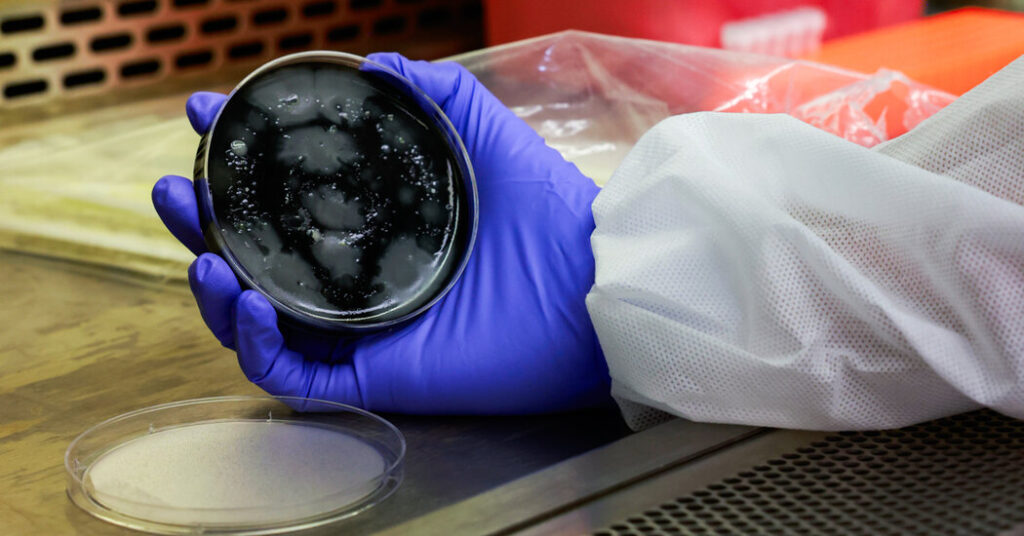
The health authorities believe that the outbreak was caused by a cooling tower — one of the boxy structures atop rooftops that are part of central air-conditioning systems. The cooling towers, with their warm water, corroding metal and slime, can incubate a bacterium called Legionella. Fans inside the cooling towers can disperse bacteria-laden mist throughout a neighborhood, where passing pedestrians can inhale it. The bacteria can cause a severe pneumonia, especially in older people or those with underlying health issues.
Cooling towers have been implicated in past outbreaks, including a deadly episode in Harlem last year and a 2015 outbreak in the South Bronx that killed at least a dozen people and was the worst Legionnaires’ outbreak in New York City’s history.
The health authorities said they had not pinpointed which cooling tower caused the outbreak, but said that they expect to do so in the coming weeks. There are more than 180 cooling towers across three Upper East Side ZIP codes — 10075, 10028 and 10128 — that largely encompass the area of the outbreak. Legionella bacteria have been found in roughly a third of those cooling towers. The Health Department ordered 83 buildings to clean and disinfect their cooling towers as part of the outbreak investigation.
The next phase in the investigation involves comparing those Legionella samples to samples taken from hospitalized patients in an effort to find a genetic match.
“We are working to pinpoint the source as quickly as possible,” Dr. Martin said.
As Legionnaires’ has grown more prevalent across the United States in recent decades, New York has emerged as an epicenter. That is partly because of the density of cooling towers — there are more than 5,000, mostly on rooftops in Manhattan — and the number of pedestrians on the sidewalks below.
The latest outbreak sparked widespread concern across the Upper East Side, which has a higher concentration of older residents than many parts of the city. The outbreak left many people worried that the air they breathed while walking outside might land them in the hospital.
The widow of one of the outbreak’s victims summed up the fears when she described what had killed her husband, an 88-year-old Air Force veteran and retired businessman: “It’s something you don’t see, an invisible monster, a vapor that just went into his lungs and just took him away from me,” the widow, Ida Goldstein, said at a news conference last week.
On Friday, Dr. Martin reassured residents that they were safe now.
“There is no longer an elevated risk of Legionnaires’ disease for the Upper East Side,” he said.
In response to past outbreaks, New York City has imposed stringent regulations on cooling towers, requiring that they be registered and tested for Legionella on a monthly basis. Some members of the City Council have expressed concern that the Health Department’s enforcement of cooling towers regulations has been lax.
“It doesn’t look like the compliance was where it needed to be,” Julie Menin, the speaker of the City Council who represents the Upper East Side, said last week at a news conference. Ms. Menin had also faulted the city Health Department for not moving faster to hire enough water ecologists to assist with Legionella testing, leaving some positions vacant.
The Health Department said it had hired water ecologists expeditiously and that more than 260 department employees were mobilized to respond to the outbreak.
Dr. Martin on Friday said that inspectors had cited buildings for more than 110 violations, with two buildings receiving an unusually large number of cooling tower citations.
A residential building on East 83rd Street had never registered its cooling tower, and the property owners had failed to sample the tower for Legionella in more than a year, Health Department officials said, adding that the owners had been issued $11,000 in fines.
A building on York Avenue, with more than 200 apartments, was issued $9,000 in fines for failing to conduct monthly Legionella sampling and other violations, the health authorities said.


Trump and Netanyahu May Be at Odds Again Over Gaza Plan

Warsh considering reducing number of Fed meetings, NYT reports

‘To cover hate with more love’: Burned Pasadena temple’s mural restored after more antisemitic vandalism

Gavin Newsom and His Wife Made $1.4 Million in 2024, Tax Returns Show

Brittney Griner Called Wife ‘The Best Mother And Spouse’ Weeks Before Pulling The Plug On 8-Year Marriage

Canada introduces tougher financial scrutiny for international students

How not to avoid a conflict of interest

 World2 days ago
My daughter’s squishy toy burst on her legs. We ended up in the emergency room.
- Investigation2 days ago
âWe are going to beat the f**king sh*t out of themâ – Trump issues sharp warning to Iran as diplomacy ends after surprise attack on US base
- National3 days ago
FG Exceeds 2024 Borrowing Target by ₦4.79tn as Debt Hits ₦12.62tn
- World3 days ago
‘Get it done!’ Trump fumes at Senate Republicans blocking ‘first step’ for election plot
- National3 days ago
Scott Wolf’s Estranged Wife Finally Catches A Break In Court After Doxxing Drama
- World3 days ago
What Is Open-Weights A.I.?
- News3 days ago
Oloyede’s class act in public relations
- World3 days ago
A Battle Over Female Ambition