News
MAN warns inflation won’t ease without reforms

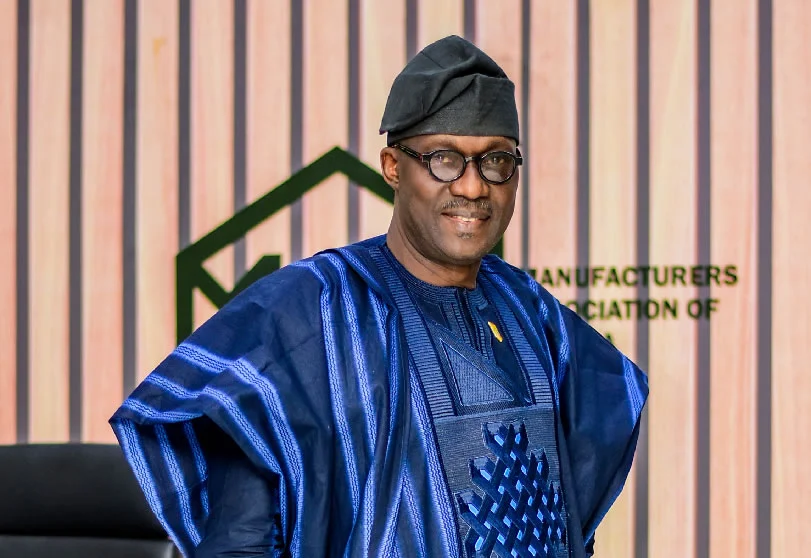
The Manufacturers Association of Nigeria has renewed its call for coordinated structural reforms to address inflation, improve productivity and strengthen the competitiveness of the country’s manufacturing sector, as it looked ahead to the second half of 2026 following disruptions caused by the Middle East conflict.
The association made the call against the backdrop of the latest National Bureau of Statistics data, which showed that Nigeria’s headline inflation eased marginally to 15.91 per cent in June 2026 from 15.93 per cent in May. However, food inflation accelerated on a month-on-month basis, driven by higher prices of fresh pepper, tomatoes, crayfish, beef, garri, yams and other staple foods.
The PidomNigeria earlier reported that members of the organised private sector welcomed the slight decline in the inflation rate for June 2026 but warned that inflation remained in double digits and prices were still too high for businesses and consumers.
In his remarks for the April-June edition of MAN News obtained by this publication, the Director-General of MAN, Segun Ajayi-Kadir, observed that the renewed increase in inflation during the quarter highlighted the fragility of Nigeria’s economic recovery as higher food prices, energy costs, transportation expenses and exchange rate pressures continued to raise production costs and weaken consumers’ purchasing power.
“MAN has consistently maintained that addressing inflation requires coordinated structural reforms that improve productivity, strengthen infrastructure, enhance security in agricultural and industrial communities, and stabilise the foreign exchange market,” Ajayi-Kadir stated.
Meanwhile, Ajayi-Kadir noted that the association remained committed to pursuing policies that would enhance industrial competitiveness despite economic headwinds in the first half of the year.
He said, “As we enter the second half of the year, our priorities remain firmly focused on advancing policies that improve competitiveness, encourage investment, expand local production, deepen exports, and position Nigeria as Africa’s industrial hub and the preferred manufacturing destination.”
He noted that the second quarter witnessed increased business and government activities after a slow start to the year but was affected by insecurity across parts of the country and the impact of the ongoing conflict between the United States and Iran in the Middle East.
Ajayi-Kadir reported that the association advocated the recapitalisation of the Bank of Industry, the creation of additional concessionary lending windows for manufacturers, lower import costs for industrial machinery and essential raw materials, and long-term development finance to support investment and expansion.
He expressed concern over the continued decline in credit to manufacturers, warning that industrialisation would remain constrained if productive enterprises could not access affordable financing.
He also reaffirmed MAN’s support for tax reforms that modernise tax administration and improve revenue generation but opposed the retroactive application of the 2025 Nigeria Tax Laws, noting, “Our position remains unchanged. We support reforms that modernise tax administration, improve revenue mobilisation, and strengthen fiscal sustainability. At the same time, successful reform depends on transparent implementation, predictable policies, and continuous stakeholder engagement.”
The MAN DG further urged the Federal Government to address the unresolved foreign exchange forward obligations owed to some manufacturers, describing the issue as a breach of valid contracts that had continued to weaken the financial position of affected companies.
He said the association also intensified advocacy for greater local raw material utilisation through collaboration with the Raw Materials Research and Development Council and the Nigeria Customs Service to deepen backward integration and reduce dependence on imported industrial inputs.
Ajayi-Kadir added that MAN remained optimistic that continued collaboration between the government and the private sector would strengthen ongoing economic reforms and support Nigeria’s industrial transformation.








Trump threatens Iran with ‘major military punishment’ after Houthi strikes on Saudi oil tankers

2027: Pentecostal Fellowship of Nigeria reject ms Muslim-Muslim Ticket

Inside the unconventional FDA panel that could reshape the peptide industry

Klopp Returns as Germany Appoints New Head Coach

‘Bandits Must Go’ — Igboho Launches Security Outfit, Vows to Reclaim Kwara Forests

Nigeria Faces $550m Palm Oil Import Pressure

Toddler di£s after being âforgottenâ inside nursery minibus âfor seven hoursâ

 Investigation3 days ago
65-year-old married female teacher blindfolded and tied 10-year-old schoolboy to bed before having s3x with him
- Investigation3 days ago
âBusinesses are dy!ng in South Africa. Nobody is making money – South African man decries low patronage days after anti-immigrant protest
- Investigation3 days ago
"I ‘m fine and healthy" – Video of late Mary Habila debunking her d3ath rumours 3 days before she d!ed at Umahi’s residence
- National3 days ago
CBN opened domiciliary accounts for Gbajabiamila-linked PFIPC on accountant-general’s order before N400 million bribe probe: Cardoso
- National3 days ago
INEC Officials Accused of Demanding ₦2,000 for PVCs in Onitsha [VIDEO]
- Investigation2 days ago
Married woman humiliated after allegedly being caught cheating on her husband with another man in Kogi community
- Investigation3 days ago
âl did not k!ll him, he d!ed on top of me" – Sani Abacha’s mistress says
- Investigation3 days ago
âThe court should marry her offââ Father of 11 begs Sharia Court to compel 27-Year-Old daughter to marry