Investigation
Mystery material hidden for 80 years found at Hiroshima atomic bomb site

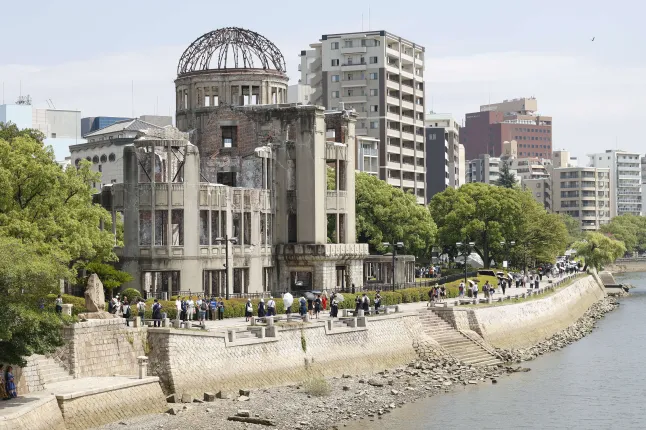

Scientists have identified a previously unknown metal alloy created during the atomic bomb explosion over Hiroshima in 1945. Researchers discovered the microscopic alloy inside tiny grains of radioactive fallout, known as “hiroshimaite,” collected from beach sands in Hiroshima Bay nearly 80 years after the bombing.
The team believes the alloy formed inside the nuclear fireball, where temperatures exceeded 7,000°C, instantly vaporising buildings, steel, glass and soil before the materials cooled within moments. Those extreme conditions produced a substance unlike any previously recorded by scientists.
The newly discovered alloy consists of iron, chromium, nickel, manganese, molybdenum, silicon and aluminium — elements commonly found in stainless steel. However, researchers found that the atoms combined into a completely new crystal structure as the fireball cooled at an extraordinary rate.
Scientists from the University of Florence made the discovery while analysing 34 glassy fallout particles recovered from Hiroshima Bay. Using advanced microscopes and X-ray analysis, they searched for unusual materials created during the explosion.
One metallic grain, measuring only a few thousandths of a millimetre across, stood out because its internal atomic structure did not match any known material. After comparing it with thousands of existing alloys, the researchers concluded they had identified a previously unknown multicomponent alloy.
Writing in the journal Science Advances, the researchers said: “We report the discovery of a previously unknown multicomponent alloy recovered from beach sands of Hiroshima Bay, formed during the August 6, 1945 atomic airburst.”
The scientists believe the finding suggests other unknown materials may still be hidden among microscopic debris left behind by the bombing. They added that studying such materials could improve understanding of how matter behaves under extreme temperatures and pressures.
The atomic bomb, codenamed “Little Boy,” was dropped on Hiroshima at 8:15 a.m. on August 6, 1945. It detonated approximately 1,900 feet above the city with an explosive force equivalent to about 15,000 tons of TNT. An estimated 60,000 to 80,000 people were killed instantly. By the end of 1945, the death toll had risen to about 140,000 as thousands more died from burns, injuries and radiation sickness.


Divers Search a New Jersey River for Second of 2 Children They Fear Drowned

‘Spider-Man: Brand New Day’: Who Is Sara?

Catholic priest rejects Tinubu branded rice calls it renewed hopelessness
Catholic priest rejects Tinubu branded rice calls it renewed hopelessness

FCT police arrest suspected vandals of govt properties, recover drainage covers, solar street lights and others

4 Bands That Prove Britpop Is Still Alive, You’re Just Not Looking In the Right Places

Anthony Fauci’s staggering earnings since leaving government revealed — as divisive Dr. doubles net worth

 World2 days ago
My daughter’s squishy toy burst on her legs. We ended up in the emergency room.
- National3 days ago
FG Exceeds 2024 Borrowing Target by ₦4.79tn as Debt Hits ₦12.62tn
- National3 days ago
Scott Wolf’s Estranged Wife Finally Catches A Break In Court After Doxxing Drama
- World3 days ago
What Is Open-Weights A.I.?
- World3 days ago
A Battle Over Female Ambition
- Investigation3 days ago
âDonât you want to be like Peller? He didnât go to school but still made his parents proudâ â Daddy Freeze jokes with son over â¦7m school fees
- Investigation2 days ago
P0rn star Emily Willisâ family reaches $3m settlement over rehab brain injury that left her permanently disabled
- Investigation2 days ago
âItâs is an opportunity but not an obligationâ â FIFA president Infantino defends new proposal to sell FIFA World Cup rights to private company after facing backlash