World
New attacks raise questions about what comes next in the Iran war

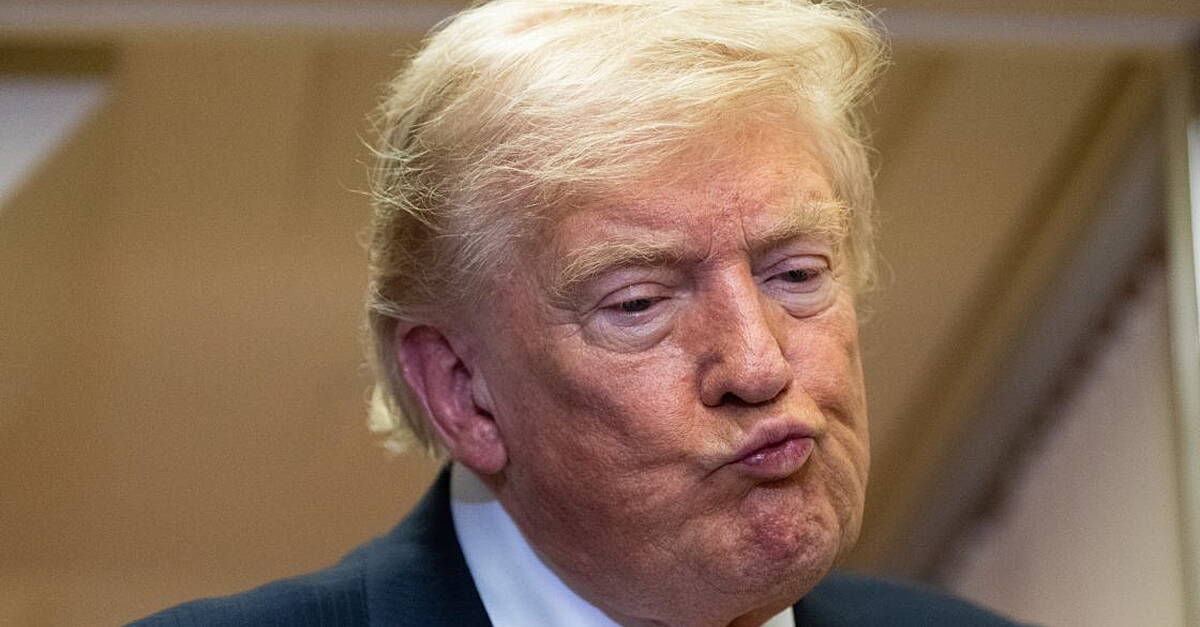
President Donald Trump says he believes the ceasefire with Iran is over.
He says he is not sure he wants a deal anymore and says the US should “finish the job”.
But he also insists that continued attacks do not mean a return to war or long-term action.
The confusion and uncertainty in Mr Trump’s mixed messaging and his approval of back-to-back military strikes leave major questions about what comes next in the conflict, just weeks after difficult diplomacy to reach even an initial deal between the long-time adversaries.
The rhetoric could be a strategy to increase the pressure on Tehran to stop attacking ships transporting oil and natural gas in the Strait of Hormuz and bend to US demands on its nuclear programme — something Mr Trump has tried before.
Whether it is a negotiation tactic or a signal of an escalation in fighting, mediators are scrambling to save the interim deal and the actions risk further inflaming tensions — which could spell problems for Republicans in November’s mid-term elections if fuel prices stay high.
Mr Trump warned on Wednesday that a new round of US attacks was coming, even as he attempted to shrug off suggestions of a return to full-scale war.
Hours later, the military announced it was carrying out new attacks on Iran that were meant to “further degrade their ability to threaten freedom of navigation in the Strait of Hormuz”.
“Anything that happens is going to happen very fast,” Mr Trump said earlier. “We’re not looking for a long time.”
A regional intelligence official involved in the mediation efforts said the conflict had reached a critical stage as mutual mistrust rises.
But high-level communications are happening around the clock to salvage the ceasefire, said the official, who spoke on condition of anonymity to discuss the delicate behind-the-scenes negotiations.
The foreign ministers of Pakistan and Qatar, as well as Egypt’s intelligence chief, are leading the efforts, while Turkish president Recep Tayyip Erdogan — whose country hosted the Nato summit that wrapped on Wednesday — and leaders from Saudi Arabia are also involved, the official said.
The US is upset about ships being attacked in the Strait of Hormuz and accuses Iran of slow-playing discussions on curtailing its nuclear programme, the official said.
Nuclear talks were a major next step to try to turn the interim deal announced last month into a lasting end to the war.
Tehran, meanwhile, says Washington is the one violating the agreement regarding the strait and failing to ensure that a ceasefire in Lebanon, including an Israeli withdrawal, is being implemented, the official said.
Michael Eisenstadt, a former US military analyst who now directs the Military and Security Studies Programme at the Washington Institute for Near East Policy, said that “we’re still in negotiating mode, no matter what the president says”.
“This is part of negotiating, and declaring that the MOU is over is part of the negotiation as well,” Mr Eisenstadt said, referring to the memorandum of understanding that the ceasefire was built on.
Mr Trump, though, has been explicit in public comments, saying he has lost interest in preserving the ceasefire: “I think it’s over.”
“We can play games, but I’m not sure I want to make a deal,” he said during the Nato summit in Ankara, Turkey, adding that the US military might “just finish the job”.
Parliament speaker Mohammad Bagher Qalibaf, Iran’s lead negotiator, said the Trump administration had repeatedly violated the terms of the initial pact, forcing the country to respond appropriately.
“The era of bullying and extortion is over,” Mr Qalibaf posted on X.
“It leads nowhere. We don’t fold.”
Pakistan, which helped broker the ceasefire, said renewed conflict is in “no-one’s interest” and urged both sides to uphold their commitments.
“There is no alternative to continued engagement, dialogue and diplomacy to achieve shared goal of peace in the region,” its Foreign Ministry said in a statement.
Mr Trump, nonetheless, dismissed Tehran’s leaders, calling them “scum” and “sick people”.
Just last month, Mr Trump said Iran’s leadership was “very rational” and “nice to deal with,” while also calling the country’s leaders “smart people”.
Speaking at an event in Milwaukee on Wednesday, vice president JD Vance, who led US efforts to reach the initial deal with Tehran, said Iran was “well behaved for about a week”.
He added that lately the country had begun attacking the strait and said, “If they shoot at ships, we’re going to knock the hell out of them”.
Before the US and Iran reached their first, two-week ceasefire in April, Mr Trump intensified his threats, pledging that American forces would bomb Iranian bridges, roads and power plants.
He even posted online, “A whole civilisation will die tonight, never to be brought back again”.
He repeated dire threats before the tentative 60-day deal to end the war was reached last month.
Mr Trump likes to seek ways to negotiate from a position of strength, and he could be looking for more leverage with new strikes.
But being unequivocal about the end of the ceasefire also could free up Iran militarily — which could again inflate oil prices and financial markets.
Ali Vaez, Iran director at the International Crisis Group, argued that escalating threats may be a riskier manoeuvre this time around, given the domestic and international stakes for the US.
“It certainly looks like an effort to turn up the military heat without yet closing the diplomatic door,” Mr Vaez said.
“But coercive bargaining is a dangerous game: At some point, a pressure campaign can acquire a momentum of its own and become the war it was ostensibly meant to avoid.”
He added, however, that Iran still has every reason to return to the table because it desperately needs the economic relief that was promised under the interim deal.
Mr Trump also has sent mixed signals about the fallout.
He long insisted that rising petrol prices for Americans did not factor into his calculations on Iran — only to say that part of the reason he agreed to the interim deal was to avoid an “economic catastrophe”.
He has since touted the falling price of oil after the deal was reached.


Netizens In Fear As Over 900 Snakes Poisonous Get Spotted Swimming In Flooded Rain

FIFA president Gianni Infantino to face ethics complaint over Trump involvement in Folarin Balogun red card controversy

2026: Global headline inflation to increase from 4.1% to 4.7% — IMF report

Kebbi schools in banditry-affected communities to remain closed until security improves
Sheriff's locked drawer reveals evidence linked to missing drug-seizure cash

Libyan police arrest Argentina fans, forcefully shave their heads following post-match altercations

Nigerian man boasts of how he lures gay men he meets on gay dating apps to his house, physically ass@ults them, and dispose them of their personal belongings (video)

 Investigation2 days ago
15-year-old student slashes schoolmate with cutlass for allegedly touching her brâ¬ast repeatedly during school clean-up exercise
- Investigation3 days ago
âYouâre my best forever. You do everything for me.â â Little girl melts hearts with sweet voice note to her dad
- National2 days ago
May Yul-Edochie Urges Court To Shut Down Yinka Omolola Theisen, Others’ Social Media Accounts Over Alleged Cyberbullying
- Investigation9 hours ago
Disturbing comments made by men after man was caught r@ping his wife’s teenage niece in Imo
- Society1 day ago
Madness!! Ghanaian Tiktoker Goes Live On Tiktok To Bath To Gain More Followers And Accumulate Gifts
- Investigation2 days ago
Lupita Nyong’o grabs attention with her revealing outfit to the premiere of Odyssey (photos/video)
- Investigation3 days ago
The referee is a little bit suspect – President Trump confirms he spoke to FIFA president to review Folarin Balogunâs red card
- Investigation3 days ago
âI have houses, I’m married and I have a 10-year Canada work permit and na me be the olodo?â â Portable reacts to âOlodo Uprisingâ debate