Breaking
Nigeria lost N2.376tn to power grid underutilisation – NISO

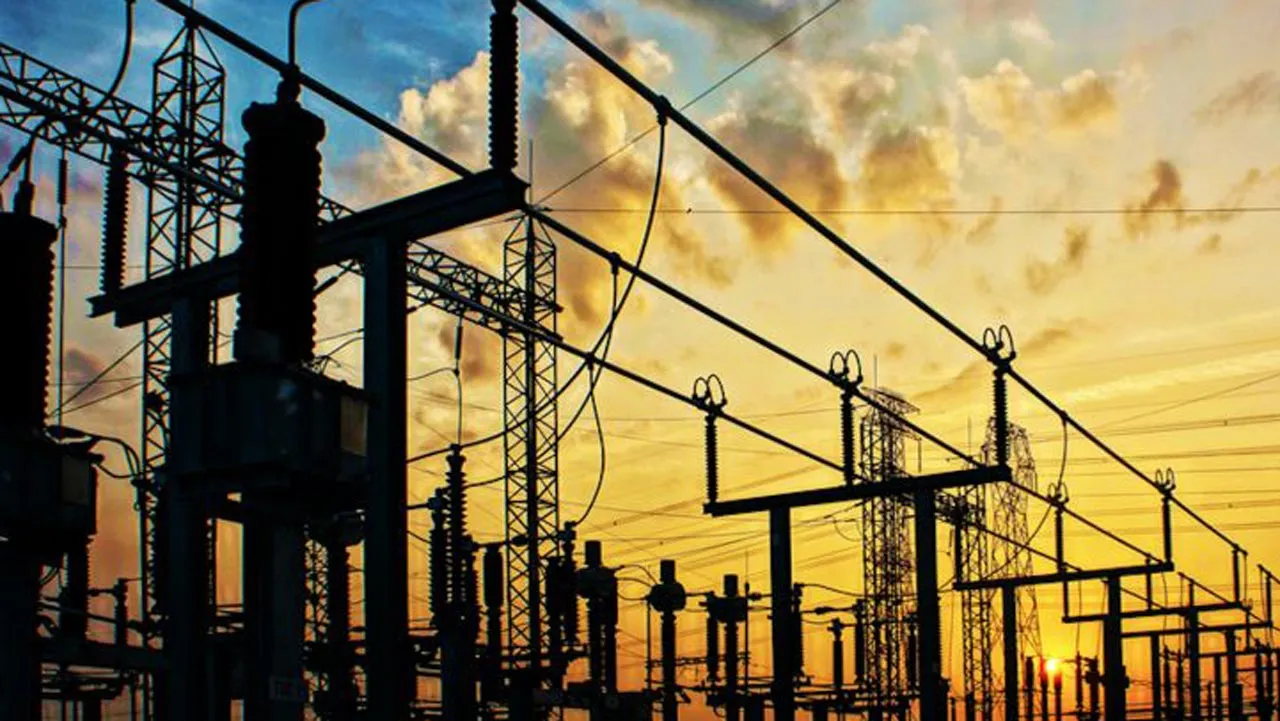
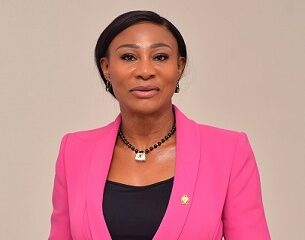
Abdu Bello, the Managing Director/Chief Executive Officer of the Nigerian Independent System Operator, NISO, says Nigeria lost over N2.376 trillion to power sector grid underutilisation in capacity payments since 2015.
Mr Bello said this at the 11th Nigeria Energy Forum 2026 (NEF-2026) Conference in Lagos.
The theme of the conference is “Upscaling Value Addition for Sustainable Industrialisation”.
Mr Bello, who was represented by NISO’s General Manager, Research, Deji Ojo, said the establishment of NISO was repositioning the power sector from infrastructure expansion towards operational excellence, market efficiency, reliability, and industrial competitiveness.
According to him, as of May 2026, Nigeria had an available generation capacity of 7,311 Megawatts, MW, but the average dispatched generation that was produced and translated into economic value was just 4,222 MW.
“You will discover that about 3,162 MW is stranded capacity and not being converted to economic use,” he said.
The CEO said the major goal of NISO was to translate the existing megawatts into economic use.
In his presentation, Abdulrahman Yinusa, the Group Managing Director, GMD, of Odu’a Investment Company Limited, said reliable power was the entry ticket to industrial growth.
Mr Yinusa, who was represented by the Executive Director, Investment and Business Development, Yemi Ajao, said Nigeria sits on the raw materials the world wants most.
“The question is whether we turn them into finished products or keep giving them away cheaply,” he said.
Also speaking, Caroline Eboumbou, the Chief Executive Officer of All On, said “Nigeria’s energy future would be shaped not only by policy or investment, but by the ingenuity of its people.
“That is why our partnership with the Tertiary Institutions Student Energy Challenge (TIEC) has been so meaningful,’’ she said.
Mr Eboumbou, who was represented by Jadesola Rawa, Senior Grant Associate of All On, said some previous TIEC winners had continued their entrepreneurial journey through All On’s Hub.
“Three alumni have gone on to receive additional support that is helping them strengthen their businesses, refine their solutions, and move closer to commercial success,” she said.
Omatsola Ogbe, Executive Secretary of the Nigerian Content Development and Monitoring Board, said that to achieve sustainable development, it was critical to produce or manufacture in Nigeria.
Mr Ogbe, who was represented by Suleiman Ozimede, General Manager, Monitoring, said that Nigerians should utilise made-in-Nigeria products, as well as Nigerian human and material resources.
In a keynote presentation, Khalil Halilu, Executive Vice Chairman of the National Agency for Science and Engineering Infrastructure, said the agency was building an integrated ecosystem where innovation is created locally, manufactured locally, and commercialised globally.
Abba Aliyu, Chief Executive Officer of the Rural Electrification Agency, who was represented by Abba Hayatudeen, Senior Advisor on Strategy, said that “the future will be defined by the number of businesses we empower, industries we revive, and prosperity we unlock through sustainable energy.”
Ibironke Olubamise, the National Coordinator of the GEF Small Grants Programme in Nigeria, said GEF SGP financing helps developing countries address complex challenges to meet international environmental goals.
“The programme provides support to build the capacity of communities to address environmental issues and improve their livelihoods,” she said.
Speaking on the forum, Adekunle Makinde, the NEF Co-Chair, said the forum had held ten previous editions and was still progressing.
“Prior to NEF, we had young people with different ideas, students from different institutions with final-year projects, and at the end of the year, the projects ended up in a trash can or library.
“But now, NEF has been able to get investors who will support these young innovators with grants to scale up clean energy solutions,” he said.
Mfikeyi Makayi, CEO Africa, KoBold Metals, said AI technology was guiding exploration and development decisions, using novel sensors, data systems, and predictive models.
Prof. Nnanyelugo Ike-Muonso, Director General of the Raw Materials Research and Development Council, said the council was promoting the optimal utilisation of Nigeria’s raw materials for sustainable industrial growth.
Febisola Oyeniyi, General Manager, Enterprise Sales, MTN, said they were expanding access while reducing environmental impact.
According to him, “Digital is powering the future of energy. Sustainability is powering the future of digital. Together, both will power Nigeria’s future.”
Dr. Kazeem Raji, Director General of the National Board for Technology Incubation, said the board was established precisely to bridge the gap between innovation and industrialisation.
Dr. Bamise Olanrewaju, NEF Innovation Director, said the All On TIEC 4.0 attracted 107 pitch decks from 36 tertiary institutions across 20 states. The First Prize and Public Vote winner was Coolbox from the University of Lagos, led by Samuel-Rotua Richard.
“The second place went to AutaNet, led by Fadekemi Haruna, and the third place was awarded to DP2P Energy Trading, led by Muhammad Abdulraheem, both from the Federal University of Technology, Minna,” she added.
In his opening remarks, Dr. Oluwole Daniel Adeuyi, the Chairman of NEF, said the theme of the 2026 edition reflected Nigeria’s and Africa’s opportunity to transform abundant resources into competitive industries, quality jobs, increased exports, and sustainable prosperity.
According to him, “The future belongs to nations that add value, manufacture competitively, innovate boldly, and build resilient industries.”
NAN


Ex-Power Minister Saleh Mamman forfeits additional properties to FG

Putin muppet fearing revolution in Russia – ‘those who oppose us are gaining momentum’
Vance or Rubio: Is Trump's 2028 heir already chosen?

Court awards N10.2m against ATBUTH over pregnant woman’s death

Update: FIFA rejects Belgium’s appeal over US star Folarin Balogun’s eligibility after President Trump’s intervention

China sparks WW3 warning after huge missile test sets up Australia showdown

BREAKING: FG Convenes Dangote Refinery And Others For PMS Fair Pricing Talks

 National2 days ago
Against Nigerian Law, CBN Deputy Governor Emem Usoro Allows Her Eleven Years Old Twin Daughters To Be Company Boss
 Society9 hours ago
H0rny Old Man Caught On Camera In Broad Daylight Trying To Chop Mad Woman At Roadside
- Investigation3 days ago
"Sometimes a man can genuinely love a woman and still not marry her because his spirit isn’t at peaceâ â X user shares opinion
 Society1 day ago
Sad Video emerges showing Kenyan Lady working in the Middle East crying in distress
- World2 days ago
Girl, 16, repeatedly raped by her older brother who 'saw his late wife in her'
- Investigation2 days ago
âWhatâs my sin?â â TV host Morayo Afolabi-Brown reacts after caller cÂ¥rses her over questions asked during interview
- Society2 days ago
61-Year-Old Woman Gives Birth To Healthy Baby In Greater Accra After Decades Of Childlessness
- Investigation3 days ago
âIâll be travelling to other African countries to encourage citizens to hold their governments accountable and build better nations" – Leader of a South African anti-migration group, Phakelâumthakathi