News
Oyedele Explains Why Nigerias Debt Jumped by Trillions

()
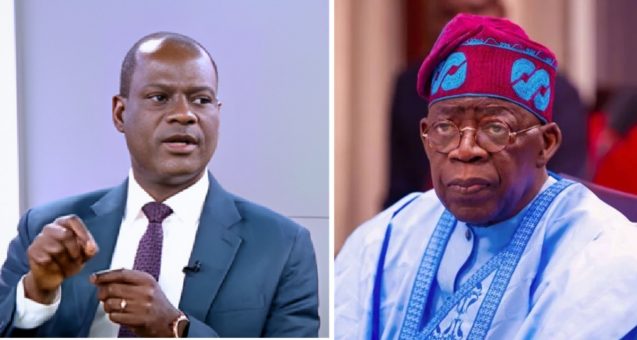
The Minister of Finance and Coordinating Minister of the Economy, Taiwo Oyedele, has attributed the sharp rise in Nigeria’s public debt to the depreciation of the naira, explaining that the increase in the country’s debt stock was largely driven by the revaluation of external loans rather than fresh borrowing.
Oyedele made the clarification while briefing the Senate Committee on Finance on the state of the nation’s economy, following concerns raised by lawmakers over reports that the Bola Tinubu administration had borrowed about ₦80 trillion in addition to the roughly ₦75 trillion debt it inherited.
Addressing the committee, the minister said comparisons between the current debt stock and the debt level at the start of the administration had created a misleading impression that the government had engaged in excessive borrowing.
According to him, Nigeria’s public debt stood at about ₦75 trillion when the Tinubu administration took office, but economic reforms and the sharp depreciation of the naira significantly increased the naira value of the country’s foreign debt.
He explained that many people simply compare that earlier figure with today’s debt stock and conclude that the government has borrowed massively.
He noted that because Nigeria reports its public debt in naira, the weakening of the local currency meant the foreign-currency component of the debt had to be revalued, leading to a substantial increase in the reported debt figure without any corresponding new borrowing.
He said that following the reforms and the naira’s depreciation, this accounting adjustment alone added more than ₦40 trillion to the public debt figure.
Oyedele further stated that another major driver of the increase was the securitisation of the Ways and Means advances approved by the National Assembly, which he said added about ₦33 trillion to the country’s public debt.
He stressed that this amount should not be interpreted as fresh borrowing, since it represented existing obligations that were formally recognised and incorporated into the nation’s debt profile.
He maintained that the figures being circulated by some commentators and reported in sections of the media did not accurately reflect the actual level of new borrowing undertaken by the current administration.
Despite the minister’s explanations, members of the Senate Committee on Finance expressed concern over what they described as the poor implementation of the capital component of the 2026 budget, urging the executive to improve the execution of capital projects to ensure that budgetary allocations translate into tangible infrastructure development and economic growth across the country.



JUST IN: Fidelity Bank Sponsors the 2026 Young Innovators Camp

Tinubu has not borrowed up to N80tn in three yearsâ Nigerian Government

UNILAG begins Post-UTME, warns candidates against malpractice

World Cup: ‘Thank God Spain won’ – Oliseh slams Argentina players over bad behaviour

Sowore Challenges ICPC to Release Full Gbajabiamila Interrogation Video

143 firms bid for 37 oil assets as NUPRC targets 300,000bpd output boost

Posthumous 70th Birthday: Akeredolu’s legacy continues to speak for him – Adegbonmire

 Society1 day ago
2026 Ballon d’Or: Top 4 players to win award after World Cup final revealed
- Society1 day ago
Pepper Seller Caught On Camera Applying Pepper On Newborn Baby As Rituals To Usher Her Into The Business
- World2 days ago
Spain earns $51 million for World Cup win and runner-up Argentina gets $34 million as total payout for all 48 teams hits record-high $871 million
- Investigation3 days ago
US President Trump questions Thomas Tuchelâs tactics in England World Cup loss to Argentina
- Society3 days ago
Prosecution Presents Evidence Against Adu-Boahene in GH¢49.1 Million Trial-Deputy AG Says
- Investigation3 days ago
Iâll retire and get a tattoo of our manager if Spain win World Cup 2026 – Spanish defender, Cucurella
 Investigation3 days ago
Police arrest four over mob k!ling, exhume victimâs remains for autopsy
- Investigation3 days ago
Iran will teach USA âunforgettable lessonsâ – Iranian Supreme Leader