Breaking
Power generation alone won’t fix electricity crisis — Minister

Advertisement
Advertisement
The Minister of Power, Joseph Tegbe, says improving electricity generation alone will not resolve the nation’s power challenges, stressing that reforms must address the entire electricity value chain to deliver reliable supply.
Mr Tegbe said this on Friday during an interactive session with journalists in Lagos.
He said electricity must be generated, transmitted, distributed and paid for efficiently for Nigerians to enjoy stable and sustainable power supply.
“Electricity must be generated, transmitted, distributed and paid for. Every part of the value chain must work efficiently for Nigerians to enjoy reliable power,” he said.
The minister said the Federal Government’s “Resetting the Sector” initiative was designed to strengthen the electricity value chain, improve service delivery, restore investor confidence and make the market financially sustainable.
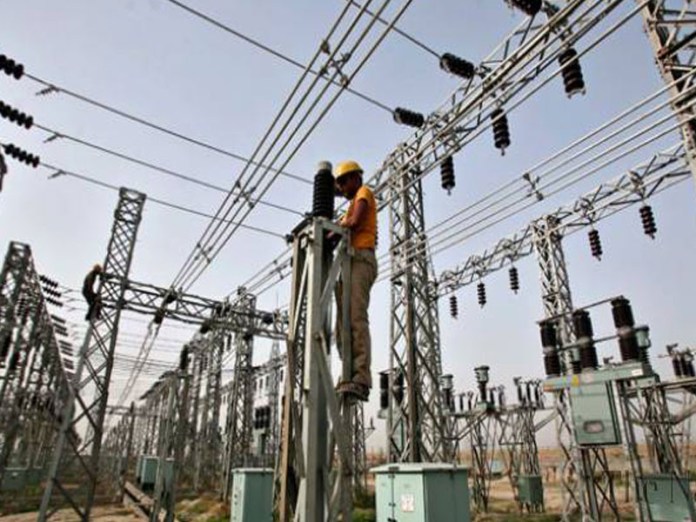
According to him, the reform programme will include a nationwide technical audit of the transmission network to identify ageing infrastructure, overloaded substations, weak transmission corridors and other operational bottlenecks.
He added that the ministry would work with the Nigerian Electricity Regulatory Commission (NERC) and state electricity regulators to harmonise electricity regulation, eliminate regulatory overlaps and provide greater certainty for investors.
Tegbe said the government remained committed to improving power supply, accelerating metering, strengthening the national grid and maintaining current electricity tariffs.
“Our goal is simple: make electricity more available, make the grid more reliable, make the market financially sustainable and ensure power becomes a driver of economic growth rather than a constraint,” he said.
He said the reforms would consolidate existing gains while addressing longstanding structural, regulatory and financial constraints affecting the sector.
The minister disclosed that procurement challenges that previously slowed meter deployment had largely been resolved, paving the way for faster installation of prepaid meters nationwide.
He also said Nigeria had consistently generated about 5,000 megawatts of electricity over the past two weeks due to improved coordination among market operators and increased availability of power plants.
According to him, the government is advancing the Power Sector Bond Initiative to clear legacy debts owed to generation companies, gas suppliers and other market participants, a move he described as critical to restoring liquidity and investor confidence.
Tegbe said strategic investments under the Grid Stabilisation Programme would target key transmission corridors in Lagos, Enugu-Port Harcourt and Abuja-Kaduna-Kano, while the proposed Super Grid Programme would strengthen the national transmission backbone, improve grid resilience and support industrialisatiaon.
The minister also highlighted the increasing adoption of renewable energy, noting that many factories, offices and commercial facilities now generate more electricity than they consume through solar installations.
He said the country’s net-metering policy would enable such consumers to sell excess electricity back to the national grid, adding that a new solar farm would be inaugurated within the next six months.
On electricity subsidies, Tegbe said the government had not removed the subsidy, contrary to public speculation.
“I did not say the subsidy is gone. We are addressing the issue, and by next year we will begin implementing measures to resolve it,” he said.
He assured Nigerians that vulnerable consumers would continue to enjoy government support as reforms progressed, while solar energy would remain central to expanding electricity access in rural and underserved communities.
The minister further disclosed that the government had reconciled outstanding debts owed to power generation companies, reducing disputed claims from about N6 trillion to an agreed N3.3 trillion as of March 2025.
He said N501.3 billion had already been paid, while another N700 billion was being processed, bringing total payments to about N1.2 trillion.
Tegbe expressed optimism that Nigerians would begin to experience noticeable improvements in electricity supply within the next few months, while a more stable and resilient national grid would emerge over the next two to three years.
He urged electricity market operators, investors, development partners, state governments, organised labour, consumer groups and the media to support the Federal Government’s reform agenda aimed at delivering stable, affordable and sustainable electricity nationwide.
NAN


Fans are convinced Ariana Grande spills on Ricky Alvarez reunion in steamy ‘Petal’ song ‘Bad Thing (Bunny Hop)’

Nobody is selling football – FIFA to continue consultation on investor plan despite UEFAâs vote to boycott

Trump’s Gaza Deal Sparks Questions on Whether Israel, Hamas Will Comply

Nigerian govt to publish detailed account of petrol subsidy savings — Finance minister

Herder collapses as 42 of his cows di£ at once in FCT community

Hope cannot be preached to a hungry stomach, Atiku flays Tinubu’s prosperity remarks

CJN bans lawyers from using ‘Barrister’ as name prefix at Supreme Court

 World2 days ago
My daughter’s squishy toy burst on her legs. We ended up in the emergency room.
- Breaking3 days ago
ââDo not shake hands”- UNILAG shares anti-r@pe advisories to female students
- Investigation3 days ago
âVilification, murd£r of Nigerians in South Africa will not be toleratedâ – Fani-Kayode speaks after graphic video showed ‘Nigerian man t0rtured to de@th’ in SA (video)
- National3 days ago
EXCLUSIVE: Police Indict Unity Bank Cooperative Officials in ₦85 Million Fraud Investigation
- National3 days ago
FG Exceeds 2024 Borrowing Target by ₦4.79tn as Debt Hits ₦12.62tn
- National3 days ago
Oyo takes delivery of two surveillance aircraft
- World3 days ago
Who Wins (and Who Loses) in the Democrats’ New 2028 Primary Calendar?
- World3 days ago
What Is Open-Weights A.I.?