World
Scientists Are Trying to Figure Out Why Orcas Are Punching Giant Sunfish So Hard They Explode

This Video Is Trending Right Now
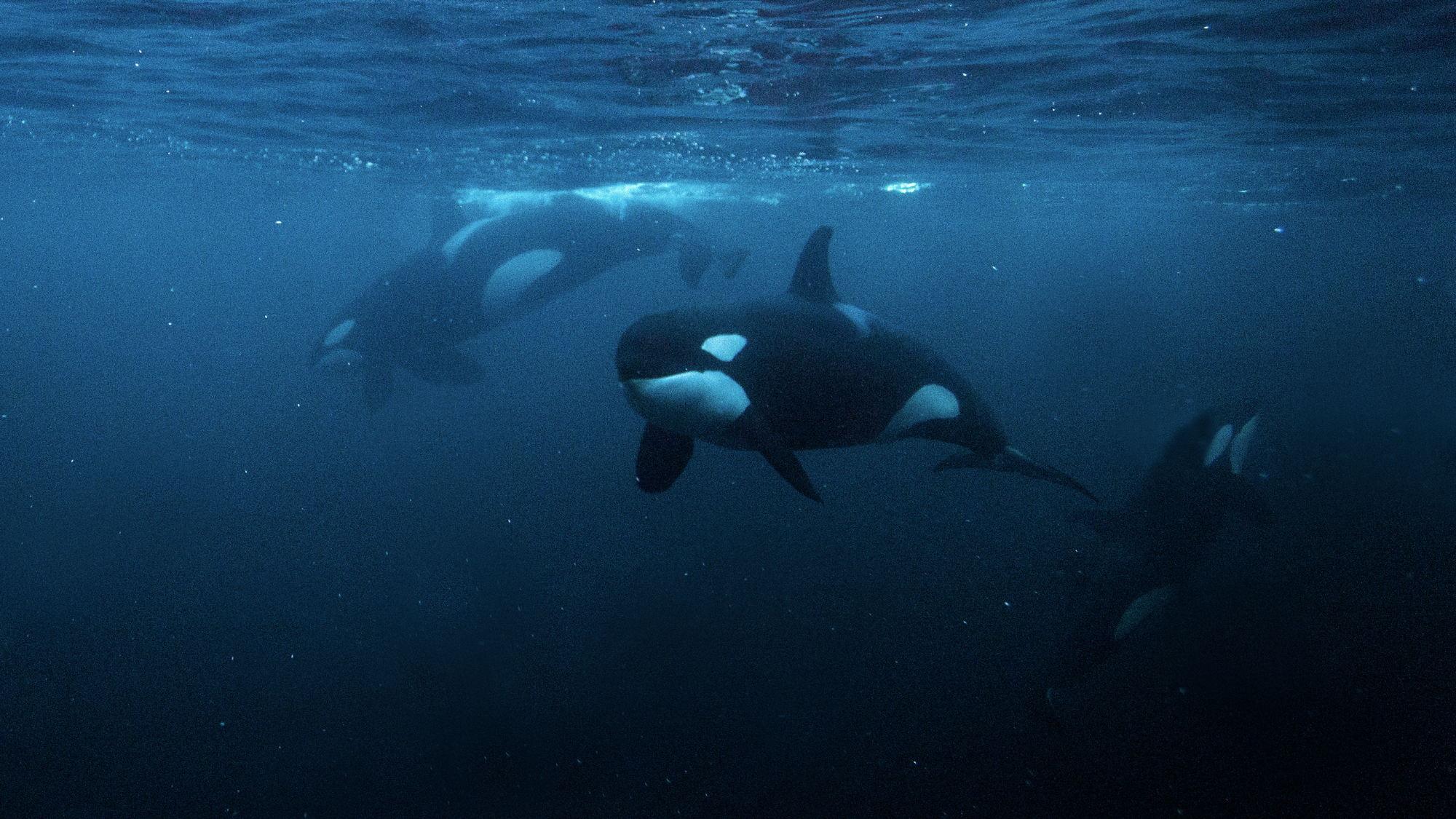
Orcas have been terrorizing great white sharks, capsizing boats off the Iberian Peninsula, and generally establishing themselves as the ocean’s most charismatic chaos agents. Now, in the Gulf of California, they’ve added something new to the repertoire: punching giant sunfish so hard they explode.
A new paper published in Frontiers in Ethology documents three separate incidents—first observed in December 2021, then again in 2024 and 2025—in which orcas employed a highly coordinated two-whale system to demolish sharptail mola, a species of sunfish that can weigh over a ton. The routine follows the same sequence each time. One orca grabs the mola to hold it in place. A second swims back to build momentum, then launches itself into the fish at full speed. The impact doesn’t just injure the sunfish—it obliterates it.
An orca has been captured smashing into a sunfish in the Gulf of California. Researchers believe the killing technique could help orcas feed their young – or be a form of entertainment. https://t.co/yb90vFnBc1 pic.twitter.com/ueFar50amD
— Sky News (@SkyNews) July 23, 2026
“The first time I witnessed this behavior was in December 2021, and in that moment, the sheer energy of the impact was stunning,” marine biologist Erick Higuera Rivas of Conexiones Terramar told ScienceAlert. “We immediately knew we were witnessing something highly unusual because of the scale of the tissue explosion.”
The Orcas Aren’t Always Killing the Sunfish, Though
The even stranger part is that the ramming isn’t what kills the fish. Analysis of the footage revealed the sunfish were already dead before impact, and their internal organs had already been removed. The high-speed collision, the researchers concluded, is almost certainly a butchery technique—a way to break an otherwise impenetrable carcass into pieces small enough to eat.
The obstacle is the sunfish’s skin. “Sunfish skin cannot be cleanly unzipped. It is an incredibly dense, waterlogged shield of collagen,” Higuera Rivas explained. “Instead of using tension to rip it, the orcas use massive kinetic energy.” One orca becomes the anvil, the other the hammer. The collagen shatters. Everyone eats.
What makes this especially interesting to researchers is who’s eating. In at least one documented incident, a juvenile orca moved in immediately after impact to feed on the fragments—which aligns with a theory that sunfish ramming may function partly as a training exercise. Higuera Rivas has previously noted that orca hunting techniques are “passed down through generations within their pods,” and the sharptail mola, slow-moving and defenseless, presents a low-stakes target for young orcas to develop precision and coordination under the supervision of adults.
Orcas in different parts of the world have developed entirely distinct hunting cultures: carousel feeding in Norway, ray-flipping in New Zealand, wave-washing in Antarctica. Sunfish ramming in the Gulf of California may be one more entry in that catalog—a pod-specific innovation that could be in the early stages of becoming tradition.
“I never imagined this could be the hunting method orcas would use against defenseless prey that posed little risk to the predator,” Higuera Rivas said. At this point, very little these animals do should surprise anyone. And yet, they keep doing it.


Troops arrest two suspected Boko Haram members during clearance operation in Borno

UniAbuja Law Student Wins Regional Speech Contest

Please Don’t Thank Us for the Land

BURATAI COMMENDS MARIAM YARO’S BOOK, SAYS WOMEN’S INCLUSION IS KEY TO NATIONAL SECURITY

NBA President Elect Promises Resignation If Rigging Proof Emerges

Governor Fired After Wearing Tight Cycling Shorts During Public Event

Transfer: Osimhen among world’s most valuable players despite World Cup failure [top five]

 Investigation3 days ago
65-year-old married female teacher blindfolded and tied 10-year-old schoolboy to bed before having s3x with him
- Investigation3 days ago
âBusinesses are dy!ng in South Africa. Nobody is making money – South African man decries low patronage days after anti-immigrant protest
- Investigation3 days ago
"I ‘m fine and healthy" – Video of late Mary Habila debunking her d3ath rumours 3 days before she d!ed at Umahi’s residence
- National3 days ago
CBN opened domiciliary accounts for Gbajabiamila-linked PFIPC on accountant-general’s order before N400 million bribe probe: Cardoso
- National3 days ago
INEC Officials Accused of Demanding ₦2,000 for PVCs in Onitsha [VIDEO]
- Investigation2 days ago
Married woman humiliated after allegedly being caught cheating on her husband with another man in Kogi community
- Investigation3 days ago
âl did not k!ll him, he d!ed on top of me" – Sani Abacha’s mistress says
- Investigation3 days ago
âThe court should marry her offââ Father of 11 begs Sharia Court to compel 27-Year-Old daughter to marry