Investigation
US slaps 12.5% tariff on Nigerian imports over forced labour rules

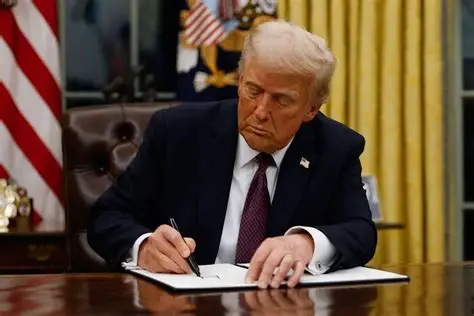

The United States has announced a new 12.5 per cent tariff on goods imported from Nigeria.
This places Nigeria among dozens of trading partners penalised under a policy aimed at combating forced labour in global supply chains.
The decision, released by the Office of the United States Trade Representative, affects 60 economies that Washington says have not adopted or effectively enforced bans on the importation of products made with forced labour.
Under the policy, countries that have introduced, or pledged to introduce, such restrictions will attract a lower tariff of 10 per cent. Those countries include India, Indonesia, Malaysia, Mexico and the United Kingdom.
According to the USTR, the action followed investigations launched in May 2026 under Section 301 of the Trade Act, covering 60 of America’s largest trading partners. The agency said the review drew more than 1,600 written submissions, featured testimony from over 100 witnesses during public hearings, and involved consultations with more than 45 governments before the final decision was reached.
Explaining the tariff structure, the USTR stated: “10 percent is the appropriate rate of Section 301 duties for investigated economies that (i) impose a forced labor import prohibition; (ii) have committed to impose and enforce such a prohibition through an Agreement on Reciprocal Trade; or (iii) have imposed a partial regime with the effect of preventing the importation of certain forced labor goods.
“These economies are: Argentina, Bangladesh, Cambodia, Canada, Ecuador, El Salvador, Guatemala, Honduras, India, Indonesia, Jordan, Malaysia, Mexico, Pakistan, Sri Lanka, Trinidad and Tobago, and the United Kingdom.
“10 percent or 12.5 percent, net of Most-Favored-Nation (MFN) rate, is the appropriate rate of Section 301 duties for certain products of the European Union, Taiwan, Japan, Korea, and Switzerland that are not otherwise exempted, as explained in greater detail in the Federal Register Notice.”
The agency added: “12.5 percent is the appropriate rate of Section 301 duty for all other investigated economies.”
A Federal Register notice obtained from the USTR confirmed that Nigerian exports would be subject to the 12.5 per cent tariff, except for products covered by specified exemptions.
The notice stated: “Based on the findings in the investigation of Nigeria, considering the public comments, testimony, and the advice of the Section 301 Committee, as well as the advice of advisory committees, and in accordance with the specific direction of the President, the Trade Representative has determined to impose 12.5 percent tariffs on products of Nigeria, except as provided in Annex I and Annex II, Part A, of this Notice.
“The Trade Representative has determined, in accordance with the specific direction of the President, that the tariff rate to be applied, and the scope of tariffs and exemptions, are appropriate to obtain the elimination of the acts, policies, and practices determined to be actionable in the investigation.”
The latest trade measure follows President Donald Trump’s decision to invoke Section 122 of the Trade Act of 1974 to introduce temporary universal tariffs after the US Supreme Court blocked his administration’s wider tariff proposal under the International Emergency Economic Powers Act.
US Trade Representative Jamieson Greer said the policy was intended to encourage stronger action by America’s trading partners against forced labour.
“President Trump recognises that decades of moral suasion have not eradicated forced labour from global supply chains,” Greer said.
“The United States has had a forced labour import ban for nearly a century. It’s well past time for our trading partners to do the same.”
The USTR said some products would be exempt from the tariffs, including raw materials whose restriction could create domestic shortages, goods capable of causing widespread economic disruption, products unavailable in sufficient quantities within the United States or from alternative suppliers, and selected imports from countries that have adopted or committed to implementing forced labour import bans.
It added that further exemptions had been granted where imposing tariffs was considered unlikely to eliminate the trade practices identified during the investigations.


US condemns killing of Plateau cleric’s family, demands justice

The Eroticism Shortage

IPOB demands action over US lawmakers seeking Nnamdi Kanu’s release

Audience mock Trump directly behind his back during speech (video)

National Assembly Passes NIWA Repeal and Re‑enactment Bill in Line with Supreme Court Judgment

MUST READ!!! See Items Travellers Cannot Bring Into UK in 2026 [FULL LIST]

When I was growing up, celebrations were reserved for big achievements. I make sure to acknowledge my sons’ smaller wins, as well.

 Investigation3 days ago
65-year-old married female teacher blindfolded and tied 10-year-old schoolboy to bed before having s3x with him
- Investigation3 days ago
âBusinesses are dy!ng in South Africa. Nobody is making money – South African man decries low patronage days after anti-immigrant protest
- National3 days ago
CBN opened domiciliary accounts for Gbajabiamila-linked PFIPC on accountant-general’s order before N400 million bribe probe: Cardoso
- National3 days ago
INEC Officials Accused of Demanding ₦2,000 for PVCs in Onitsha [VIDEO]
- Investigation2 days ago
Married woman humiliated after allegedly being caught cheating on her husband with another man in Kogi community
- Investigation3 days ago
âl did not k!ll him, he d!ed on top of me" – Sani Abacha’s mistress says
- Investigation3 days ago
âThe court should marry her offââ Father of 11 begs Sharia Court to compel 27-Year-Old daughter to marry
- Investigation3 days ago
âHe bargained the car from â¦15m to â¦13.5m and asked for a test driveâ â Car dealer recounts how suspected car thief allegedly stole vehicle before being caught