News
Senate expands Safe Schools probe, summons TETFund, NELFUND

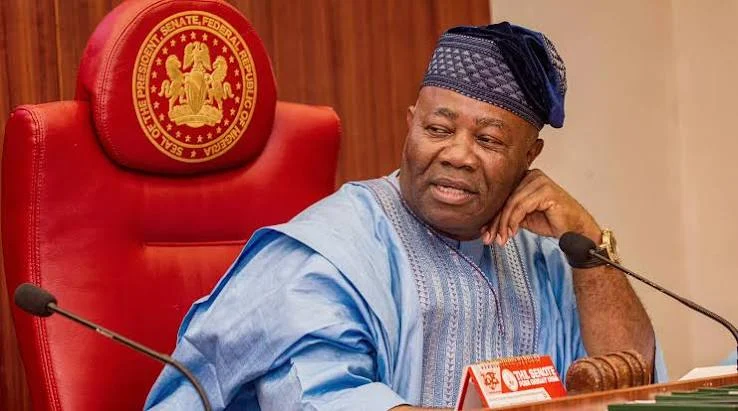
The Senate on Tuesday extended by three weeks the lifespan of its ad hoc committee investigating the Safe Schools Initiative and broadened the scope of the probe to include the Tertiary Education Trust Fund, Nigerian Education Loan Fund, Universal Basic Education Commission, Federal Ministry of Humanitarian Affairs and Poverty Alleviation, and the National Social Investment Programme Agency.
The Red Chamber said the expansion was aimed at conducting a comprehensive investigation into the funding, implementation and accountability of education and social intervention programmes linked to the safety and welfare of students across the country.
The resolution followed a motion moved by the Chairman of the Senate Ad hoc Committee on the Safe Schools Initiative, Senator Orji Uzor Kalu (APC, Abia North), pursuant to Orders 41 and 51 of the Senate Standing Orders, 2026 (as amended), seeking an expansion of the committee’s terms of reference and additional time to conclude its assignment.
Presenting the motion, Kalu told lawmakers that preliminary investigations had revealed strong links between the implementation and funding of the Safe Schools Initiative and several government agencies responsible for educational funding, student welfare, humanitarian interventions and social investment programmes.
According to him, limiting the investigation to the Safe Schools Initiative alone would prevent the Senate from carrying out a comprehensive assessment of issues affecting school security and educational interventions.
“The issues surrounding student security, educational infrastructure funding and social intervention schemes for vulnerable learners across the country are deeply interwoven. Investigating the Safe Schools Initiative without reviewing these complementary bodies will result in fragmented legislative oversight,” Kalu stated.
He added that broadening the committee’s mandate had become necessary to enable the Senate to produce a comprehensive report that could strengthen accountability, safeguard students, and improve transparency in the management of intervention funds.
Under the expanded mandate, the committee will evaluate financial flows, operational challenges and accountability mechanisms across the Safe Schools Initiative and the affected agencies.
It will also review social safety net allocations linked to school feeding programmes, emergency relief for displaced students and educational rehabilitation initiatives implemented through the Federal Ministry of Humanitarian Affairs and Poverty Alleviation and NSIPA.
The panel is further expected to audit infrastructure and security-related intervention projects funded by TETFund in tertiary institutions, assess NELFUND’s disbursement processes, operational readiness, administrative efficiency, and students’ access to education loans, and examine UBEC’s interventions in basic education.
Seeking the Senate’s approval, Kalu said the committee required additional time because some critical aspects of the investigation had yet to be completed due to its extensive workload and other legislative engagements.
“We’re supposed to submit our report, and there are four key areas that were not done. I needed the permission of the Senate so that we can conclude it in the next two or three weeks and come back with a report,” he said.
Following a voice vote called by Senate President Godswill Akpabio, lawmakers unanimously approved the request, granting the committee an additional three weeks to conclude its assignment.
The Senate inaugurated the ad hoc committee in December 2025 amid growing concerns over persistent attacks on schools despite years of government funding and policy interventions aimed at protecting educational institutions.
The probe gained further urgency following the abduction of 25 female students of Government Girls Comprehensive Secondary School, Maga, Kebbi State, during which bandits reportedly killed the school’s vice principal, reigniting concerns over the safety of students and teachers in vulnerable communities.
The Safe Schools Initiative was launched in May 2014 after the abduction of 276 schoolgirls from Chibok, Borno State.
Established as a partnership involving the Federal Government, the United Nations and private sector stakeholders, the programme was designed to strengthen security infrastructure around schools, particularly in conflict-affected areas.
The Senate’s ongoing investigation has already raised questions over the utilisation of funds released for the programme.
During previous hearings, the committee scrutinised the disbursement of ₦15bn released in 2023, with the Nigerian Police Force receiving the highest allocation of ₦6.225bn.
Other allocations examined by the panel include ₦3.362bn to the Nigeria Security and Civil Defence Corps, ₦2.250bn to Defence Headquarters and ₦519m to the Federal Ministry of Education, while the amount released to the Department of State Services was not publicly disclosed.
The committee also queried alleged financial irregularities and consultancy payments under the programme and directed the Safe Schools Financing Office to submit a reconciled breakdown of all funds released, expenditures, contractors and supporting documents relating to the Central Bank of Nigeria Trust Fund account.
During one of the investigative hearings, the National Coordinator of Financing Safe Schools in Nigeria, Hajia Halima Iliya, disclosed that the initiative received funding from both domestic and international partners, including $10m each from the Federal Government and Nigerian business leaders, $1m from the African Development Bank, €2m from the German Government, $4m from the Norwegian Government managed through UNICEF, as well as additional support from USAID, the Qatar Foundation and United Nations agencies.
With the expanded mandate, the Senate committee is expected to present a broader assessment of how education, security and humanitarian intervention funds are being utilised and whether the various programmes are effectively addressing the safety, welfare and educational needs of Nigerian students.






Sony Music Entertainment files new lawsuit against AI startup Udio

Death of my partner affected my life – Hanks Anuku speaks after viral deliverance video

Elon Musk says AI and robots will do ‘so much stuff’ that humans will run out of things to do

There’s a right way to regulate drugs. Kratom is no exception.

“Two-Year Tenure Is Unconstitutional” — 56 Anambra Councillors Sue AG, Assembly, ANSIEC

Relationship counsellor Chidinma Praise announces cancellation of her planned wedding

Former NFL Star Le’Veon Bell arrested over alleged child support neglect

 Society2 days ago
2026 Ballon d’Or: Top 4 players to win award after World Cup final revealed
- Society1 day ago
Pepper Seller Caught On Camera Applying Pepper On Newborn Baby As Rituals To Usher Her Into The Business
- World2 days ago
Spain earns $51 million for World Cup win and runner-up Argentina gets $34 million as total payout for all 48 teams hits record-high $871 million
- Investigation7 hours ago
65-year-old married female teacher blindfolded and tied 10-year-old schoolboy to bed before having s3x with him
- Society3 days ago
Prosecution Presents Evidence Against Adu-Boahene in GH¢49.1 Million Trial-Deputy AG Says
- Investigation3 days ago
Iâll retire and get a tattoo of our manager if Spain win World Cup 2026 – Spanish defender, Cucurella
 Investigation3 days ago
Police arrest four over mob k!ling, exhume victimâs remains for autopsy
- Investigation3 days ago
Iran will teach USA âunforgettable lessonsâ – Iranian Supreme Leader